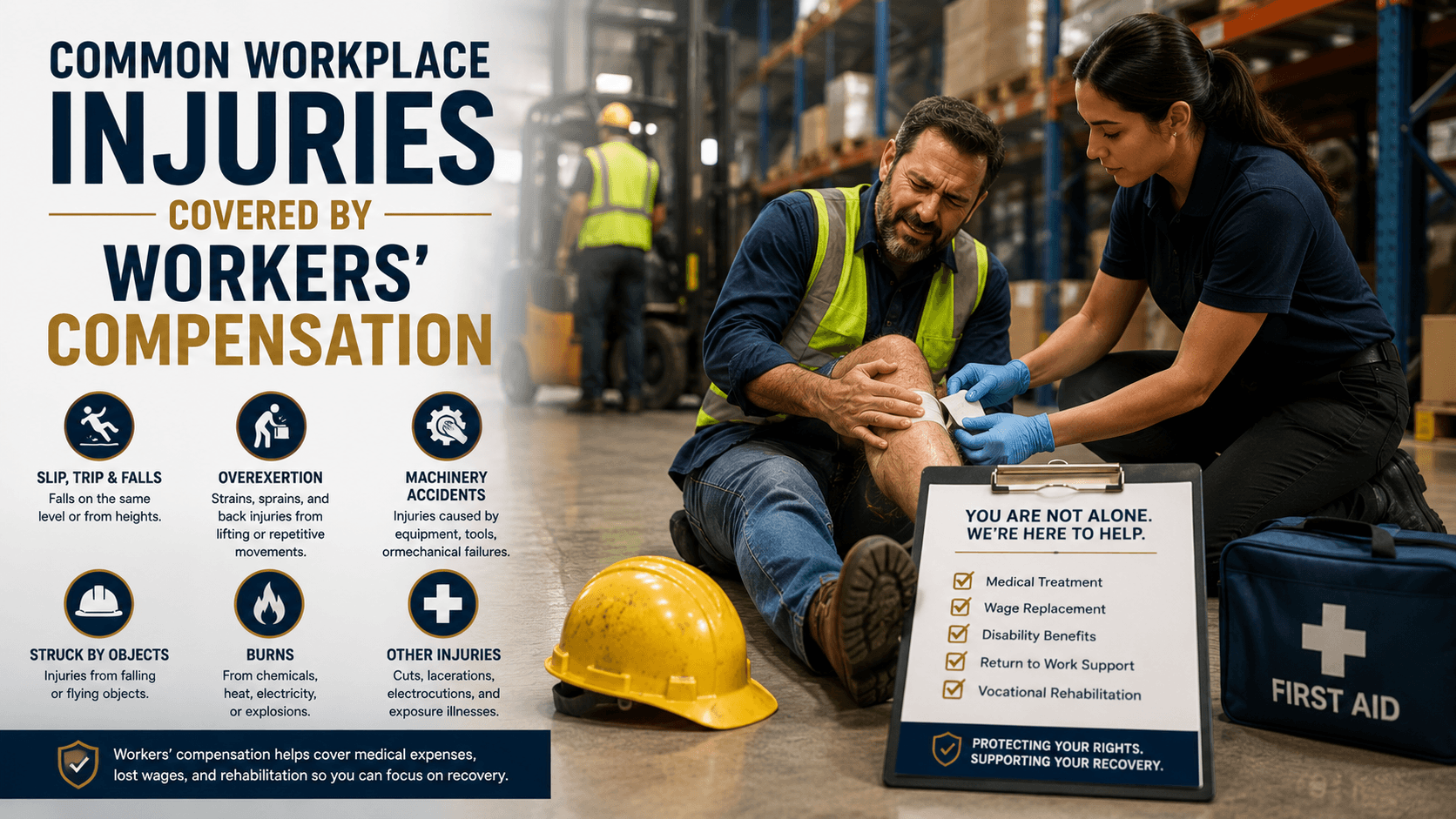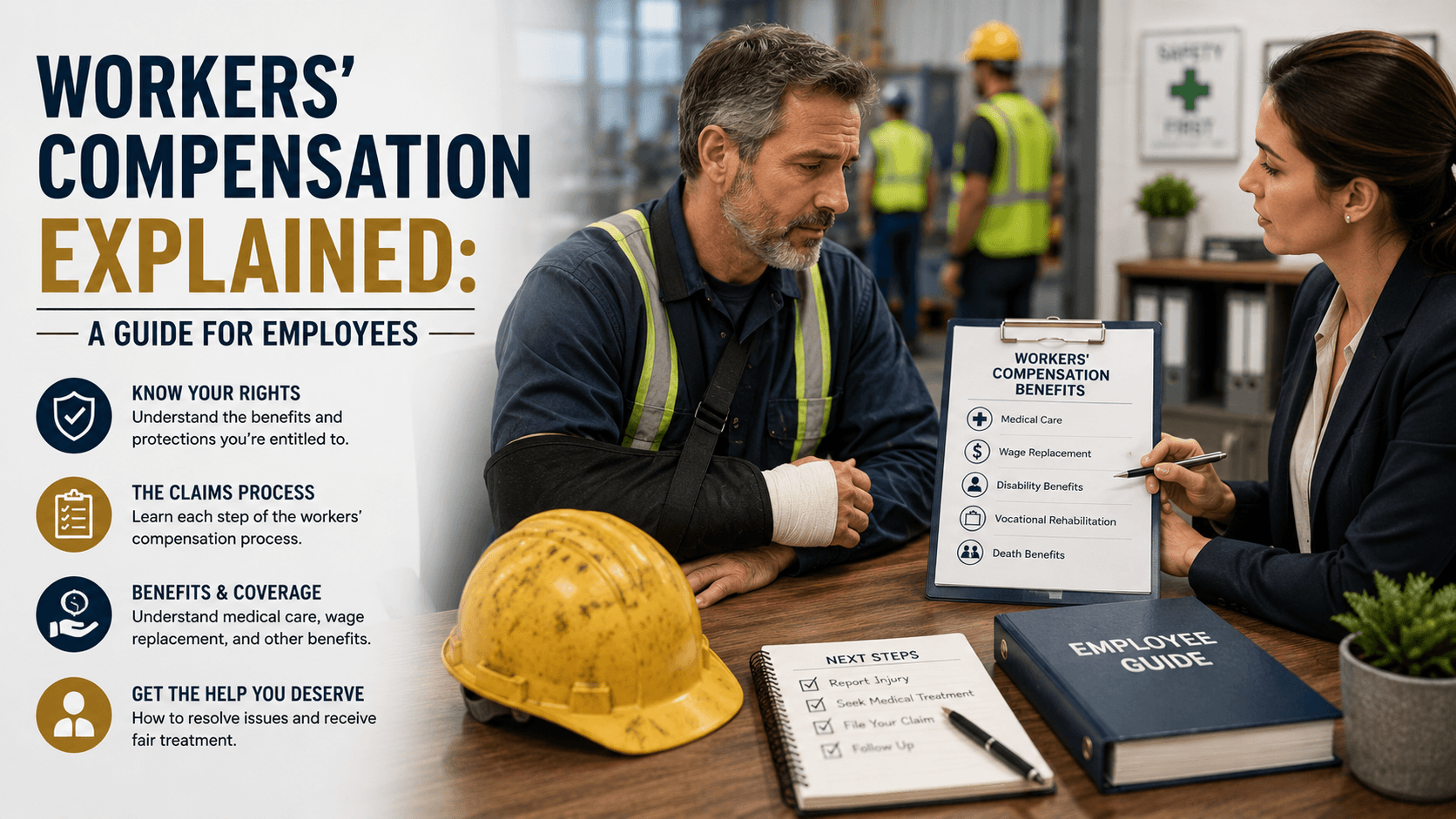
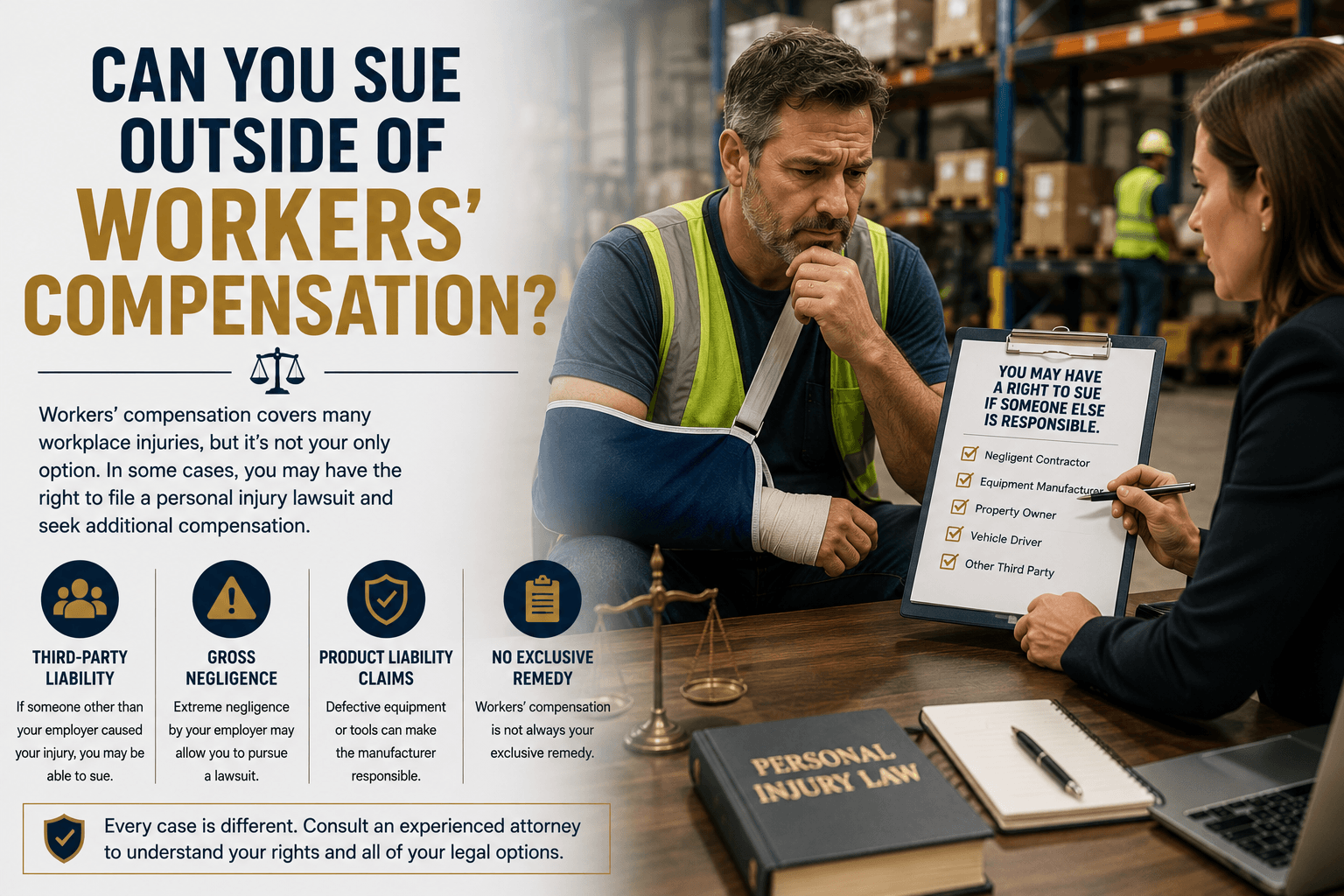

Workers’ compensation systems were created to provide employees with a structured way to receive benefits after suffering work-related injuries or occupational illnesses. In many situations, an injured employee can receive medical treatment, wage replacement benefits, rehabilitation services, and other assistance without having to prove that the employer was negligent. This approach helps simplify many workplace injury claims while reducing lengthy legal disputes.
Because workers’ compensation generally operates as an exclusive remedy, employees often wonder whether they can file a separate lawsuit after being injured at work. The answer depends on the facts of the accident, the parties involved, and the laws of the applicable jurisdiction. While workers’ compensation frequently limits lawsuits against employers, there are circumstances where legal claims outside the workers’ compensation system may still be available.
Understanding these situations helps employees better understand how workers’ compensation interacts with other areas of personal injury law.
What Is the Exclusive Remedy Rule?
One of the central principles of workers’ compensation is the exclusive remedy rule.
Under this concept, eligible employees who receive workers’ compensation benefits generally cannot sue their employer for damages arising from the same workplace injury.
The rule was designed to balance the interests of both employees and employers by:
- Providing faster access to benefits
- Reducing lengthy litigation
- Creating predictable compensation systems
- Encouraging workplace safety
- Lowering legal costs
Although this rule applies in many situations, important exceptions may exist depending on the applicable law.
Why Workers’ Compensation Limits Lawsuits
Workers’ compensation is often described as a compromise.
Employees generally receive:
- Medical benefits
- Partial wage replacement
- Rehabilitation services
- Disability benefits where applicable
In exchange, employers often receive protection from many personal injury lawsuits arising from ordinary workplace accidents.
This framework allows many workplace injury claims to be resolved without traditional civil litigation.
Situations Where Additional Lawsuits May Be Possible
Although workers’ compensation may limit lawsuits against employers, certain circumstances may permit legal claims outside the workers’ compensation system.
These situations vary by jurisdiction and should always be evaluated according to applicable law.
Third-Party Claims
One of the most common exceptions involves injuries caused by someone other than the employer or a coworker.
Examples may include:
- Motor vehicle accidents caused by another driver while performing work duties
- Defective machinery manufactured by another company
- Dangerous property conditions controlled by another business
- Negligent subcontractors on construction sites
- Equipment supplied by outside vendors
In these situations, an injured employee may receive workers’ compensation benefits while also pursuing a claim against the responsible third party, where permitted by law.
Defective Products
Some workplace injuries occur because equipment or machinery allegedly contains a design or manufacturing defect.
Examples include:
- Defective power tools
- Faulty industrial machinery
- Unsafe ladders
- Malfunctioning forklifts
- Defective protective equipment
Product liability claims generally involve different legal principles than workers’ compensation claims.
Motor Vehicle Accidents During Work
Employees who drive as part of their job may be injured in traffic accidents.
Examples include:
- Delivery drivers
- Sales representatives
- Utility workers
- Truck drivers
- Home healthcare providers
If another driver allegedly caused the collision, the injured employee may have both a workers’ compensation claim and a claim against the at-fault driver.
Premises Liability Claims
Employees sometimes perform work on property owned by another company or individual.
Examples include:
- Construction projects
- Customer locations
- Delivery sites
- Vendor facilities
- Commercial buildings
If unsafe property conditions contribute to an injury, liability may extend beyond the employer depending on the circumstances.
Intentional Misconduct
Workers’ compensation systems generally address accidental workplace injuries.
Some jurisdictions recognize limited exceptions involving intentional misconduct.
Examples may include allegations of:
- Intentional physical harm
- Deliberate assault
- Certain intentional acts specifically recognized by law
These situations are uncommon, and legal standards differ significantly among jurisdictions.
Toxic Exposure Cases
Certain workplace injuries develop after long-term exposure to hazardous substances.
Examples include:
- Industrial chemicals
- Asbestos
- Silica dust
- Toxic fumes
- Contaminated products
Depending on the facts, these cases may involve parties other than the employer, such as manufacturers or suppliers.
Construction Site Accidents
Construction projects often involve multiple companies working together.
Potential parties may include:
- General contractors
- Subcontractors
- Equipment rental companies
- Property owners
- Material suppliers
- Architects or engineers
Determining responsibility often requires careful investigation into each party’s role on the project.
How Third-Party Claims Differ from Workers’ Compensation
Workers’ compensation and third-party lawsuits serve different purposes.
Workers’ compensation generally provides statutory benefits without requiring proof of negligence.
A third-party personal injury lawsuit typically requires establishing legal responsibility under applicable civil law.
Because these are separate legal processes, they may proceed simultaneously in appropriate cases.
Common Evidence in Third-Party Claims
Evidence may include:
- Accident reports
- Medical records
- Witness statements
- Photographs
- Surveillance footage
- Equipment inspection records
- Maintenance documentation
- Expert evaluations
The specific evidence depends on the circumstances surrounding the workplace injury.
Common Misconceptions About Workers’ Compensation Lawsuits
Myth: Workers’ Compensation Always Prevents Any Lawsuit
Workers’ compensation often limits lawsuits against employers, but claims against responsible third parties may still be available depending on the circumstances.
Myth: Every Workplace Injury Results in Two Claims
Many workplace injuries involve only workers’ compensation. Additional claims arise only when another legally responsible party may be involved.
Myth: Third-Party Claims Replace Workers’ Compensation
Third-party lawsuits and workers’ compensation claims often address different legal issues and may coexist in appropriate situations.
Myth: Intentional Misconduct Is Common
Most workplace injuries involve accidental events rather than intentional conduct. Exceptions involving intentional acts are generally limited and depend on jurisdiction-specific laws.
Technology and Modern Workplace Investigations
Technology has improved how workplace accidents are investigated.
Examples include:
- Digital incident reporting
- Surveillance video
- Drone site inspections
- Electronic maintenance records
- Artificial intelligence-assisted accident analysis
- Wearable safety devices
- Digital construction management systems
- Three-dimensional accident reconstruction
These tools help investigators analyze complex workplace incidents more accurately.
Preventing Workplace Injuries
Although legal rights are important, prevention remains the most effective strategy.
Safety measures include:
- Employee training
- Routine equipment inspections
- Personal protective equipment
- Hazard reporting systems
- Regular maintenance
- Safe operating procedures
- Workplace safety audits
- Ongoing regulatory compliance
A strong safety culture benefits employees, employers, and the public alike.
Conclusion
Workers’ compensation serves as the primary system for addressing most workplace injuries, and in many cases it limits an employee’s ability to sue an employer directly. However, this does not mean every workplace injury is confined solely to the workers’ compensation system. Depending on the circumstances, claims involving third parties, defective products, motor vehicle accidents, unsafe premises, or other legally recognized exceptions may allow injured employees to pursue additional legal remedies.
Because the availability of these claims depends on specific facts and applicable laws, every workplace injury should be evaluated individually. Understanding how workers’ compensation interacts with third-party liability provides employees with a clearer picture of the legal landscape following a work-related injury.
Frequently Asked Questions
Can an employee sue outside of workers’ compensation?
In some situations, yes. Although workers’ compensation often limits lawsuits against employers, employees may be able to pursue claims against responsible third parties or under other recognized legal exceptions, depending on applicable law.
What is a third-party workplace injury claim?
A third-party claim involves a person or business other than the employer whose actions or products allegedly contributed to the workplace injury.
Can someone receive workers’ compensation and file a third-party lawsuit?
In many jurisdictions, eligible employees may pursue workers’ compensation benefits while also bringing a claim against a legally responsible third party, subject to applicable laws.
Does workers’ compensation cover defective equipment injuries?
Workers’ compensation may provide benefits for work-related injuries, while a separate product liability claim may be available against the manufacturer or another responsible party if a defective product allegedly contributed to the injury.
Does every workplace injury qualify for a lawsuit outside workers’ compensation?
No. Most workplace injuries are resolved exclusively through the workers’ compensation system. Additional lawsuits are generally limited to specific circumstances recognized by applicable law.