
Workplace injuries can occur in nearly every industry, from office environments and retail stores to hospitals, warehouses, construction sites, manufacturing facilities, and transportation operations. While some occupations involve greater physical risks than others, no workplace is entirely free from the possibility of accidents or occupational illnesses.
Workers’ compensation systems are designed to provide specified benefits to eligible employees who experience work-related injuries or illnesses. Although eligibility requirements and available benefits vary by jurisdiction, many workplace injuries fall within the scope of workers’ compensation laws when they arise out of and in the course of employment.
Understanding the types of injuries commonly associated with workers’ compensation claims helps employees recognize potential workplace hazards while emphasizing the importance of prevention, early reporting, and proper medical care.
What Is a Workplace Injury?
A workplace injury is a physical or mental injury that occurs while an employee is performing work-related duties or as a result of employment.
Examples may include:
- Sudden accidents
- Repetitive stress injuries
- Occupational illnesses
- Exposure-related conditions
- Certain work-related mental health conditions where recognized by law
Whether an injury qualifies for workers’ compensation depends on applicable legal requirements and the specific facts of the claim.
Slip, Trip, and Fall Injuries
Slip, trip, and fall accidents remain among the most common workplace injuries.
These incidents may occur because of:
- Wet floors
- Uneven surfaces
- Loose cables
- Poor lighting
- Cluttered walkways
- Ice or snow
- Damaged flooring
Common injuries include:
- Broken bones
- Sprains
- Head injuries
- Back injuries
- Shoulder injuries
Maintaining clean and hazard-free work environments helps reduce these accidents.
Back and Neck Injuries
Back and neck injuries affect employees across many industries.
Common causes include:
- Heavy lifting
- Repetitive bending
- Poor posture
- Falling accidents
- Vehicle collisions
- Overexertion
These injuries may range from muscle strains to more serious spinal conditions requiring extended treatment and rehabilitation.
Repetitive Stress Injuries
Some workplace injuries develop gradually rather than resulting from a single accident.
Examples include:
- Carpal tunnel syndrome
- Tendonitis
- Tennis elbow
- Rotator cuff injuries
- Trigger finger
Employees performing repetitive tasks, keyboard work, assembly line duties, or frequent lifting may be at increased risk.
Fractures and Broken Bones
Broken bones commonly occur during workplace accidents.
Typical causes include:
- Falls
- Machinery accidents
- Falling objects
- Vehicle incidents
- Crush injuries
The severity of fractures varies depending on the affected body part and the nature of the accident.
Head and Brain Injuries
Head injuries may occur in construction, manufacturing, transportation, healthcare, and even office environments.
Examples include:
- Concussions
- Skull fractures
- Traumatic brain injuries
- Facial injuries
Proper protective equipment and workplace safety procedures help reduce these risks.
Burn Injuries
Employees may suffer burns in many work settings.
Burns may result from:
- Fire
- Hot liquids
- Steam
- Chemicals
- Electricity
- Explosions
Burn injuries range from minor skin irritation to severe injuries requiring specialized medical care.
Eye Injuries
Eye injuries are common in occupations involving machinery, chemicals, construction materials, or airborne debris.
Potential causes include:
- Flying particles
- Chemical splashes
- Welding arcs
- Dust exposure
- Broken equipment
Safety goggles and protective eyewear significantly reduce the risk of eye injuries.
Hearing Loss
Long-term exposure to excessive workplace noise may contribute to occupational hearing loss.
High-risk industries include:
- Manufacturing
- Construction
- Aviation
- Mining
- Transportation
Hearing protection and noise control programs play important roles in prevention.
Respiratory Conditions
Certain work environments expose employees to airborne hazards.
Examples include:
- Dust
- Smoke
- Chemical fumes
- Asbestos
- Silica
- Industrial gases
Long-term exposure may contribute to occupational respiratory illnesses depending on the circumstances.
Chemical Exposure Injuries
Employees working with hazardous substances may face risks associated with chemical exposure.
Potential effects include:
- Skin irritation
- Burns
- Respiratory problems
- Eye injuries
- Toxic exposure illnesses
Proper handling procedures, ventilation, and protective equipment help minimize these risks.
Machinery-Related Injuries
Industrial equipment presents significant workplace hazards when improperly operated or maintained.
Examples include:
- Crush injuries
- Lacerations
- Amputations
- Fractures
- Entrapment injuries
Machine guards, training, and routine maintenance are critical safety measures.
Vehicle-Related Workplace Accidents
Employees who drive as part of their job may be involved in work-related vehicle accidents.
Examples include:
- Delivery vehicle collisions
- Truck accidents
- Forklift incidents
- Construction equipment accidents
- Agricultural vehicle accidents
Transportation safety policies help reduce these risks.
Falling Object Injuries
Objects falling from shelves, scaffolding, cranes, or elevated work areas may cause serious injuries.
Common injuries include:
- Head trauma
- Shoulder injuries
- Fractures
- Neck injuries
- Internal injuries
Proper storage practices and overhead protection help prevent these accidents.
Occupational Illnesses
Workers’ compensation may also apply to certain illnesses that develop because of workplace conditions.
Examples include:
- Occupational asthma
- Skin disorders
- Hearing loss
- Heat-related illnesses
- Cold-related injuries
- Infectious diseases in certain occupations
- Occupational cancers where recognized by law
Medical evidence often helps establish whether an illness is work-related.
Mental Health Conditions
Some jurisdictions recognize certain work-related psychological injuries under workers’ compensation laws.
Examples may include:
- Post-traumatic stress disorder (PTSD)
- Acute stress reactions
- Anxiety related to traumatic workplace events
- Depression associated with qualifying workplace injuries
Eligibility varies significantly depending on the applicable legal standards.
Preventing Workplace Injuries
Reducing workplace injuries requires cooperation between employers and employees.
Important safety practices include:
- Regular safety training
- Proper lifting techniques
- Personal protective equipment
- Routine equipment maintenance
- Hazard reporting
- Ergonomic workstation design
- Emergency preparedness
- Workplace inspections
A proactive approach helps create safer working environments.
Common Misconceptions About Workplace Injuries
Myth: Only Dangerous Jobs Result in Workers’ Compensation Claims
Employees in offices, schools, retail stores, healthcare facilities, and other lower-risk workplaces may also experience work-related injuries.
Myth: Repetitive Stress Injuries Are Not Workplace Injuries
Many repetitive stress injuries may qualify for workers’ compensation if they arise out of employment and satisfy applicable legal requirements.
Myth: Occupational Illnesses Are Rare
Many work-related illnesses develop gradually over time and may not become apparent until long after exposure begins.
Myth: Minor Injuries Never Require Medical Attention
Even seemingly minor injuries may worsen if left untreated, making prompt medical evaluation important after workplace accidents.
Technology Improving Workplace Safety
Modern workplaces increasingly use technology to reduce injury risks.
Examples include:
- Wearable safety devices
- Ergonomic assessment software
- Automated machinery
- Artificial intelligence safety monitoring
- Smart personal protective equipment
- Digital hazard reporting systems
- Robotics
- Predictive safety analytics
These innovations help improve workplace safety while reducing preventable accidents.
Conclusion
Workplace injuries can affect employees in every profession, regardless of industry or experience level. From slips and falls to repetitive stress injuries, burns, fractures, respiratory illnesses, and machinery accidents, workers’ compensation systems are designed to provide specified benefits for many qualifying work-related injuries and occupational illnesses.
Recognizing common workplace hazards, following safety procedures, reporting injuries promptly, and seeking appropriate medical care all contribute to healthier workplaces and more effective injury prevention. As technology and workplace safety practices continue evolving, employers and employees share an important responsibility in creating safer work environments for everyone.
Frequently Asked Questions
What injuries are commonly covered by workers’ compensation?
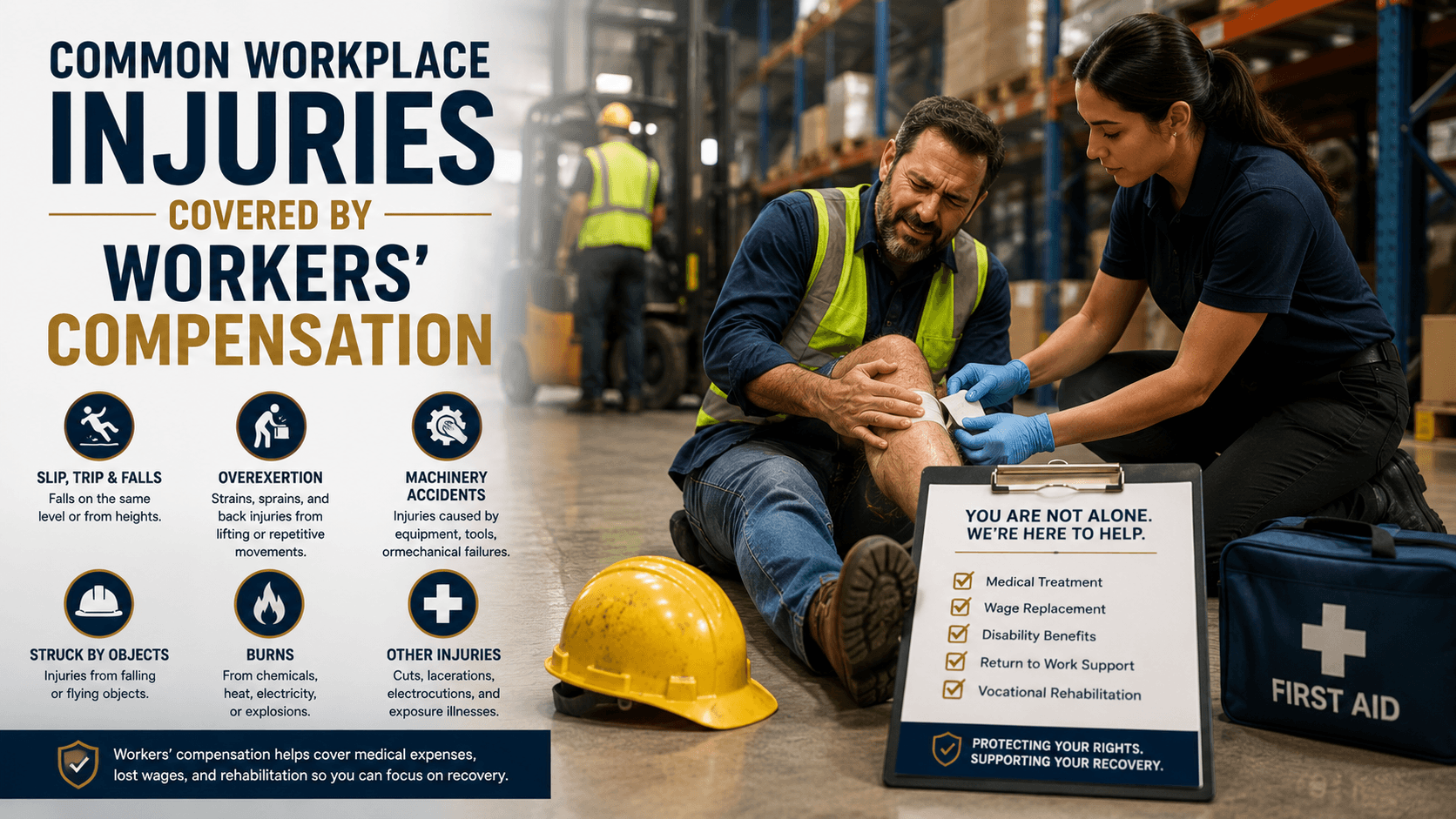
Common workplace injuries may include falls, fractures, back injuries, repetitive stress injuries, burns, head injuries, hearing loss, occupational illnesses, machinery accidents, and vehicle-related injuries, depending on applicable law.
Are repetitive stress injuries covered by workers’ compensation?
In many jurisdictions, repetitive stress injuries such as carpal tunnel syndrome may qualify if they arise out of employment and satisfy applicable legal requirements.
Can occupational illnesses qualify for workers’ compensation?
Yes. Certain work-related illnesses caused by workplace exposure or occupational conditions may qualify, depending on the facts and applicable workers’ compensation laws.
Do office workers qualify for workers’ compensation?
Yes. Office employees may experience work-related injuries such as slips and falls, ergonomic injuries, repetitive stress disorders, or other workplace accidents.
Why should workplace injuries be reported immediately?
Prompt reporting helps preserve evidence, supports medical treatment, facilitates claims processing, and assists employers in maintaining workplace safety.