
Every year, millions of employees work in environments that range from traditional offices and retail stores to factories, construction sites, hospitals, warehouses, and transportation facilities. Although employers and employees alike strive to maintain safe workplaces, accidents and occupational illnesses can still occur. A workplace injury may result in medical expenses, lost income, rehabilitation needs, and temporary or permanent changes to an employee’s ability to perform their job. Workers’ compensation is a system designed to provide certain benefits to eligible employees who suffer work-related injuries or illnesses.
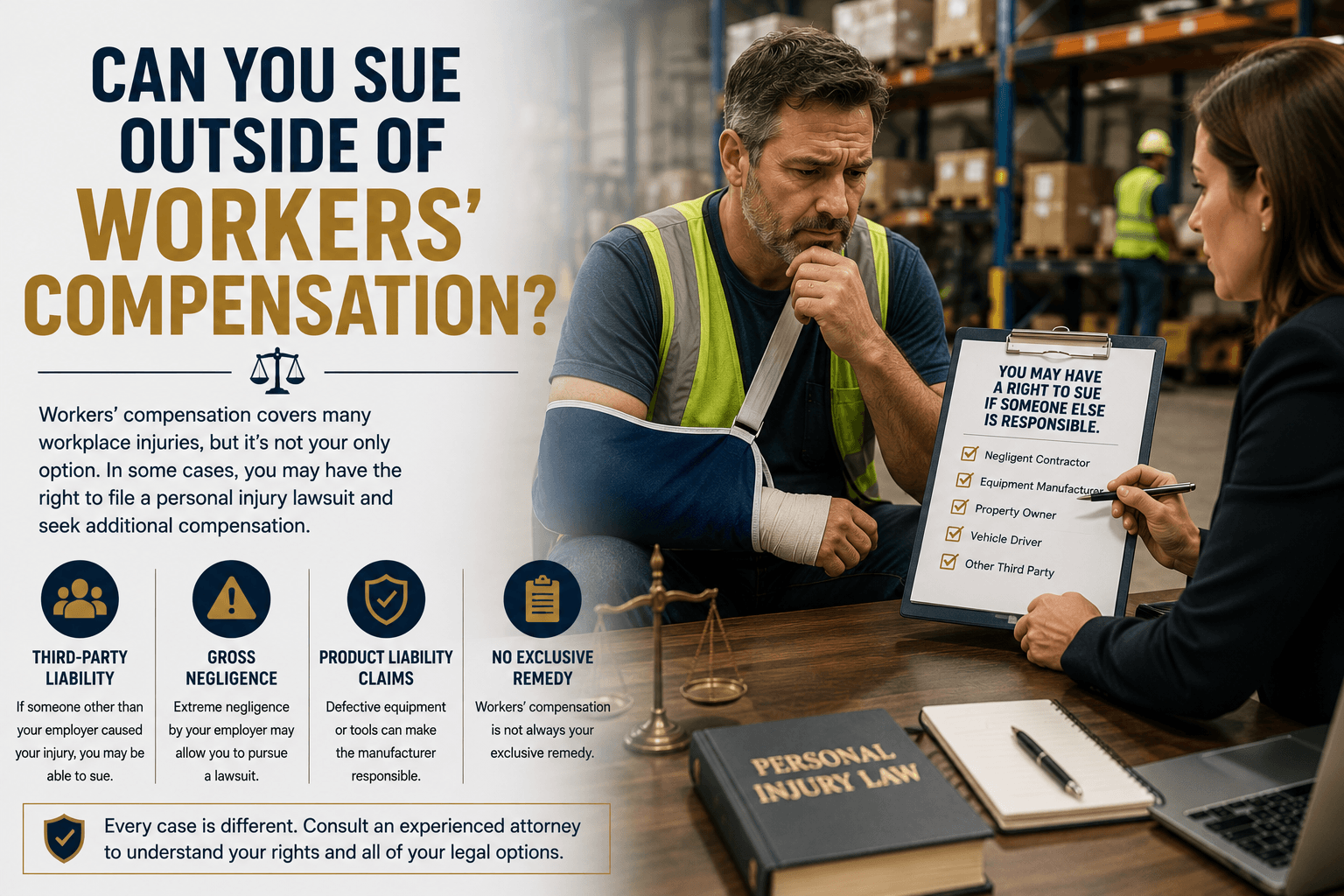
Rather than requiring injured workers to prove fault in many situations, workers’ compensation systems generally provide access to specified benefits according to applicable laws and regulations. In exchange, employees may be subject to limitations on bringing certain legal claims against their employers, depending on the jurisdiction and circumstances.
Understanding how workers’ compensation works helps employees recognize their rights and responsibilities while providing a better understanding of the claims process following a workplace injury.
What Is Workers’ Compensation?
Workers’ compensation is a system established by law that provides benefits to eligible employees who experience work-related injuries or occupational illnesses.
Although laws vary by jurisdiction, workers’ compensation programs generally aim to:
- Provide medical benefits
- Replace a portion of lost wages
- Support rehabilitation
- Assist injured employees during recovery
- Encourage workplace safety
Workers’ compensation is typically funded through insurance or other employer-sponsored coverage required by applicable law.
Why Workers’ Compensation Exists
Before workers’ compensation systems were developed, injured employees often had to pursue lengthy legal proceedings to recover compensation after workplace injuries.
Modern workers’ compensation systems seek to:
- Provide faster access to benefits
- Reduce workplace disputes
- Promote employee recovery
- Improve workplace safety
- Create a structured process for handling workplace injuries
These systems are designed to balance the interests of employees and employers while encouraging safe working environments.
Who May Be Covered?
Coverage depends on applicable laws, employment status, and the specific facts of each case.
Individuals who may be covered include:
- Full-time employees
- Part-time employees
- Seasonal workers
- Temporary employees
- Apprentices
- Certain public employees
Coverage rules differ by jurisdiction, employer type, and industry.
Common Workplace Injuries
Workers’ compensation may apply to many different types of work-related injuries.
Examples include:
- Slip and fall injuries
- Back injuries
- Fractures
- Head injuries
- Repetitive stress injuries
- Burns
- Machinery accidents
- Falling object injuries
- Occupational illnesses
- Exposure-related conditions
Each claim is evaluated according to the applicable legal standards and available evidence.
Occupational Illnesses
Not every workers’ compensation claim involves a sudden accident.
Some claims arise from occupational illnesses that develop over time.
Examples include:
- Respiratory conditions
- Hearing loss
- Occupational skin disorders
- Chemical exposure illnesses
- Repetitive motion disorders
- Certain work-related infectious diseases
Medical evidence often plays an important role in establishing the relationship between an illness and employment.
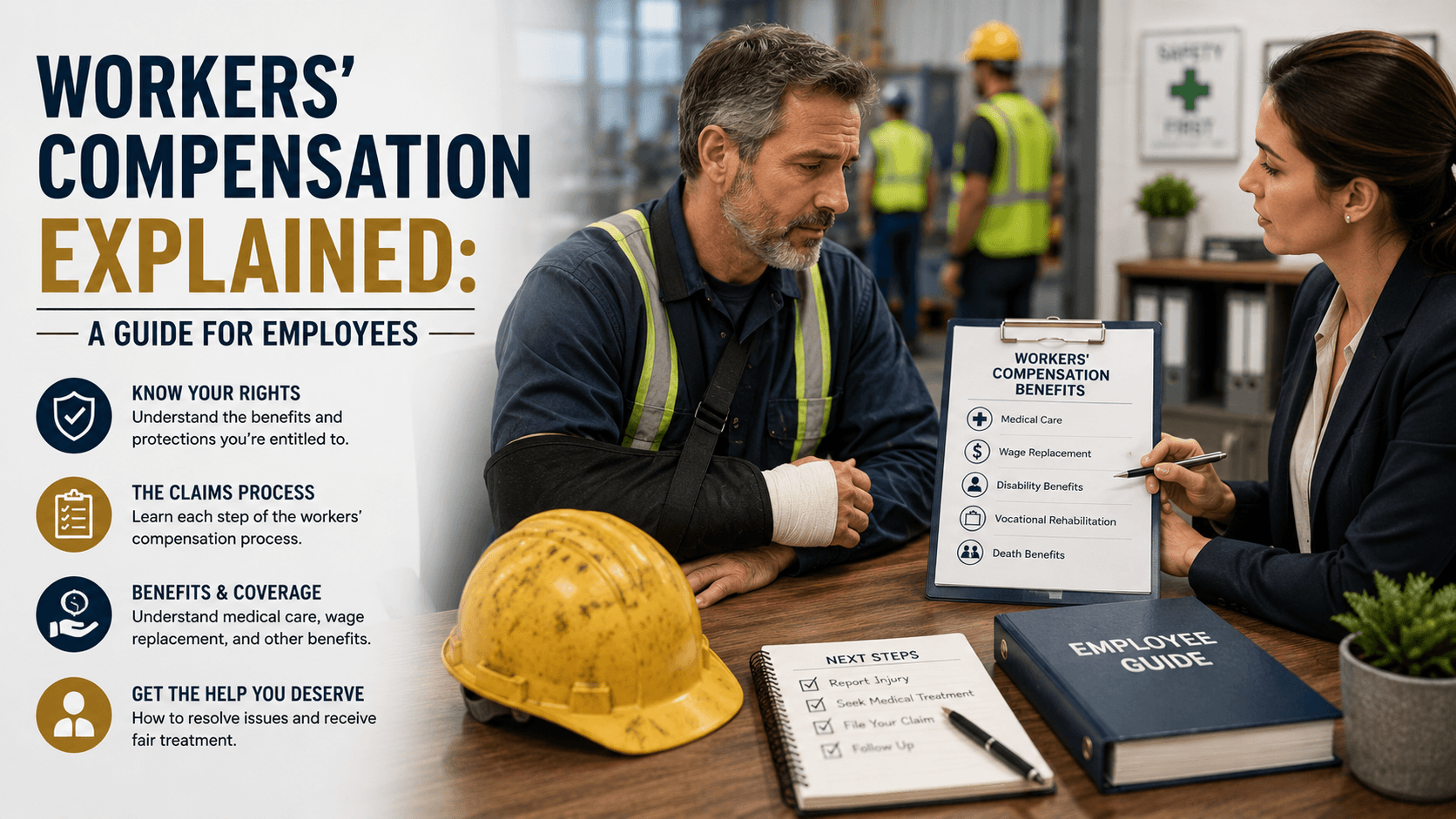
Benefits That May Be Available
Workers’ compensation programs commonly provide several categories of benefits.
Medical Benefits
Medical benefits may include:
- Emergency treatment
- Hospital care
- Physician visits
- Diagnostic testing
- Surgery
- Prescription medications
- Physical therapy
- Rehabilitation
- Medical equipment
Coverage varies according to applicable laws and the facts of the claim.
Wage Replacement Benefits
If a work-related injury prevents an employee from working, wage replacement benefits may be available.
Depending on applicable law, benefits may relate to:
- Temporary disability
- Permanent disability
- Partial disability
- Total disability
Workers’ compensation benefits generally replace only a portion of lost wages rather than the employee’s full income.
Rehabilitation Services
Some employees require additional assistance before returning to work.
Rehabilitation services may include:
- Physical therapy
- Occupational therapy
- Vocational rehabilitation
- Job retraining
- Functional capacity evaluations
These services aim to support recovery and improve the employee’s ability to return to suitable employment.
Death Benefits
In tragic circumstances involving fatal workplace injuries or illnesses, certain surviving family members may be eligible for benefits under applicable workers’ compensation laws.
Eligibility and available benefits vary by jurisdiction.
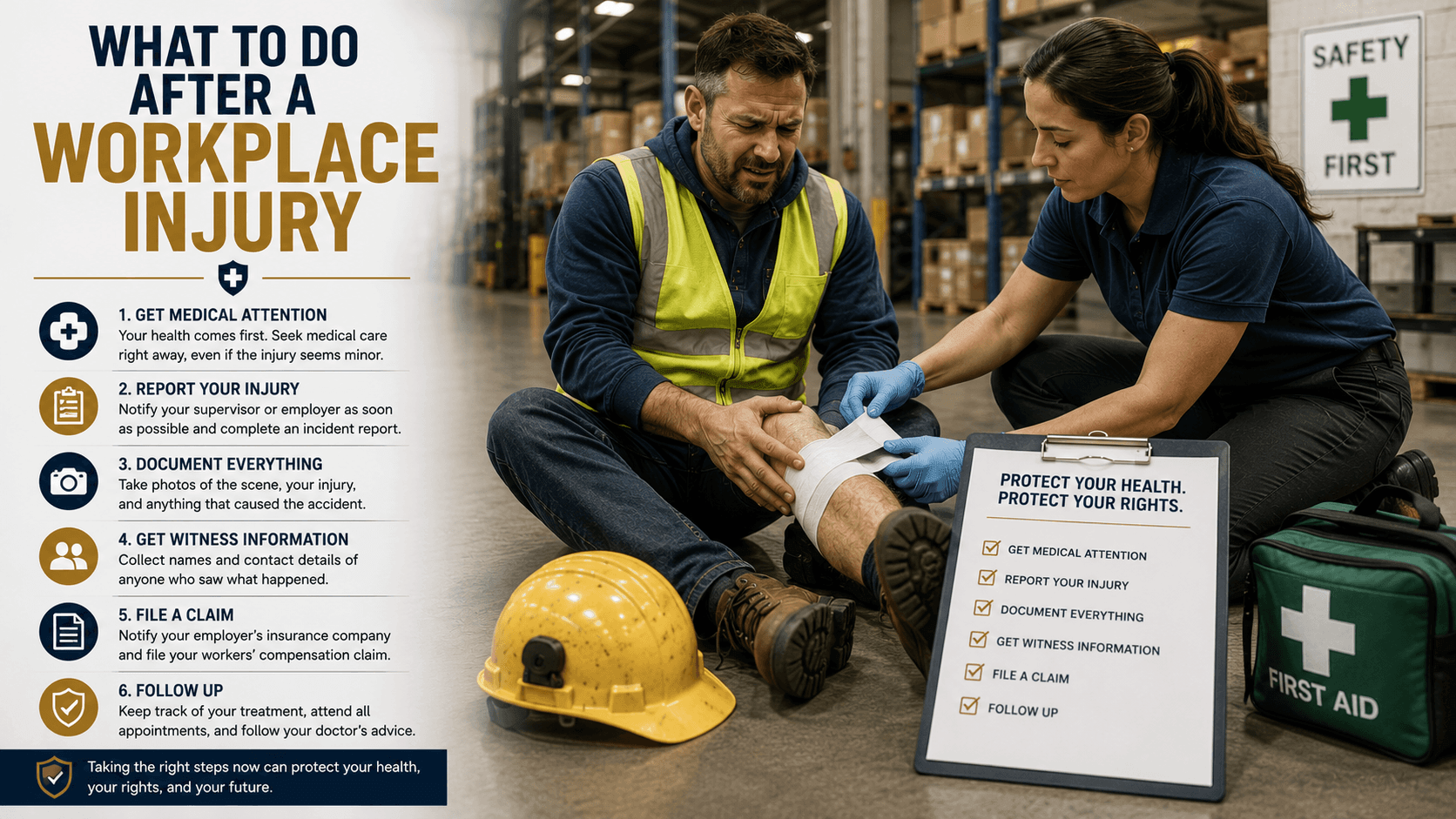
What Employees Should Do After a Workplace Injury
Although every situation is unique, several steps are generally recommended after a workplace injury.
These may include:
- Seek immediate medical attention.
- Report the injury to the employer as soon as possible.
- Follow workplace reporting procedures.
- Keep copies of medical records.
- Document accident details.
- Save receipts for injury-related expenses.
- Attend follow-up medical appointments.
Prompt reporting and accurate documentation often help support the claims process.
Employer Responsibilities
Employers generally have legal obligations relating to workplace safety and workers’ compensation.
Responsibilities may include:
- Maintaining a reasonably safe workplace
- Carrying required workers’ compensation insurance where applicable
- Reporting workplace injuries
- Cooperating during claim investigations
- Providing required notices
- Maintaining workplace safety programs
Specific responsibilities vary according to jurisdiction.
How Workers’ Compensation Claims Are Evaluated
Each claim is reviewed based on the available evidence.
Investigators may consider:
- Medical records
- Accident reports
- Employment records
- Witness statements
- Workplace safety documentation
- Physician evaluations
- Applicable workers’ compensation laws
The evaluation focuses on whether the injury or illness is work-related under the governing legal standards.
Common Reasons Claims Become Complicated
Some workers’ compensation claims are straightforward, while others involve disputed issues.
Examples include:
- Questions about whether the injury occurred at work
- Pre-existing medical conditions
- Delayed reporting
- Disputes regarding medical treatment
- Conflicting medical opinions
- Employment status questions
Each issue is evaluated according to the facts of the claim and applicable law.
Common Misconceptions About Workers’ Compensation
Myth: Workers’ Compensation Covers Every Injury
Workers’ compensation generally applies to work-related injuries or occupational illnesses that satisfy applicable legal requirements.
Myth: Employees Must Prove Employer Negligence
Many workers’ compensation systems operate without requiring employees to prove employer fault in order to receive eligible benefits.
Myth: Workers’ Compensation Replaces Full Salary
Wage replacement benefits typically provide only a percentage of lost income, subject to applicable legal limits.
Myth: Office Workers Never Qualify
Employees in office environments may also experience work-related injuries or occupational illnesses, including repetitive stress injuries, slips and falls, or ergonomic conditions.
Technology and the Future of Workers’ Compensation
Technology continues improving workplace safety and claims administration.
Examples include:
- Electronic claims management systems
- Telemedicine services
- Wearable safety devices
- Artificial intelligence-assisted claims review
- Ergonomic monitoring technology
- Digital medical records
- Predictive workplace safety analytics
- Remote rehabilitation programs
These innovations may improve both workplace safety and the efficiency of workers’ compensation programs.
Preventing Workplace Injuries
Although accidents cannot always be prevented, many workplace injuries can be reduced through proactive safety measures.
Examples include:
- Employee safety training
- Proper equipment maintenance
- Personal protective equipment
- Ergonomic workstations
- Hazard reporting programs
- Routine workplace inspections
- Safe lifting techniques
- Emergency preparedness planning
A strong workplace safety culture benefits both employees and employers.
Conclusion
Workers’ compensation provides an important system of benefits for employees who experience work-related injuries or occupational illnesses. By offering medical care, wage replacement, rehabilitation services, and other benefits where applicable, workers’ compensation programs help support injured workers during recovery while promoting workplace safety.
Although the specific rules vary by jurisdiction, understanding the basic principles of workers’ compensation helps employees know what to expect after a workplace injury and why prompt reporting, proper documentation, and compliance with applicable procedures are important throughout the claims process.
Frequently Asked Questions
What is workers’ compensation?
Workers’ compensation is a legal system that provides specified benefits to eligible employees who suffer work-related injuries or occupational illnesses, subject to applicable laws.
What injuries are generally covered by workers’ compensation?
Coverage may include workplace accidents, repetitive stress injuries, occupational illnesses, falls, machinery accidents, burns, and other work-related injuries, depending on the jurisdiction and the facts of the claim.
Does workers’ compensation pay full wages?
Workers’ compensation wage replacement benefits generally provide only a portion of an employee’s lost income rather than full salary.
Do employees have to prove employer negligence?
In many workers’ compensation systems, eligible employees are not required to prove employer negligence to receive benefits for covered work-related injuries.
Why should workplace injuries be reported quickly?
Prompt reporting helps preserve evidence, supports medical documentation, facilitates claim processing, and assists employers in complying with legal reporting requirements.