
Filing a disability claim is only one part of the overall process. In many cases, applicants may be asked to participate in a disability claim medical examination or attend an Independent Medical Examination (IME) as part of the assessment. While receiving this request can feel intimidating, understanding its purpose and knowing how to prepare can make the experience less stressful.
An Independent Medical Examination is generally conducted by a qualified healthcare professional who evaluates an individual’s medical condition, reviews relevant records, and provides an independent opinion regarding the functional impact of the reported disability. Depending on the disability program or insurance policy, an IME may help decision-makers better understand complex medical conditions or clarify conflicting medical evidence.
Preparation is not about trying to influence the outcome of the examination. Instead, it involves ensuring that your medical records are organized, your information is accurate, and you understand what to expect during the evaluation.
This guide explains how disability claim reviews and Independent Medical Examinations typically work and offers practical steps to help applicants approach the process with confidence.
What Is a Disability Claim Review?
A disability claim review is a formal assessment conducted after a claim has been submitted or while benefits are being received.
The purpose of the review may include:
- Verifying medical information.
- Assessing continued eligibility.
- Reviewing updated treatment records.
- Evaluating changes in functional abilities.
- Confirming compliance with policy or program requirements.
Some reviews occur shortly after an application is submitted, while others may take place periodically for ongoing disability benefits.
What Is an Independent Medical Examination (IME)?
An Independent Medical Examination is a medical assessment performed by a healthcare professional who has not been directly involved in the applicant’s treatment.
The examiner may:
- Review medical records.
- Ask questions about symptoms.
- Discuss treatment history.
- Perform a physical or psychological evaluation, where appropriate.
- Assess functional abilities.
The purpose is to provide an independent medical opinion based on the available information and examination findings.
The exact procedures vary depending on the type of disability claim and the nature of the medical condition.
Why Are IMEs Requested?
There are several reasons why a disability claim medical examination or IME may be requested.
Examples include:
- Additional clarification is needed.
- Medical records contain conflicting information.
- Updated assessments are required.
- The condition has changed over time.
- Long-term disability benefits are being reviewed.
An IME should not automatically be viewed as a sign that a claim will be approved or denied. It is simply one component of the overall evaluation process.
Understanding the Examiner’s Role
The healthcare professional conducting the examination is generally responsible for providing an objective assessment.
Their role is to:
- Evaluate the reported condition.
- Document clinical observations.
- Assess functional limitations.
- Prepare a medical report.
The examiner typically does not make the final decision regarding disability benefits. Instead, their findings become part of the evidence reviewed by the organization responsible for deciding the claim.
Preparing Before the Appointment
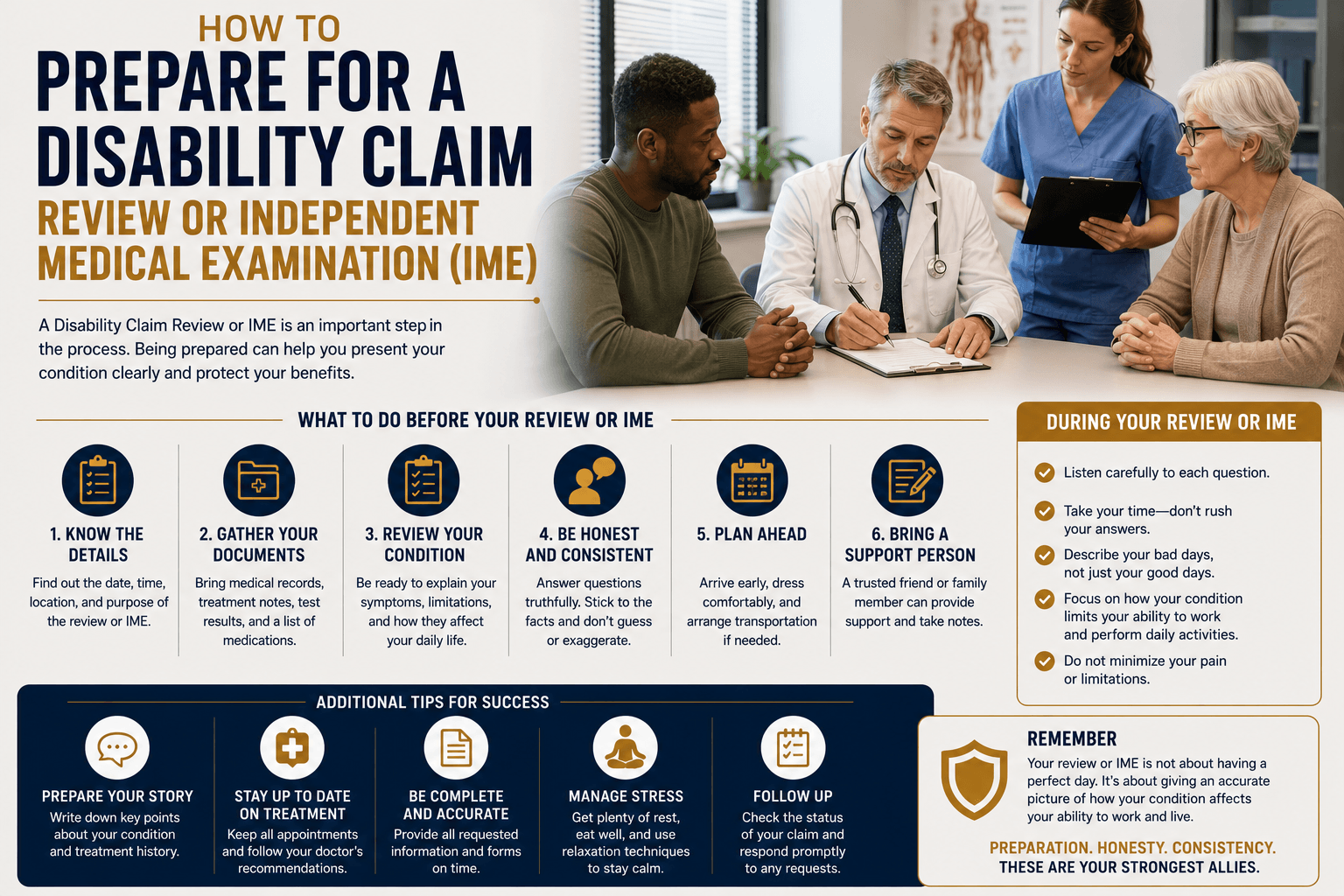
Preparation begins well before the examination date.
Helpful steps include:
- Reviewing the appointment details.
- Confirming the location and time.
- Organizing medical documents.
- Bringing identification if required.
- Arriving early.
Reducing unnecessary stress beforehand allows applicants to focus on providing accurate information during the evaluation.
Organize Your Medical Records
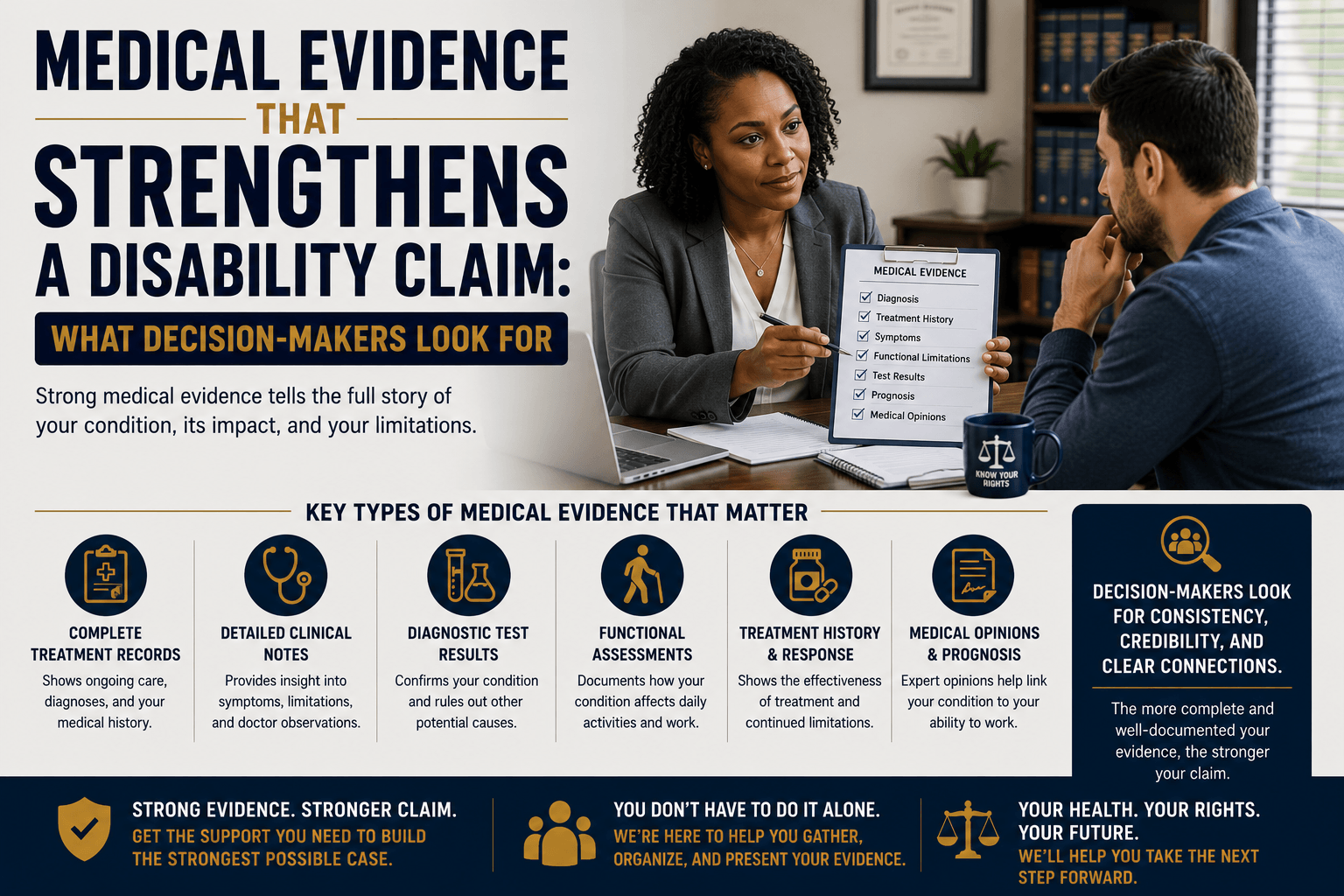
Keeping medical records well organized is one of the best ways to prepare.
Important documents may include:
- Physician reports.
- Specialist evaluations.
- Diagnostic imaging.
- Laboratory results.
- Medication lists.
- Rehabilitation records.
- Treatment summaries.
Although the examiner may already have access to many records, maintaining your own organized copies helps ensure you understand your medical history.
Be Honest and Accurate
During the examination, answer questions truthfully and accurately.
Describe:
- Current symptoms.
- Daily limitations.
- Treatment received.
- Medication use.
- Changes in your condition.
Avoid exaggerating symptoms or minimizing genuine difficulties.
Providing clear and consistent information helps create a more accurate assessment.
Explain Functional Limitations Clearly
Many disability evaluations focus less on the diagnosis itself and more on how the condition affects daily life.
Examples include difficulty with:
- Standing for extended periods.
- Walking long distances.
- Sitting continuously.
- Climbing stairs.
- Concentrating.
- Remembering instructions.
- Lifting objects.
- Completing routine household tasks.
Using real-life examples often helps explain the practical impact of your condition more effectively than general descriptions.
Review Your Medical History
Before attending the appointment, take time to review your medical history.
Consider:
- When symptoms first appeared.
- Major treatment milestones.
- Hospitalizations.
- Surgeries.
- Rehabilitation programs.
- Current medications.
- Ongoing specialist care.
Being familiar with these details helps you answer questions accurately and consistently.
Understand That Every Examination Is Different
The nature of an IME depends on the condition being evaluated.
Some examinations may focus primarily on reviewing records and discussing symptoms.
Others may involve:
- Physical movement assessments.
- Range-of-motion testing.
- Neurological observations.
- Cognitive evaluations.
- Psychological interviews.
The procedures generally reflect the specific medical issues involved in the disability claim.
Common Mistakes to Avoid
Applicants sometimes make avoidable mistakes during disability claim medical examination.
Examples include:
- Arriving late.
- Forgetting important medical information.
- Providing inconsistent answers.
- Speculating when unsure.
- Becoming argumentative.
- Omitting recent treatment updates.
If you do not know the answer to a question, it is appropriate to say so rather than guessing.
Keep Your Information Consistent
Consistency is one of the most important aspects of any disability claim.
Information discussed during the examination should generally align with:
- Medical records.
- Physician reports.
- Previous claim forms.
- Treatment history.
Minor differences may naturally occur as medical conditions change, but significant inconsistencies may prompt additional questions.
Continue Following Your Treatment Plan
An upcoming disability examination should not interrupt ongoing medical care.
Continue attending:
- Medical appointments.
- Physical therapy sessions.
- Counseling appointments.
- Specialist consultations.
Maintaining consistent treatment demonstrates ongoing management of the condition and ensures medical records remain current.
What Happens After the Examination?
After the IME is completed, the examiner usually prepares a written report summarizing:
- Medical findings.
- Examination results.
- Functional observations.
- Professional opinions.
This report becomes one piece of the evidence considered during the disability claim review.
The final decision generally takes into account:
- Medical records.
- Physician opinions.
- Diagnostic testing.
- Treatment history.
- Policy or program requirements.
- Other supporting documentation.
Practical Tips for a Smooth Examination
To help the appointment go as smoothly as possible:
- Get adequate rest beforehand.
- Wear comfortable clothing if a physical examination is expected.
- Bring requested documents.
- Answer questions honestly.
- Listen carefully before responding.
- Remain calm and respectful throughout the appointment.
Good preparation allows the examiner to conduct a thorough and accurate assessment.
Looking Ahead
As healthcare technology continues to improve, disability claim medical examinations are evolving through electronic medical records, telemedicine, digital imaging, and enhanced communication between healthcare providers.
Despite these advancements, the basic principles remain unchanged.
Clear medical evidence, consistent documentation, accurate communication, and honest participation continue to be the foundation of a well-supported disability claim.
Applicants who understand the review process are often better prepared to navigate examinations with confidence and reduce unnecessary stress throughout the claims process.
Conclusion
A disability claim examination or Independent Medical Examination is an important part of many disability benefit assessments. While the process may seem unfamiliar, proper preparation can help applicants approach the examination with greater confidence and clarity.
Organizing medical records, reviewing treatment history, communicating honestly, and explaining functional limitations accurately all contribute to a more complete understanding of the medical condition being evaluated. By focusing on accuracy rather than assumptions, applicants can ensure that decision-makers receive reliable information when reviewing their disability claim.
Frequently Asked Questions
What is an Independent Medical Examination (IME)?
An IME is an evaluation performed by an independent healthcare professional to assess a medical condition and provide an objective opinion for a disability claim review.
Does attending an IME mean my disability claim will be denied?
No. An IME is simply one part of the evidence-gathering process and does not determine the final outcome of a disability claim.
What should I bring to a disability claim medical examination?
Bring identification if requested, review your medical history beforehand, and keep copies of important medical records and medication information readily available.
Should I discuss my daily limitations during the examination?
Yes. Explaining how your condition affects everyday activities helps provide a clearer understanding of your functional abilities.
What happens after the examination is completed?
The examiner prepares a medical report, which is reviewed alongside other evidence such as medical records, physician reports, diagnostic tests, and policy requirements before a decision is made on the claim.