
Class action lawsuits are often discussed in news reports after a settlement has been reached or a major court ruling has been announced. By that point, however, the case has usually been progressing through the legal system for months or even years.
What many people don’t see is the lengthy process that occurs before a settlement is reached or a trial begins. Investigations, legal research, evidence gathering, court hearings, procedural reviews, and negotiations all play important roles in determining how a class action develops.
Although the exact procedures differ between jurisdictions, most class action lawsuits follow a series of similar stages designed to ensure fairness, efficiency, and due process for everyone involved.
Understanding these stages helps consumers appreciate why complex class actions require time and why large cases often involve extensive preparation before reaching a resolution.
This guide explains the typical journey of a class action lawsuit—from the first signs of a widespread problem through settlement discussions and court oversight.
Step 1: Identifying a Widespread Legal Issue
Every class action begins with the recognition that multiple people may have experienced similar harm.
The issue may come to light through:
- Consumer complaints
- Product recalls
- Regulatory investigations
- News reports
- Employee reports
- Medical findings
- Data breach notifications
At this stage, no class action officially exists.
Instead, individuals, attorneys, regulators, or consumer advocacy organizations begin examining whether the underlying problem extends beyond isolated incidents.
The central question is whether a large group of people may have been affected by substantially similar conduct.
Step 2: Conducting a Preliminary Investigation
Once a potential widespread issue has been identified, attorneys generally conduct an extensive investigation before deciding whether to file a lawsuit.
This phase may involve reviewing:
- Consumer records
- Company documents
- Public reports
- Product information
- Government investigations
- Technical data
- Medical literature
- Industry standards
Attorneys seek to determine whether sufficient evidence exists to support legal claims on behalf of multiple individuals.
Not every investigation ultimately results in litigation.
Some matters conclude because available evidence does not support collective legal action.
Step 3: Evaluating Whether a Class Action Is Appropriate
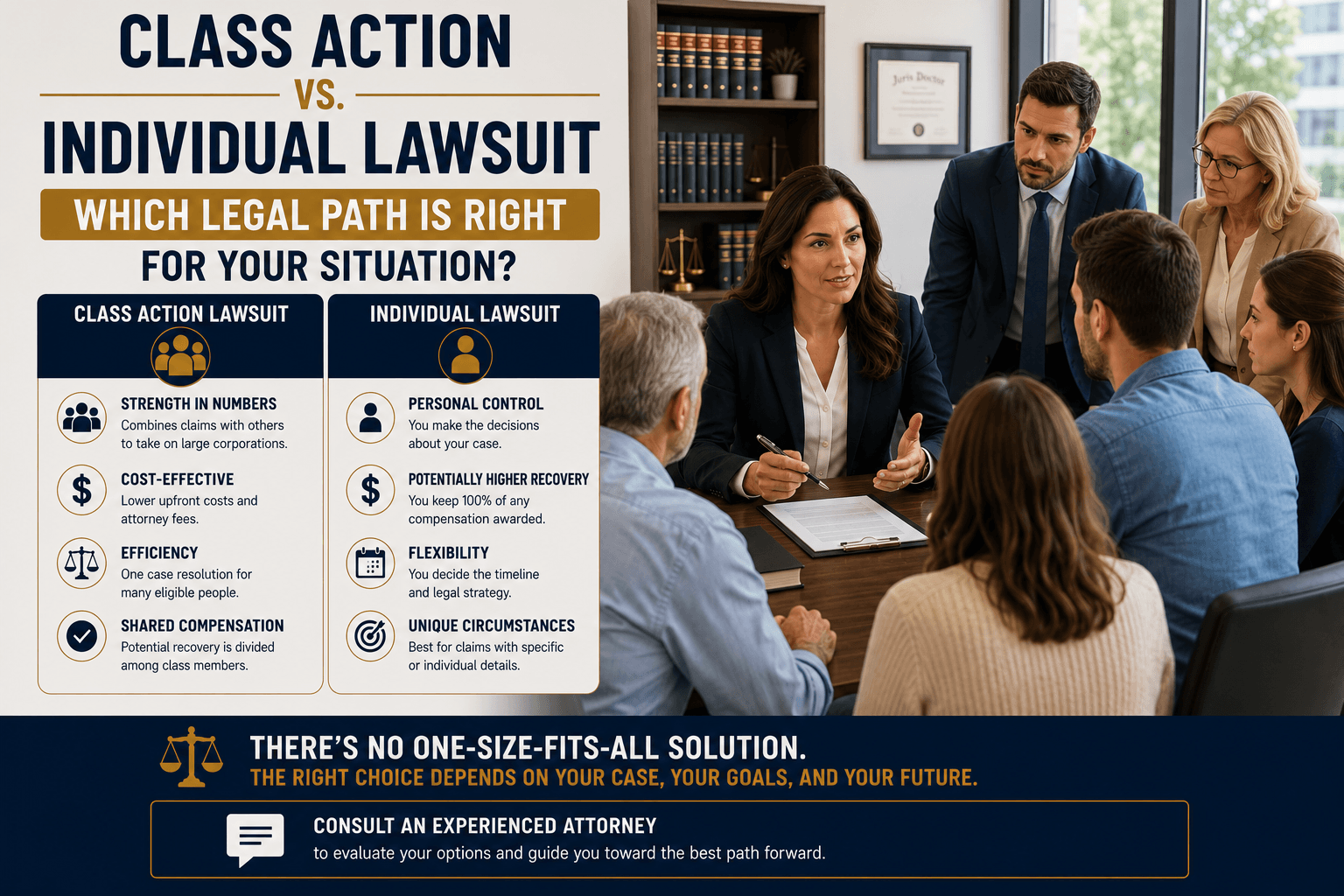
Even when numerous people appear to have been affected, a class action is not always the best legal approach.
Legal professionals consider questions such as:
- Did people experience similar harm?
- Are common legal issues involved?
- Would individual lawsuits be impractical?
- Can one case efficiently address the dispute?
If the answers support collective litigation, attorneys may begin preparing a proposed class action complaint.
Otherwise, individual lawsuits or other legal remedies may be more appropriate.
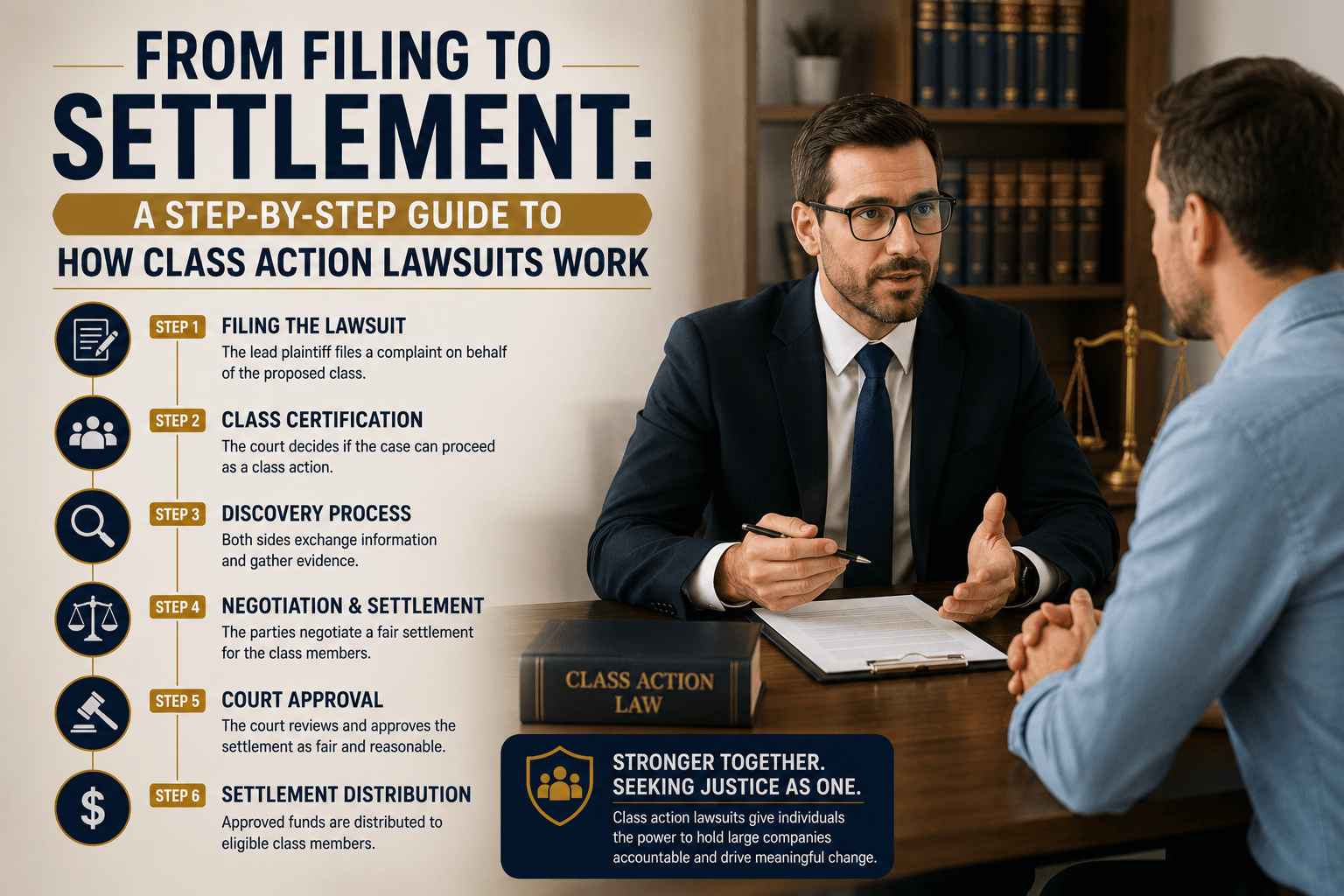
Step 4: Filing the Lawsuit
The formal legal process begins when representative plaintiffs file a complaint with the appropriate court.
The complaint generally outlines:
- The alleged conduct
- The legal claims
- The proposed class
- The relief being requested
- The factual basis supporting the lawsuit
Filing the complaint officially starts the litigation process.
However, filing alone does not automatically create a certified class action.
Several important procedural steps remain before the case can proceed on behalf of a broader group.
Step 5: Selecting Representative Plaintiffs
Representative plaintiffs play an important role throughout the litigation.
These individuals typically have claims that closely resemble those of the proposed class.
Their responsibilities may include:
- Providing information
- Assisting with evidence
- Participating in legal proceedings
- Working with legal counsel
- Representing the broader interests of class members
Courts generally evaluate whether representative plaintiffs can fairly and adequately represent the proposed class.
This helps ensure that the interests of all class members remain protected.
Step 6: Serving the Defendant
After the lawsuit is filed, the defendant receives formal notice of the legal action.
The defendant then has an opportunity to:
- Respond to the allegations
- Present legal defenses
- Challenge factual claims
- File procedural motions
At this stage, both sides begin presenting their initial legal positions.
The case often becomes significantly more detailed as litigation progresses.
Step 7: The Defendant’s Initial Response
The defendant’s response does not necessarily determine whether the case will proceed.
Instead, it begins the formal exchange of legal arguments.
Depending on the circumstances, defendants may:
- Deny liability
- Challenge legal theories
- Dispute factual allegations
- Request dismissal
- Contest procedural issues
These early responses help define the issues that will require further examination during litigation.
Step 8: Seeking Class Certification
Class certification represents one of the most significant stages in any class action lawsuit.
At this point, the court evaluates whether the proposed case satisfies the legal requirements necessary for collective treatment.
Certification does not determine whether the defendant is liable.
Instead, it addresses whether the lawsuit should proceed as a class action.
Courts generally examine factors such as:
- Similarity of claims
- Common legal questions
- Adequacy of representation
- Efficiency of collective litigation
Certification decisions help ensure that class actions remain appropriate for disputes involving large groups of similarly affected individuals.
Why Certification Matters
Without certification, the lawsuit generally proceeds only on behalf of the individual plaintiffs who filed it.
If certification is granted, the litigation may continue on behalf of everyone included within the certified class definition.
Because certification significantly affects both plaintiffs and defendants, courts evaluate these decisions carefully.
Detailed legal arguments, supporting evidence, and procedural hearings frequently accompany this stage.
Step 9: Discovery
Once the litigation moves forward, both parties enter a phase known as discovery.
Discovery allows each side to obtain information relevant to the dispute.
This process may include reviewing:
- Internal company documents
- Emails
- Contracts
- Product testing records
- Financial information
- Employment records
- Technical reports
- Expert analyses
Discovery often represents one of the longest and most resource-intensive stages of class action litigation.
Large cases may involve reviewing millions of documents over extended periods.
Depositions and Expert Testimony
Discovery frequently includes depositions.
During a deposition, witnesses answer questions under oath before trial.
Individuals who may participate include:
- Company executives
- Employees
- Subject matter experts
- Representative plaintiffs
- Industry specialists
Expert testimony may also become important when cases involve:
- Medical issues
- Engineering
- Financial analysis
- Product design
- Data security
- Environmental science
Experts help explain complex technical issues that may influence the outcome of the litigation.
Building the Evidentiary Record
Throughout discovery, both sides continue gathering evidence that supports their legal positions.
Evidence may include:
- Business records
- Scientific studies
- Consumer complaints
- Internal communications
- Product specifications
- Regulatory findings
- Witness testimony
The goal is to create a comprehensive factual record that allows the court to evaluate the disputed issues fairly.
By the conclusion of discovery, both plaintiffs and defendants typically possess a much clearer understanding of the strengths and weaknesses of their respective positions.
This often becomes an important foundation for the next stages of litigation, including settlement discussions, mediation, or trial preparation.
Step 10: Exploring Settlement Negotiations
After discovery has progressed and both sides have a clearer understanding of the evidence, settlement discussions often begin.
Contrary to popular belief, settlement negotiations can occur at almost any stage of a class action lawsuit. Some cases begin discussions shortly after filing, while others do not negotiate until discovery is nearly complete.
During negotiations, the parties may discuss:
- Financial compensation
- Product replacements
- Refund programs
- Changes to company policies
- Future compliance measures
- Consumer notification requirements
Settlement does not necessarily mean either side admits wrongdoing. In many cases, it simply reflects a practical decision to resolve the dispute without continuing lengthy litigation.
Mediation and Alternative Dispute Resolution
Many complex class actions involve mediation before proceeding toward trial.
Mediation is a structured negotiation process facilitated by an independent third party known as a mediator.
The mediator does not decide who wins the case. Instead, they help both sides:
- Identify areas of agreement
- Clarify disputed issues
- Explore possible compromises
- Improve communication
- Work toward a voluntary resolution
Because mediation is generally less formal than court proceedings, it can provide an efficient way to resolve disputes while reducing costs and uncertainty.
What Happens if No Settlement Is Reached?
Not every class action ends through negotiation.
If the parties cannot reach an agreement, the case may proceed toward trial.
During trial, each side presents:
- Witness testimony
- Documentary evidence
- Expert opinions
- Legal arguments
The court—or, where applicable, a jury—considers the evidence before reaching a decision on the disputed issues.
Trials are often time-consuming and involve considerable preparation, which is one reason many parties continue negotiating even while preparing for court.
Step 11: Court Review of a Proposed Settlement
Even when the parties reach an agreement, the settlement is not automatically finalized.
Because a class action affects many individuals, courts typically review proposed settlements to ensure they are fair, reasonable, and appropriate for the class as a whole.
During this stage, the court may examine:
- The proposed compensation
- The method for distributing benefits
- Attorney fee requests
- The fairness of the negotiated terms
- The interests of absent class members
Judicial oversight helps protect the rights of everyone included in the class, including individuals who were not directly involved in the negotiations.
Step 12: Notifying Class Members
If the court grants preliminary approval to a proposed settlement, eligible class members are generally notified.
Depending on the case, notice may be provided through:
- Postal mail
- Company websites
- Newspapers
- Digital advertising
- Official settlement websites
The purpose of the notice is to explain:
- The nature of the lawsuit
- Who qualifies as a class member
- The proposed settlement
- Important deadlines
- Available legal rights
- Instructions for submitting claims, if required
Providing clear notice is an important part of ensuring transparency throughout the class action process.
Step 13: Claims Administration
Once settlement procedures begin, a claims administration process is often established.
This stage focuses on identifying eligible participants and distributing benefits according to the court-approved settlement.
Depending on the case, class members may be asked to:
- Complete claim forms
- Provide proof of purchase
- Submit supporting documentation
- Confirm eligibility information
- Update contact details
In some settlements, benefits are distributed automatically when sufficient records already exist.
The specific procedures depend on the settlement terms and the type of claims involved.
Step 14: Distribution of Settlement Benefits
After claims have been reviewed and approved, settlement benefits are distributed.
These benefits vary widely depending on the nature of the case.
Examples include:
- Cash payments
- Refunds
- Product replacements
- Service credits
- Repair programs
- Extended warranties
- Business practice changes
Distribution may occur over several months, particularly in large cases involving significant numbers of class members.
Courts often continue supervising aspects of the settlement process to ensure that approved procedures are followed appropriately.
Step 15: Appeals and Post-Settlement Proceedings
Even after a judgment or settlement approval, additional legal proceedings may occur.
Appeals may involve questions regarding:
- Certification decisions
- Settlement approval
- Legal interpretations
- Procedural rulings
Not every case involves appeals, but when they occur, they can extend the timeline before the litigation reaches its final conclusion.
Once all required legal procedures have been completed, the class action generally comes to an end.
Why Some Class Actions Take Years
One of the most common questions people ask is why major class action lawsuits often require several years to resolve.
The answer lies in the complexity of the process.
Large cases may involve:
- Thousands or millions of affected individuals
- Extensive documentary evidence
- Multiple expert witnesses
- Technical scientific issues
- Financial analysis
- Numerous procedural hearings
Each stage is designed to protect fairness, accuracy, and due process.
Although lengthy timelines can sometimes be frustrating, they often reflect the careful review required for disputes affecting large groups of people.
The Importance of Documentation Throughout the Process
Accurate records remain valuable from the beginning of a dispute until its conclusion.
Depending on the nature of the litigation, helpful documentation may include:
- Receipts
- Contracts
- Account statements
- Medical records
- Warranty information
- Product serial numbers
- Correspondence
- Employment records
Maintaining organized records can simplify eligibility verification if participation becomes available later.
How Technology Is Improving Class Action Administration
Technology has significantly improved many aspects of modern class action litigation.
Today, digital tools assist with:
- Identifying eligible class members
- Managing court documents
- Distributing legal notices
- Processing claims
- Communicating settlement updates
- Tracking case progress
Online claim portals have made participation more convenient in many cases, while electronic records often improve the efficiency of claims administration.
As technology continues to evolve, class action procedures are likely to become increasingly streamlined without compromising fairness or judicial oversight.
Conclusion
Class action lawsuits involve far more than a single courtroom appearance or settlement announcement. From identifying widespread legal issues and conducting detailed investigations to certification, discovery, negotiations, court approval, and settlement administration, each stage serves an important purpose in protecting the interests of everyone involved.
Although the process can appear lengthy, every step is designed to promote fairness, transparency, and efficiency while ensuring that similar claims are resolved consistently. For consumers, understanding how class actions progress provides valuable insight into why these cases often take time and why judicial oversight plays such an essential role.
Whether a case ultimately settles or proceeds to trial, the structured nature of class action litigation helps balance the rights of individuals, organizations, and the legal system itself. As new technologies, industries, and consumer issues continue to emerge, this process will remain an important tool for resolving large-scale legal disputes.
Frequently Asked Questions
How long does a class action lawsuit usually take?
The timeline varies depending on the complexity of the case. Some lawsuits conclude within a year, while others may require several years because of discovery, certification, negotiations, appeals, and court review.
What is the discovery phase in a class action lawsuit?
Discovery is the stage during which both sides exchange information, review documents, gather evidence, and conduct witness interviews to prepare for settlement discussions or trial.
Does every class action lawsuit end with a settlement?
No. While many class actions settle before trial, some proceed to court when the parties cannot reach an agreement.
Why must a court approve a class action settlement?
Court approval helps ensure that the proposed settlement is fair, reasonable, and adequately protects the interests of all eligible class members.
Can technology make class action lawsuits more efficient?
Yes. Digital communication, electronic document management, and online claims administration have improved the efficiency of identifying class members, distributing notices, and processing settlements.