
When applying for disability benefits, medical evidence often becomes the foundation of the entire claim. Regardless of whether an application is submitted through a government program, private insurance policy, or employer-sponsored disability plan, decision-makers typically rely on objective medical information to understand the nature of the condition and how it affects an individual’s daily life.
Many applicants believe that simply providing a diagnosis is enough to support a disability claim. In reality, a diagnosis is only one piece of a much larger picture. Reviewers generally want to understand the severity of the condition, the treatments received, the expected duration of the impairment, and—most importantly—how the condition limits a person’s ability to perform work-related tasks or everyday activities.
Strong medical evidence helps create a clear, consistent narrative that supports the facts presented in the application. The more complete and organized the documentation, the easier it becomes for reviewers to evaluate the claim fairly and accurately.
This guide explains the types of medical evidence that often strengthen disability claims and highlights practical ways applicants can build a well-supported case.
Why Medical Evidence Is So Important
Every disability claim is based on evidence rather than assumptions.
Medical documentation serves several important purposes, including:
- Confirming the existence of a medical condition.
- Demonstrating the severity of symptoms.
- Showing the progression of the illness or injury.
- Explaining treatment history.
- Identifying functional limitations.
- Supporting the expected duration of the disability.
Without sufficient documentation, reviewers may have difficulty determining whether the eligibility requirements have been met.
A Diagnosis Is Only the Starting Point
Receiving a diagnosis is an important step, but it does not automatically establish eligibility for disability benefits.
Two individuals with the same diagnosis may experience very different levels of impairment.
For example, one person may continue working with minimal limitations, while another may struggle with mobility, concentration, endurance, or chronic pain.
Because of these differences, reviewers often place greater emphasis on how a condition affects daily functioning rather than the diagnosis alone.
Physician Reports
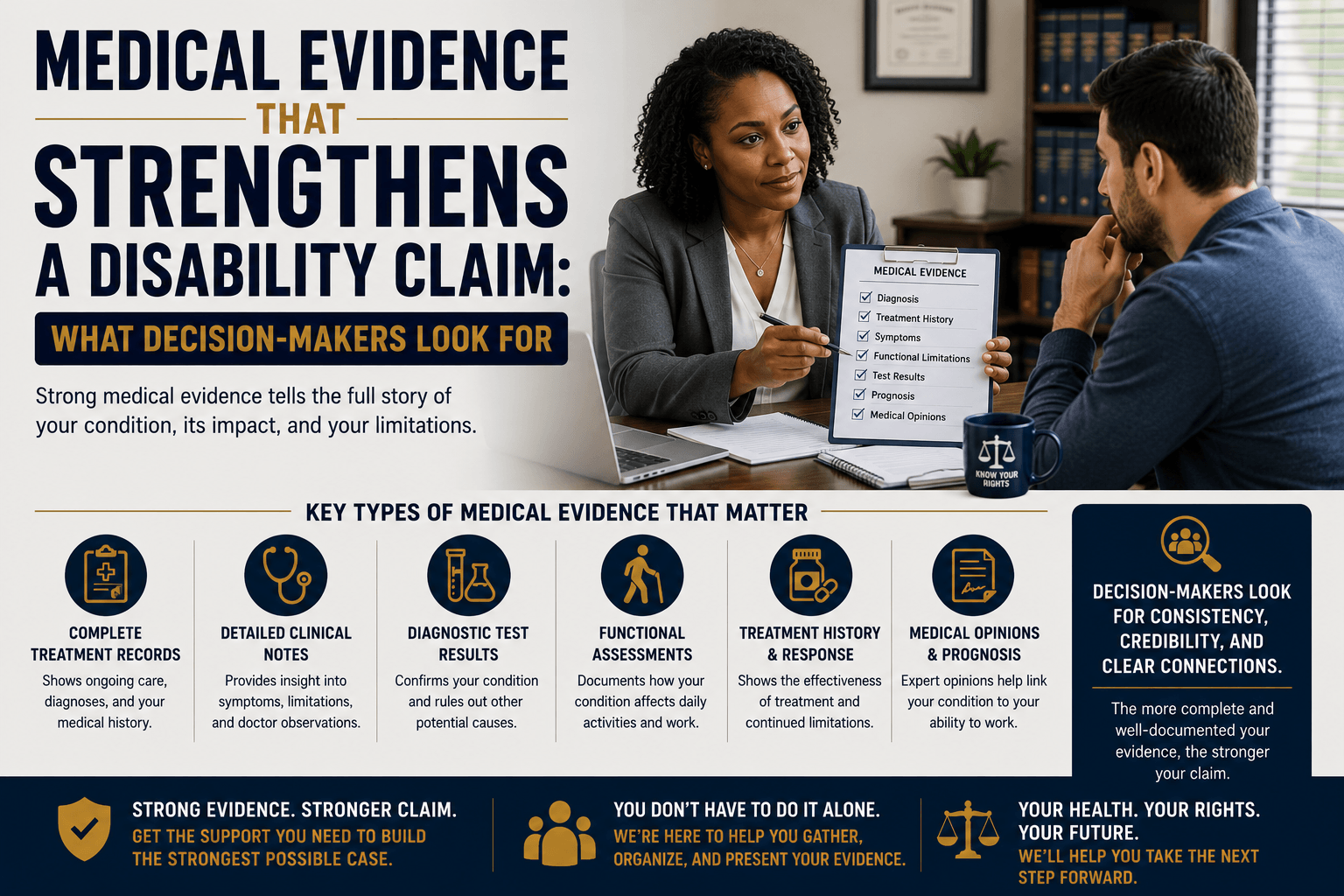
Reports from treating physicians are among the most valuable pieces of evidence in many disability claims.
A detailed physician report may include:
- Medical history
- Diagnosis
- Symptoms
- Clinical findings
- Treatment recommendations
- Prognosis
- Functional limitations
Clear explanations from healthcare providers often help reviewers better understand the practical impact of a medical condition.
Specialist Evaluations
Depending on the nature of the disability, evaluations from specialists may provide additional insight.
Examples include:
- Neurologists
- Orthopedic surgeons
- Psychiatrists
- Cardiologists
- Rheumatologists
- Oncologists
- Pulmonologists
- Endocrinologists
Specialist reports often include advanced testing, expert opinions, and condition-specific assessments that support the overall claim.
Diagnostic Test Results
Objective testing can strengthen a disability application by providing measurable medical findings.
Common examples include:
- X-rays
- MRI scans
- CT scans
- Ultrasound imaging
- Blood tests
- Pulmonary function tests
- Cardiac evaluations
- Nerve conduction studies
These tests help confirm medical conditions and may demonstrate the extent of an illness or injury.
However, test results are usually considered alongside other medical evidence rather than in isolation.
Treatment Records
A consistent treatment history often demonstrates that the applicant has actively sought medical care.
Treatment records may include:
- Clinic notes
- Hospital records
- Physical therapy reports
- Mental health counseling notes
- Rehabilitation progress
- Pain management records
These documents create a timeline that illustrates how the condition has developed over time.
Medication History
Prescription records can also provide useful supporting evidence.
Medication documentation may show:
- Ongoing treatment
- Changes in prescriptions
- Long-term disease management
- Attempts to control symptoms
In some cases, records may also describe medication side effects that affect daily functioning, such as fatigue, dizziness, reduced concentration, or impaired coordination.
Functional Capacity Matters More Than Labels
One of the most important aspects of a disability claim is demonstrating functional capacity—or, more accurately, functional limitations.
Decision-makers often evaluate whether an individual can perform activities such as:
- Walking
- Standing
- Sitting
- Lifting
- Carrying
- Reaching
- Climbing stairs
- Using hands repetitively
- Concentrating
- Remembering instructions
- Communicating effectively
Medical reports that clearly describe these limitations often provide stronger support than those listing diagnoses alone.
Mental Health Documentation
Disability claims involving mental health conditions also rely on thorough medical evidence.
Supporting documentation may include:
- Psychiatric evaluations
- Psychological assessments
- Therapy records
- Medication management notes
- Treatment plans
- Functional assessments
Rather than focusing solely on a diagnosis, reviewers typically consider how symptoms affect concentration, decision-making, communication, emotional regulation, and the ability to maintain daily routines.
Rehabilitation Records
Individuals recovering from serious injuries or illnesses often participate in rehabilitation programs.
Records from rehabilitation providers may document:
- Physical progress
- Functional improvements
- Ongoing limitations
- Therapy attendance
- Clinical observations
These reports can provide valuable insight into recovery while helping reviewers understand the long-term outlook.
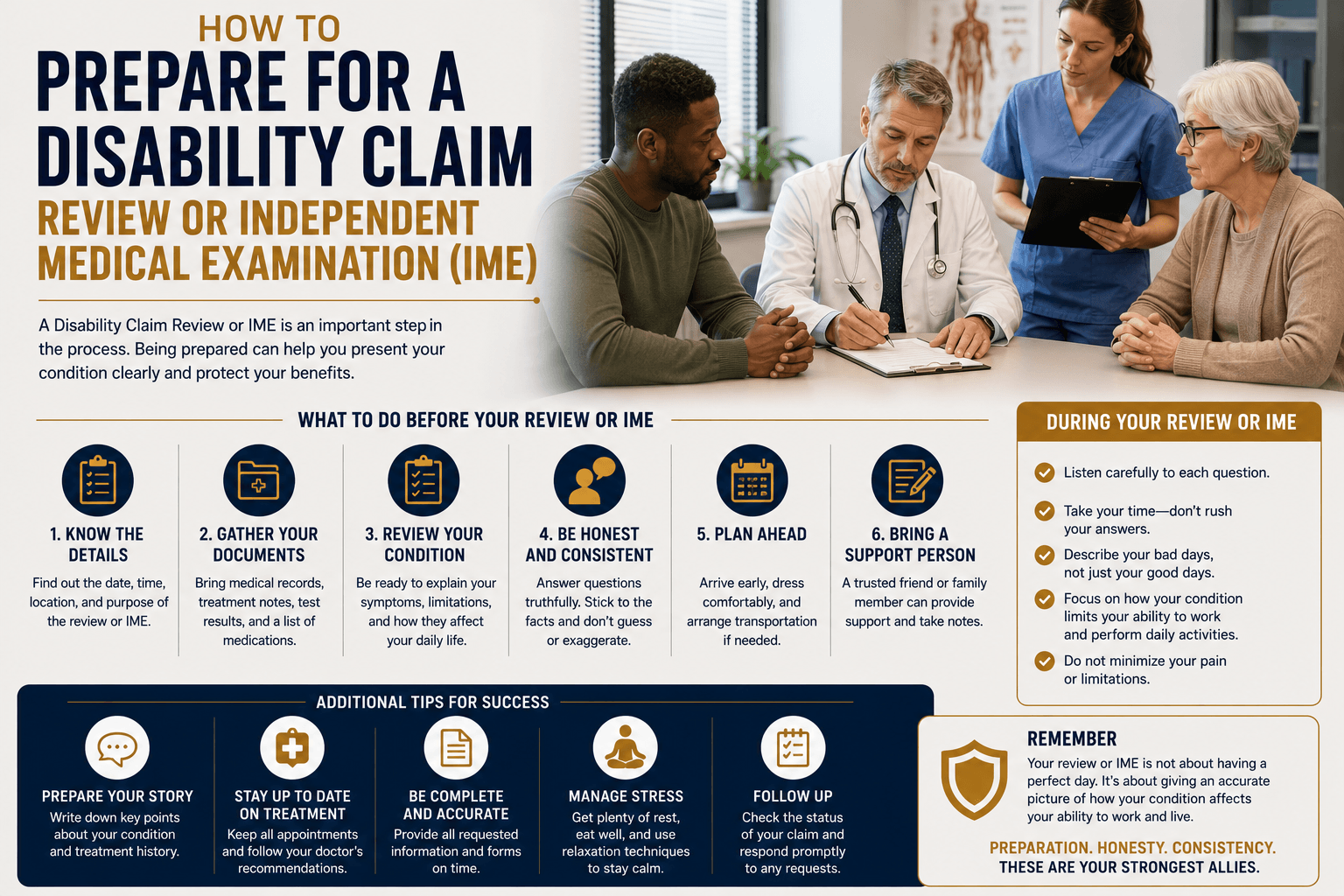
Independent Medical Examinations
Some disability programs or insurance providers may request an independent medical examination (IME).
An IME is generally conducted by a healthcare professional who evaluates the applicant and prepares an assessment based on the available medical information and examination findings.
Applicants should approach these evaluations honestly, provide accurate medical histories, and answer questions clearly.
The examination typically becomes one component of the overall evidence reviewed during the decision-making process.
Keeping Medical Records Organized
Organization plays an important role in presenting a disability claim effectively.
Helpful practices include:
- Keeping copies of all medical records.
- Organizing documents by date.
- Saving diagnostic test results.
- Recording treatment appointments.
- Maintaining prescription lists.
- Updating medical information regularly.
Well-organized records help ensure important information is readily available if additional documentation is requested.
The Importance of Consistency
Consistency across medical records, application forms, and supporting statements helps strengthen credibility.
For example, physician reports, treatment notes, and personal descriptions of symptoms should generally present a consistent picture of the condition.
Minor differences may naturally occur over time as medical conditions change, but significant contradictions can lead reviewers to seek clarification.
Accurate and truthful documentation remains essential throughout the claims process.
Common Mistakes That Weaken Medical Evidence
Several avoidable issues may reduce the effectiveness of supporting documentation.
Examples include:
- Waiting too long to seek medical treatment.
- Missing follow-up appointments.
- Failing to provide updated records.
- Submitting incomplete documentation.
- Relying only on a diagnosis without explaining functional limitations.
- Omitting specialist reports when available.
- Providing inconsistent information.
Addressing these issues early may improve the overall quality of the application.
Building a Strong Medical Timeline
One effective strategy is creating a chronological record of the condition.
A well-documented timeline may include:
- Initial diagnosis
- Treatment milestones
- Hospital admissions
- Specialist referrals
- Rehabilitation progress
- Medication changes
- Diagnostic testing
- Ongoing follow-up care
This timeline helps reviewers understand how the condition has developed and whether it continues to affect daily functioning.
Looking Ahead
Healthcare documentation continues to evolve through electronic medical records, telemedicine, digital imaging, and improved diagnostic technologies.
These advancements have made it easier for healthcare providers to maintain detailed treatment histories and share information when appropriate.
As disability assessment processes continue to modernize, comprehensive and accurate medical documentation will remain one of the most important factors in evaluating disability claims.
Applicants who maintain organized records, follow recommended treatment plans, and communicate openly with healthcare providers are often better prepared to present a clear and well-supported application.
Conclusion
Medical evidence is the cornerstone of a strong disability claim. While a diagnosis establishes the existence of a medical condition, it is the combination of physician reports, specialist evaluations, diagnostic testing, treatment history, and documentation of functional limitations that provides decision-makers with a complete understanding of an applicant’s circumstances.
Preparing comprehensive medical records, maintaining consistency throughout the claims process, and demonstrating how a condition affects everyday life can significantly strengthen an application. Although every disability claim is unique, clear, objective, and well-organized medical evidence remains one of the most effective ways to support a fair and informed review.
Frequently Asked Questions
What medical evidence is most important in a disability claim?
Physician reports, specialist evaluations, diagnostic tests, treatment records, rehabilitation notes, and documentation explaining functional limitations are among the most valuable forms of evidence.
Is a diagnosis alone enough to qualify for disability benefits?
Not usually. Decision-makers generally evaluate how the condition affects an individual’s ability to work or perform daily activities in addition to confirming the diagnosis.
Why are functional limitations important?
Functional limitations help explain the practical impact of a medical condition, such as difficulties with mobility, concentration, lifting, standing, or completing everyday tasks.
Should I include records from multiple healthcare providers?
Yes. Reports from treating physicians, specialists, therapists, and rehabilitation professionals can provide a more complete picture of your medical condition and its effects.
How can I keep my medical evidence organized?
Maintain copies of all medical records, arrange documents chronologically, save diagnostic test results, track treatment appointments, and update your records regularly throughout the claims process.