
Consumers trust that the products they purchase have been designed, manufactured, and tested to meet appropriate safety standards. While businesses invest considerable resources in quality control and product testing, no manufacturing process is completely free from risk. Occasionally, safety concerns are identified after products have already entered the marketplace. When this happens, companies may issue a product recall to reduce potential risks and protect consumers.
Product recalls are an important part of modern consumer protection. They allow manufacturers and regulatory authorities to respond quickly when a product may present a safety concern, whether due to a design issue, manufacturing defect, labeling problem, or newly discovered hazard. Although recalls are often associated with product liability cases, the relationship between a recall and legal liability is more complex than many people realize.
Understanding how product recalls affect product liability claims helps consumers appreciate the purpose of recalls while recognizing the responsibilities shared by manufacturers, distributors, retailers, and regulatory agencies in maintaining product safety.
What Is a Product Recall?
A product recall is an action taken to remove, repair, replace, or correct products that may present safety risks or fail to comply with applicable standards.
Recalls may involve a wide range of products, including:
- Motor vehicles
- Medical devices
- Prescription medications
- Food products
- Household appliances
- Children’s toys
- Electronics
- Power tools
- Consumer goods
The primary objective of a recall is to reduce potential harm by addressing identified safety concerns as efficiently as possible.
Why Product Recalls Happen
Products may be recalled for many different reasons.
Common examples include:
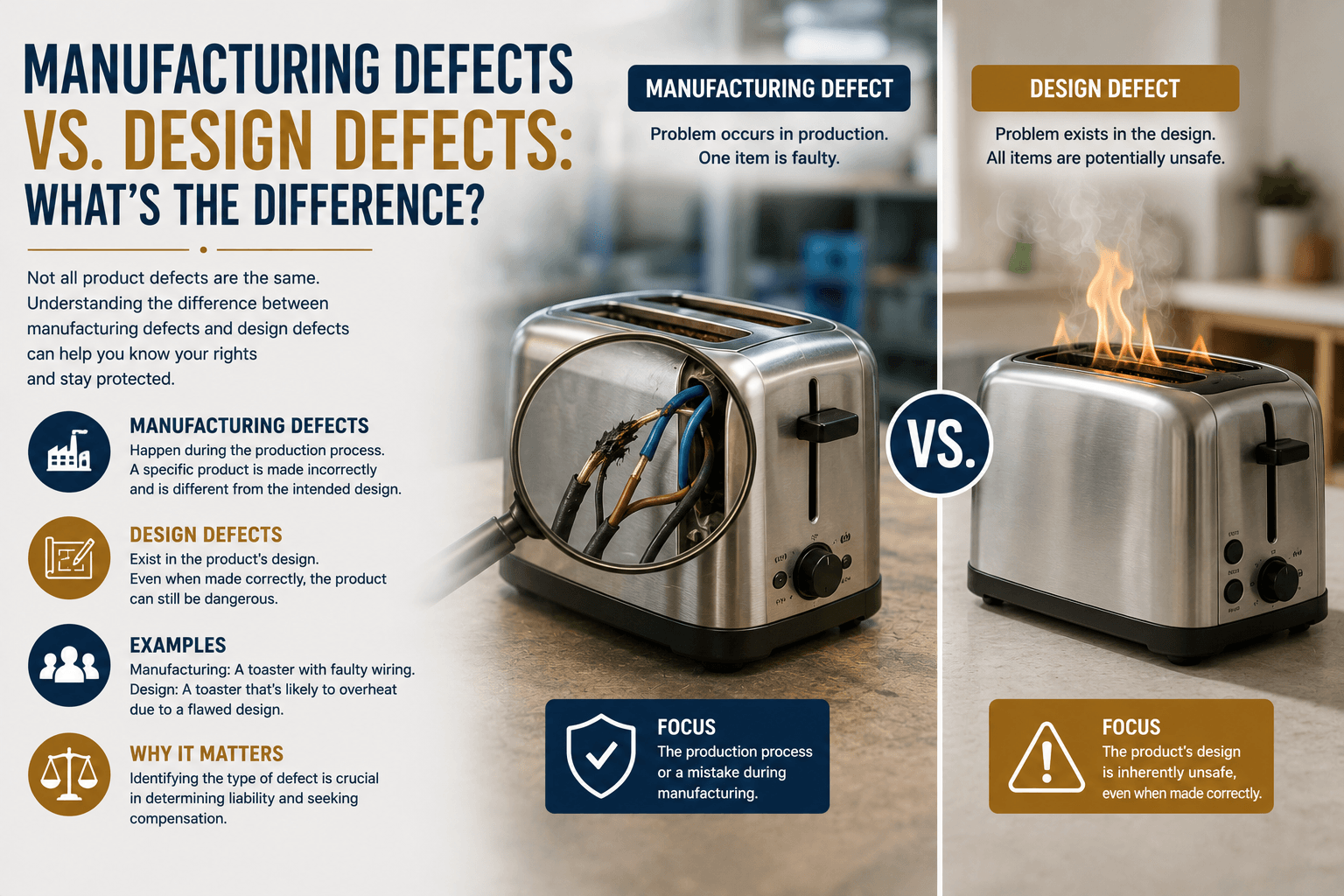
- Manufacturing defects
- Design flaws
- Electrical hazards
- Fire risks
- Chemical contamination
- Mechanical failures
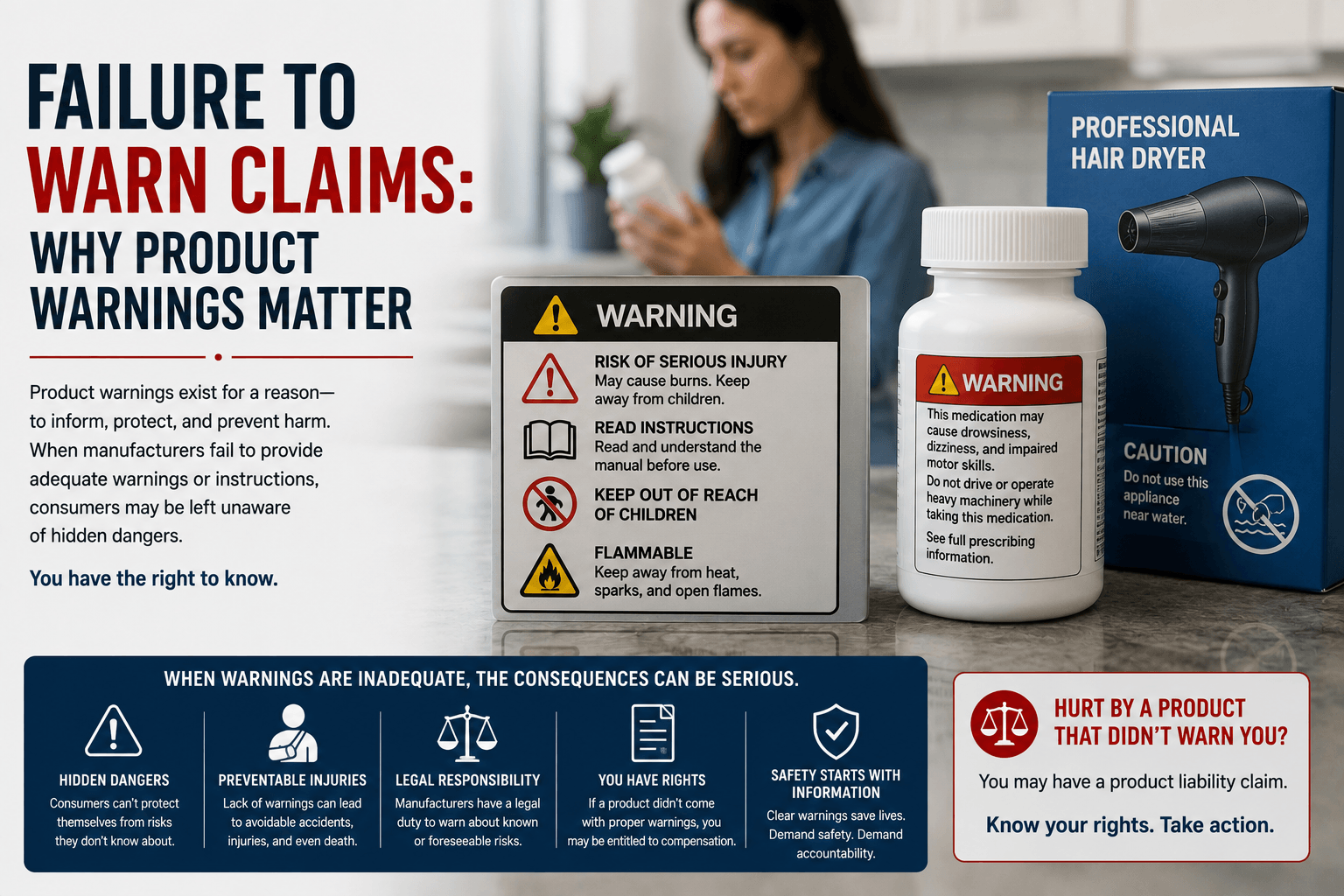
- Incorrect labeling
- Missing safety warnings
- Software defects in connected devices
Sometimes problems are discovered during internal quality reviews, while in other cases they are identified through consumer complaints, warranty claims, regulatory inspections, or ongoing safety monitoring.
Voluntary vs. Mandatory Recalls
Not every recall follows the same process.
Voluntary Recalls
Many recalls are initiated voluntarily by manufacturers after identifying a potential safety concern.
Companies may choose to:
- Notify consumers
- Repair affected products
- Replace defective items
- Offer refunds
- Update product instructions
Voluntary recalls often demonstrate a company’s commitment to consumer safety and responsible business practices.
Mandatory Recalls
In some jurisdictions, government agencies have authority to require recalls when products pose significant risks and voluntary action is insufficient.
Regulatory oversight helps ensure that unsafe products are addressed promptly and consistently.
The procedures for mandatory recalls vary depending on the country and the type of product involved.
Regulatory Agencies and Product Safety
Different countries have agencies responsible for monitoring product safety and overseeing recalls.
These organizations may:
- Investigate consumer complaints
- Monitor injury reports
- Evaluate product testing
- Publish recall notices
- Coordinate with manufacturers
- Establish safety standards
- Educate consumers about product risks
Their role is to promote consumer protection while encouraging businesses to maintain high safety standards.
How Product Recalls Relate to Product Liability
A common misconception is that every product recall automatically results in product liability claims.
In reality, recalls and liability are related but distinct concepts.
A recall is primarily a preventive safety measure designed to reduce potential risks.
A product liability claim generally focuses on whether a defective product allegedly caused injury or damage under the applicable legal standards.
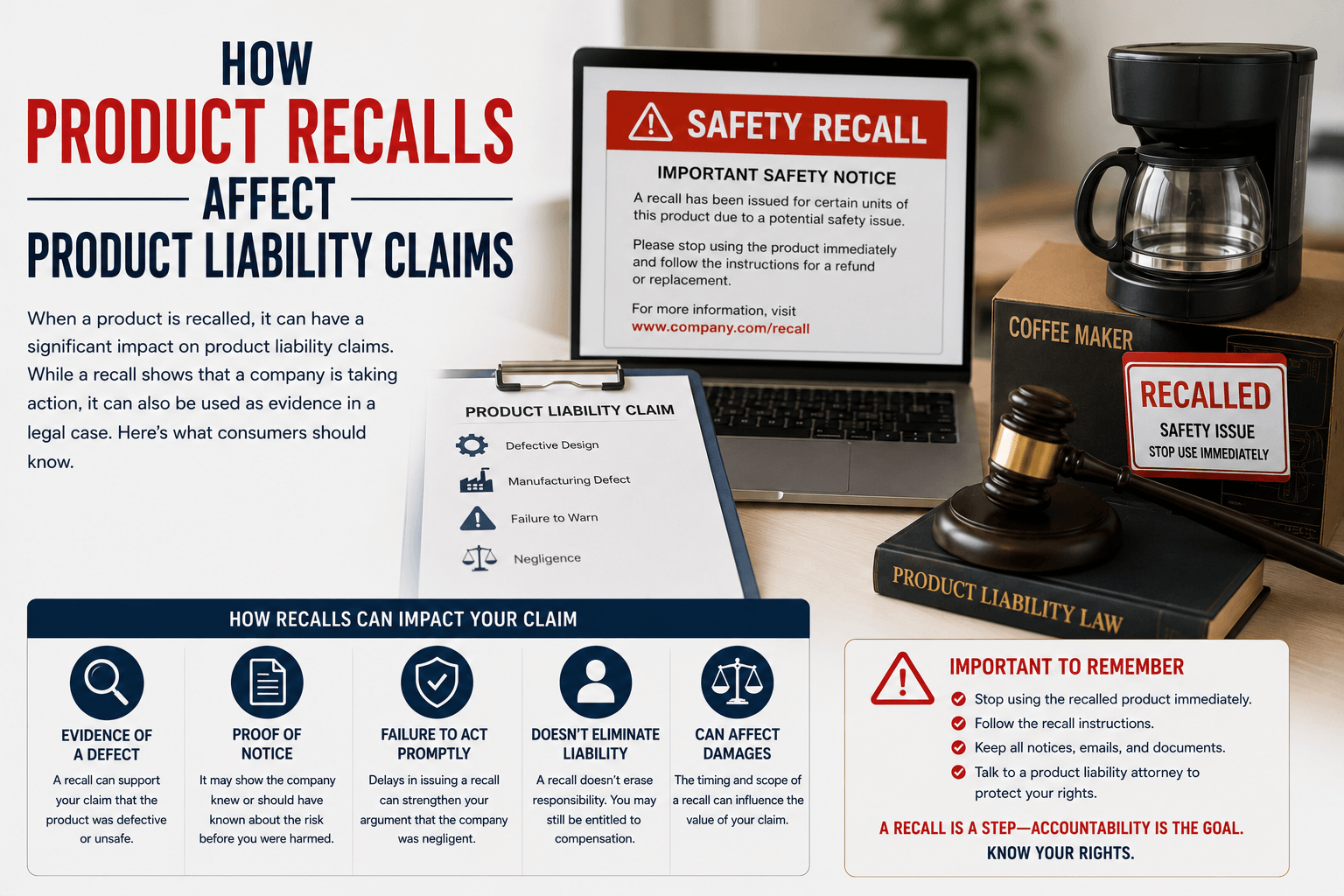
While a recall may become relevant evidence in certain situations, it does not automatically establish legal responsibility.
Each case is evaluated individually based on its own facts and evidence.
Can a Recall Be Used as Evidence?
In some product liability cases, recall information may be reviewed alongside other evidence.
Examples of evidence may include:
- Product testing reports
- Engineering evaluations
- Manufacturing records
- Quality control documentation
- Medical records
- Expert opinions
- Witness statements
- Product inspection reports
The significance of a recall depends on the specific facts of the case and the applicable legal rules.
Consumer Responsibilities After a Recall
Consumers play an important role in product safety by responding appropriately to recall notices.
Recommended actions may include:
- Stop using the product if instructed.
- Read the official recall notice carefully.
- Follow repair or replacement instructions.
- Contact the manufacturer if necessary.
- Register products to receive future updates.
- Keep proof of purchase when possible.
- Dispose of recalled products according to official guidance.
Prompt action can significantly reduce the risk of injury or property damage.
Business Responsibilities Following a Recall
When a recall is announced, manufacturers and other businesses often take several steps to address the issue.
These may include:
- Investigating the safety concern.
- Identifying affected products.
- Notifying distributors and retailers.
- Informing consumers.
- Providing repairs, replacements, or refunds.
- Improving manufacturing processes.
- Updating warning labels or instructions.
- Monitoring the effectiveness of corrective actions.
The goal is to restore consumer confidence while reducing future safety risks.
The Role of Product Traceability
Modern supply chains rely heavily on product traceability systems.
These systems help companies identify:
- Manufacturing dates
- Production batches
- Component suppliers
- Distribution routes
- Retail locations
- Serial numbers
- Lot numbers
Accurate traceability allows recalls to target affected products more efficiently rather than removing entire product lines unnecessarily.
Technology and Recall Management
Advances in technology have improved how recalls are managed.
Examples include:
Digital Product Registration
Consumers can register products online to receive recall notifications directly.
Smart Devices
Connected products may automatically notify users when software updates or safety improvements are available.
Artificial Intelligence
AI assists manufacturers in analyzing warranty claims, customer complaints, and production data to identify potential safety concerns earlier.
Data Analytics
Large-scale data analysis helps identify trends that may indicate emerging product issues before widespread problems develop.
Product Recalls Across Different Industries
Automotive Industry
Vehicle recalls may involve braking systems, airbags, steering components, electrical systems, or software updates.
Modern vehicles increasingly rely on electronic systems that can often be updated through specialized service programs.
Medical Devices
Medical device recalls require careful coordination because patients may already rely on implanted or life-supporting equipment.
Healthcare providers work closely with manufacturers to determine appropriate patient care.
Food Products
Food recalls may involve contamination, undeclared allergens, labeling errors, or packaging defects.
Rapid communication is essential to protect public health.
Consumer Electronics
Electronic product recalls may address battery failures, overheating, charging problems, or electrical hazards.
Manufacturers often provide replacement programs or repair services.
Common Misconceptions About Product Recalls
Myth: Every Recall Means the Product Injured Someone
Some recalls are issued proactively before injuries occur. Manufacturers may identify potential risks during routine quality reviews or post-market monitoring.
Myth: A Recall Automatically Proves Legal Liability
A recall is a safety action, not a legal determination of fault. Whether liability exists depends on the facts, evidence, and applicable laws.
Myth: Only Manufacturers Participate in Recalls
Successful recalls often involve manufacturers, distributors, retailers, regulatory agencies, service providers, and consumers working together to remove or correct affected products.
Myth: Recalled Products Always Need to Be Discarded
Some recalled products can be repaired, updated, or modified safely according to the manufacturer’s official instructions.
The Future of Product Recall Systems
Product safety continues evolving alongside technology.
Future developments may include:
- Blockchain supply chain tracking
- Real-time product monitoring
- Internet of Things (IoT) diagnostics
- Predictive safety analytics
- Automated recall notifications
- Artificial intelligence-assisted quality control
- Enhanced global product tracking
- Digital product passports
These innovations aim to improve the speed, accuracy, and effectiveness of recall programs while strengthening consumer protection.
Conclusion
Product recalls play an essential role in protecting consumers by addressing safety concerns that emerge after products enter the marketplace. Whether initiated voluntarily by manufacturers or required by regulatory authorities, recalls help reduce risks through repairs, replacements, refunds, updated instructions, or other corrective actions.
Although recalls are often associated with product liability claims, they do not automatically establish legal responsibility. Instead, they represent one part of a broader product safety system that includes quality control, regulatory oversight, consumer education, and continuous product improvement.
As manufacturing technologies and global supply chains continue to evolve, effective recall systems will remain a cornerstone of consumer protection, helping businesses respond quickly to safety concerns while reinforcing public confidence in the products they use every day.
Frequently Asked Questions
What is a product recall?
A product recall is an action taken to repair, replace, remove, or correct products that may present safety risks or fail to meet applicable standards.
Does a product recall automatically mean the manufacturer is legally liable?
No. A recall is primarily a safety measure. Whether legal liability exists depends on the specific facts, evidence, and laws applicable to the case.
Why do companies issue voluntary recalls?
Manufacturers may voluntarily recall products to address safety concerns, protect consumers, comply with regulations, and maintain public trust.
What should consumers do if they own a recalled product?
Consumers should follow the instructions provided in the official recall notice, which may include stopping use, arranging repairs, obtaining a replacement, or requesting a refund.
How has technology improved product recalls?
Modern technologies such as digital product registration, AI, data analytics, and supply chain tracking help manufacturers identify safety concerns earlier and notify affected consumers more efficiently.