
After a car accident, many people assume that compensation is determined by a simple review of medical bills and repair estimates. In reality, the process is far more complex. Behind every settlement offer is an evaluation conducted by insurance adjusters whose job is to investigate claims, assess risk, and determine how much an insurance company may be willing to pay.
For claimants, understanding how insurance adjusters evaluate car accident claims can provide valuable insight into why settlement offers vary and what evidence may influence the outcome of a case. Whether the accident involves minor vehicle damage or serious injuries, the evaluation process often shapes the direction of negotiations from the very beginning.
While every claim is unique, insurance adjusters generally follow a structured approach when reviewing accident-related losses. Knowing what they look for—and what factors can affect their decisions—can help claimants prepare more effectively and avoid common mistakes.
Who Is an Insurance Adjuster?
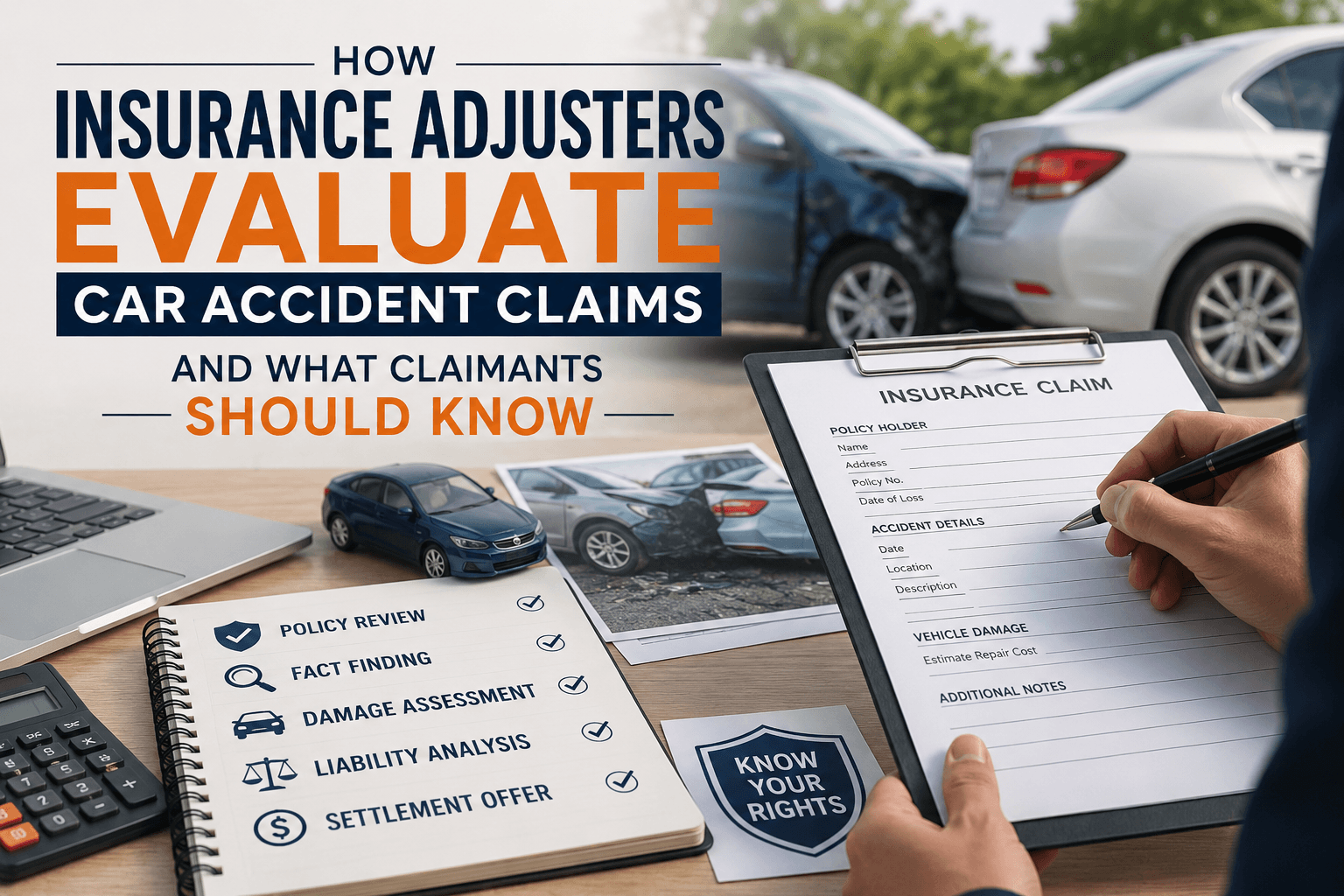
An insurance adjuster is a professional responsible for investigating claims submitted after an accident or other covered event.
Their responsibilities often include:
- Reviewing accident reports
- Examining evidence
- Interviewing involved parties
- Assessing vehicle damage
- Evaluating injury claims
- Determining liability
- Estimating claim value
Adjusters may work directly for insurance companies, independently as contractors, or on behalf of public claimants in some situations.
When evaluating a car accident claim, their primary objective is to determine the insurer’s potential financial responsibility under the terms of the policy.
The Initial Review Process
Most claim evaluations begin shortly after an accident is reported.
During this stage, adjusters typically gather:
- Police reports
- Insurance policy information
- Driver statements
- Witness accounts
- Photographs and videos
- Vehicle repair estimates
- Medical records
The goal is to establish a basic understanding of what occurred and identify any immediate issues that may affect the claim.
The sooner relevant information becomes available, the more efficiently the review process tends to move forward.
Determining Liability
One of the first questions adjusters seek to answer is who was responsible for the accident.
Liability assessments often involve examining:
Traffic Violations
Evidence of speeding, distracted driving, failure to yield, or impaired driving may influence fault determinations.
Police Findings
While police reports do not always establish legal fault, they often provide valuable observations that adjusters consider during their investigation.
Witness Statements
Independent witnesses can provide important perspectives regarding how the collision occurred.
Physical Evidence
Skid marks, vehicle positioning, traffic camera footage, and damage patterns may help reconstruct the accident.
In some cases, responsibility may be shared among multiple parties, which can affect compensation depending on applicable laws.
Evaluating Vehicle Damage
Vehicle damage serves as an important piece of evidence during claim evaluation.
Adjusters frequently review:
- Repair estimates
- Vehicle inspection reports
- Photographs
- Replacement costs
- Total loss calculations
The extent of vehicle damage can sometimes support injury claims, although severe injuries may occur even in accidents involving limited property damage.
Modern vehicles often absorb impact differently than older models, making vehicle damage only one component of the overall assessment.
Reviewing Medical Treatment
Medical documentation plays a central role in car accident claim evaluation.
Adjusters generally examine:
Emergency Care Records
Initial treatment records often establish a direct connection between the accident and reported injuries.
Diagnostic Testing
X-rays, MRIs, CT scans, and other imaging studies may provide objective evidence of injuries.
Physician Notes
Treatment plans, progress reports, and specialist evaluations help demonstrate the severity of injuries.
Rehabilitation Records
Physical therapy and rehabilitation documentation can illustrate ongoing recovery needs.
The consistency and timing of medical treatment often influence how adjusters view a claim.
Why Treatment Gaps Raise Questions
One issue adjusters frequently notice involves gaps in medical care.
For example:
- Delaying treatment for several weeks
- Missing appointments
- Discontinuing recommended therapy
These gaps may lead adjusters to question whether injuries were as serious as claimed.
There are often legitimate reasons for treatment interruptions, but claimants should maintain records that explain any delays or disruptions.
Assessing Injury Severity
Not all injuries have the same impact on claim value.
Adjusters typically evaluate factors such as:
- Type of injury
- Duration of recovery
- Permanent impairment
- Required treatment
- Future medical needs
- Effect on daily activities
A temporary soft tissue injury will usually be evaluated differently than a traumatic brain injury, spinal injury, or permanent disability.
The long-term consequences of an injury often carry significant weight during settlement discussions.
Examining Lost Income Claims
Many accident victims experience income disruption during recovery.
To evaluate lost income claims, adjusters may request:
- Pay stubs
- Tax returns
- Employer statements
- Attendance records
- Medical work restrictions
These documents help establish the amount of income lost due to accident-related limitations.
For self-employed individuals, proving income loss may require additional documentation such as invoices, contracts, and business records.
Future Financial Losses
Adjusters do not always focus solely on current expenses.
In more serious injury cases, they may evaluate:
- Future medical treatment
- Long-term rehabilitation
- Reduced earning capacity
- Permanent disability impacts
These future losses can significantly influence settlement calculations when supported by medical and vocational evidence.
The stronger the documentation, the easier it becomes to demonstrate future financial needs.
How Pain and Suffering Is Evaluated
Pain and suffering damages are often among the most misunderstood aspects of accident claims.
Unlike medical bills or repair costs, there is no receipt attached to physical pain or emotional distress.
Adjusters may consider:
- Injury severity
- Recovery duration
- Lifestyle limitations
- Emotional impact
- Medical treatment history
Some insurers use internal evaluation systems designed to assign values to various injury scenarios.
While no formula can perfectly measure personal suffering, these factors often play a role in settlement negotiations.
The Role of Documentation
Strong documentation frequently influences claim outcomes more than verbal descriptions alone.
Helpful evidence may include:
- Medical records
- Photographs of injuries
- Accident scene images
- Witness statements
- Expense receipts
- Employment documentation
- Recovery journals
A well-documented claim allows adjusters to verify losses more efficiently and may reduce disputes over compensation.
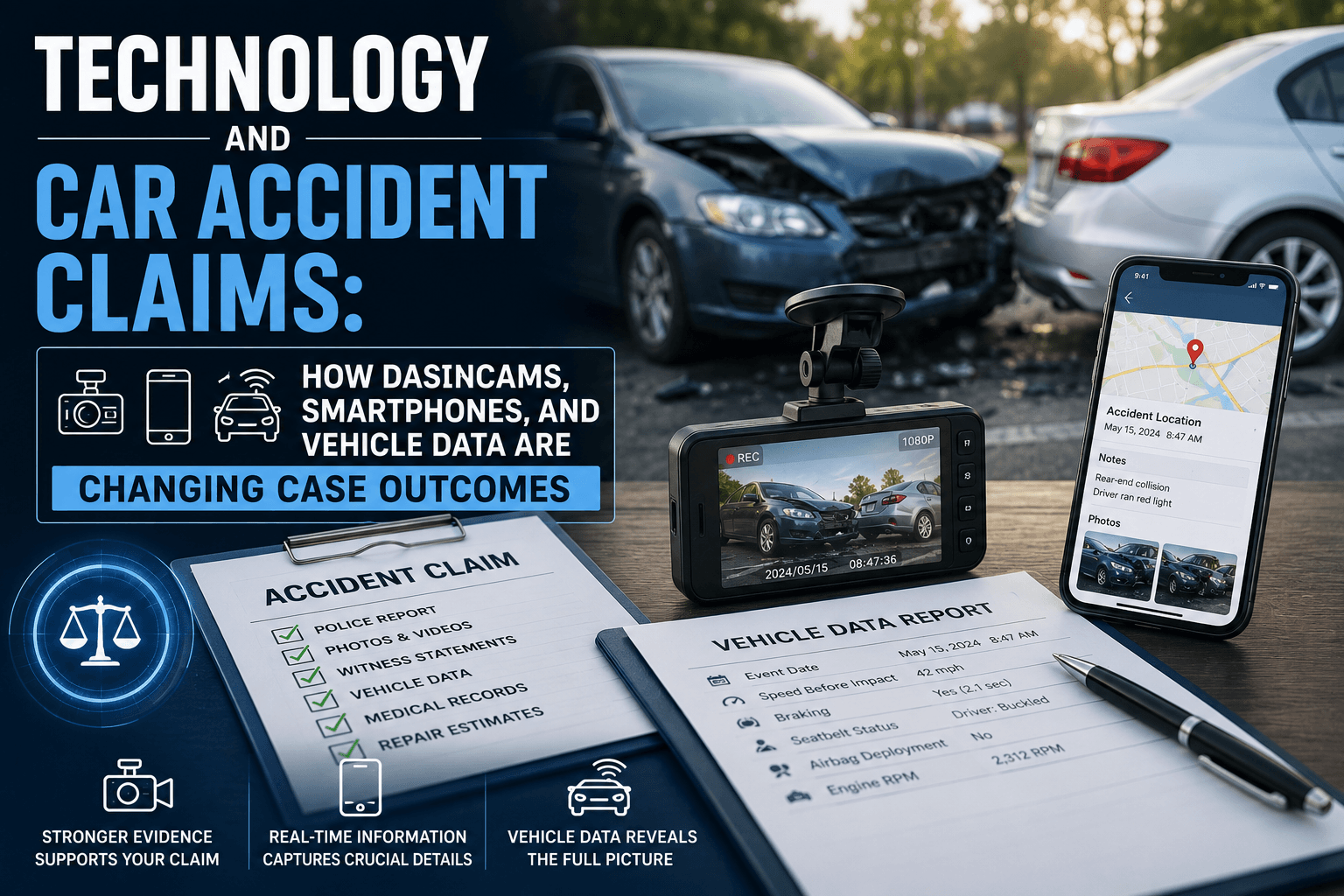
Digital Evidence Is Becoming More Important
Technology has changed the way accident claims are evaluated.
Adjusters may review:
- Dashcam footage
- Smartphone photographs
- Surveillance videos
- GPS records
- Vehicle event data recorders
- Social media content
Digital evidence can strengthen or weaken a claim depending on what it reveals.
For example, accident footage may clarify liability, while public social media posts may raise questions about reported injuries if they appear inconsistent with medical claims.
Factors That Can Reduce a Claim’s Value
Several issues may negatively affect claim evaluations.
These include:
Inconsistent Statements
Conflicting descriptions of the accident can create credibility concerns.
Delayed Medical Treatment
Long delays between the accident and treatment may complicate injury claims.
Limited Supporting Evidence
Claims lacking documentation may be more difficult to verify.
Pre-Existing Conditions
Prior injuries or medical conditions may require additional evidence to distinguish accident-related harm.
Shared Responsibility
If multiple parties contributed to the accident, compensation may be adjusted accordingly.
Understanding these potential challenges can help claimants prepare stronger cases.
Why Initial Settlement Offers May Be Lower
Many claimants are surprised when an initial settlement offer seems lower than expected.
There are several reasons this may occur:
- Ongoing investigation
- Incomplete medical treatment
- Uncertainty regarding future costs
- Disputed liability
- Limited supporting documentation
Early offers often reflect the information available at the time rather than the final value of a claim.
As additional evidence becomes available, negotiations may evolve.
The Importance of Claim Consistency
Consistency matters throughout the claims process.
Adjusters often compare information from:
- Accident reports
- Medical records
- Recorded statements
- Witness interviews
- Claim forms
Significant inconsistencies may prompt further investigation.
Accurate and consistent reporting helps establish credibility and supports a smoother evaluation process.
Understanding the Negotiation Phase
Claim evaluation is not always the final step.
Many cases enter a negotiation stage where parties discuss:
- Liability concerns
- Medical expenses
- Future treatment needs
- Lost income
- Non-economic damages
Negotiations may continue until both sides reach an agreement or decide to pursue alternative dispute resolution or litigation.
The quality of evidence often influences negotiating leverage.
Common Misconceptions About Claim Evaluation
Several myths frequently create unrealistic expectations.
Myth 1: Vehicle Damage Determines Injury Value
Injury severity does not always correlate directly with visible vehicle damage.
Myth 2: Every Medical Bill Is Automatically Reimbursed
Medical expenses generally require documentation and may be reviewed for reasonableness and necessity.
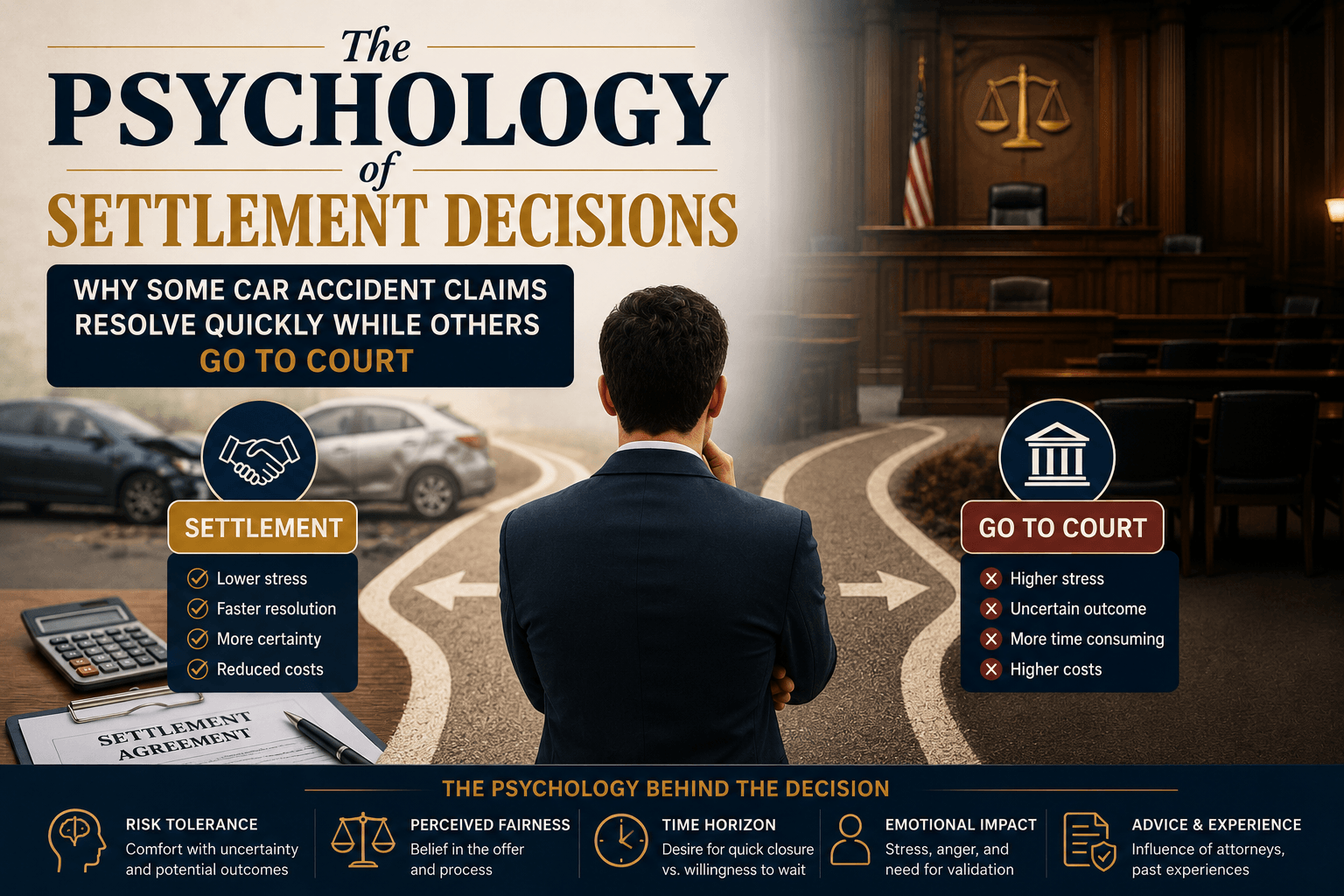
Myth 3: The First Offer Is Always Final
Settlement discussions often involve multiple rounds of evaluation and negotiation.
Myth 4: Larger Claims Resolve Faster
More complex claims frequently require additional investigation and documentation.
Understanding these realities can help claimants approach the process with realistic expectations.
Building a Stronger Claim
While claimants cannot control every aspect of an insurance company’s evaluation process, they can take steps to strengthen their position.
Helpful practices include:
- Seeking prompt medical attention
- Following treatment recommendations
- Keeping organized records
- Documenting expenses
- Preserving evidence
- Tracking recovery progress
- Communicating accurately and consistently
Preparation often plays a major role in how effectively a claim is presented and evaluated.
Final Thoughts
Insurance adjusters play a critical role in determining how car accident claims are evaluated and ultimately resolved. Their reviews extend beyond medical bills and vehicle repairs to include liability assessments, injury severity, lost income, future costs, documentation quality, and many other factors.
For claimants, understanding this process can help eliminate uncertainty and improve preparation. A well-documented claim supported by credible evidence is often better positioned for productive negotiations and fair consideration.
While every accident presents unique circumstances, the same principle generally applies: the more clearly losses can be demonstrated, the easier it becomes to communicate the true impact of the accident and pursue appropriate compensation.
Frequently Asked Questions
What does an insurance adjuster look for when evaluating a car accident claim?
Insurance adjusters typically review liability, vehicle damage, medical records, lost income documentation, witness statements, and other evidence related to the accident.
Do insurance adjusters use formulas to calculate settlements?
Many insurers use internal evaluation tools and guidelines, but settlement decisions often involve multiple factors beyond simple formulas.
Can delayed medical treatment affect a claim?
Yes. Significant delays in seeking treatment may raise questions regarding the connection between the accident and the reported injuries.
Why do insurance companies request medical records?
Medical records help verify injuries, treatment needs, recovery progress, and the relationship between medical conditions and the accident.
Does a larger repair bill mean a larger injury settlement?
Not necessarily. Vehicle damage and injury severity are evaluated separately, and serious injuries can sometimes occur even when vehicle damage appears limited.