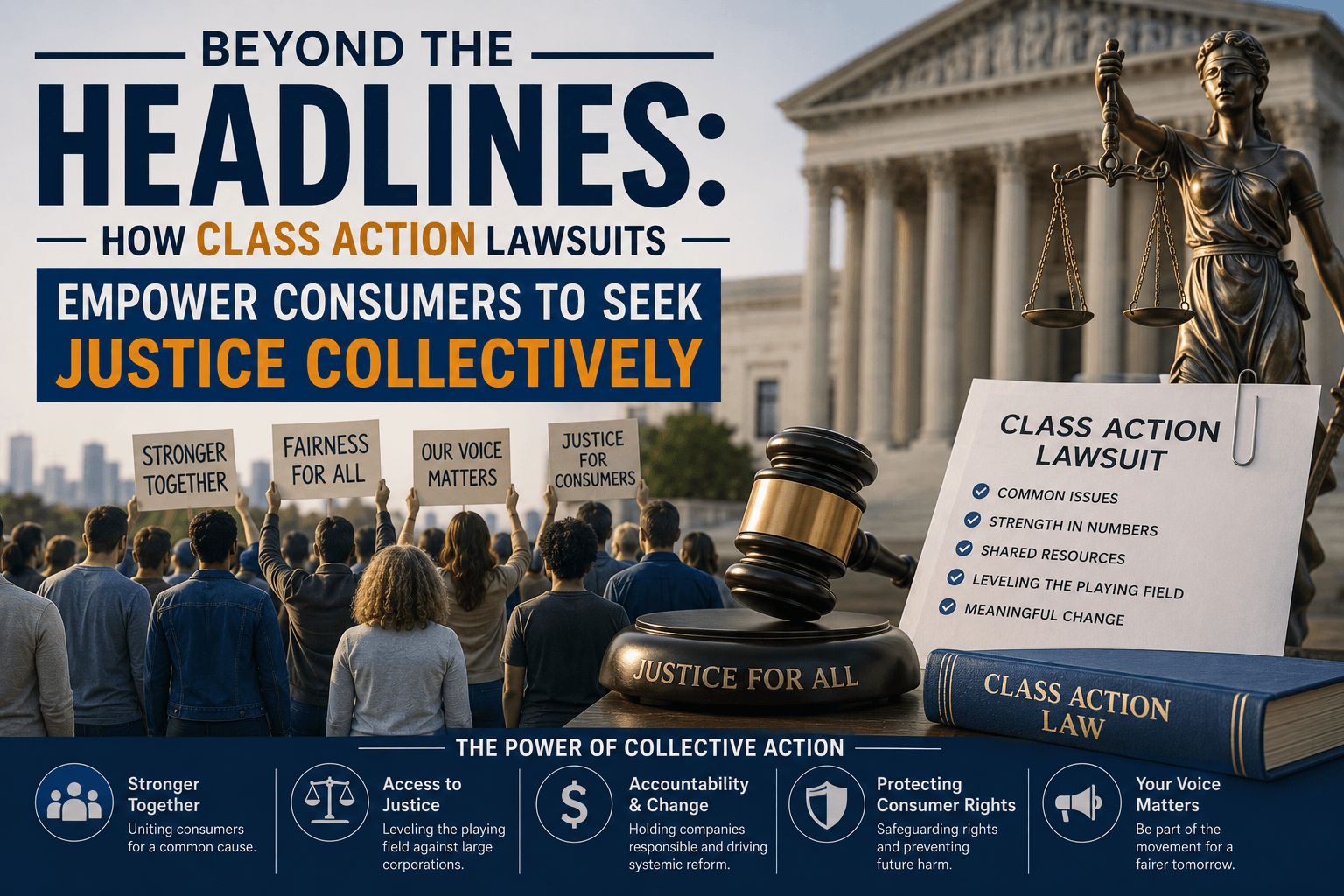
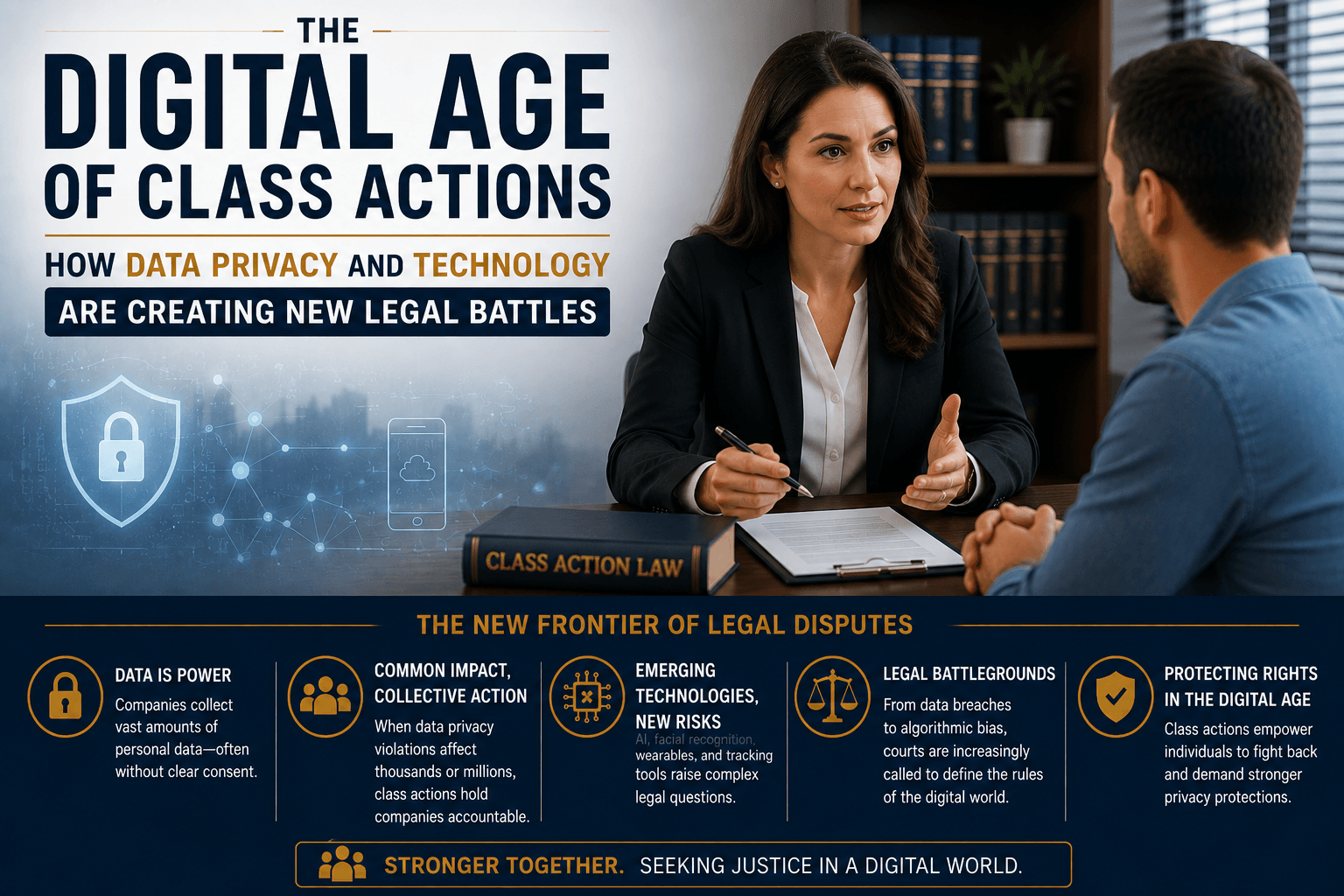

Technology has transformed nearly every aspect of modern life. From online shopping and digital banking to social media platforms and smart devices, people generate enormous amounts of personal information every day. Businesses rely on this data to improve services, personalize experiences, and support innovation. However, the increasing collection and use of personal information have also introduced significant legal and ethical challenges.
As digital technologies continue to evolve, concerns surrounding data privacy, cybersecurity, artificial intelligence (AI), and online consumer protection have become more prominent. When a security incident or alleged misuse of personal information affects large numbers of people, class action lawsuits have emerged as an important legal mechanism for addressing widespread claims.
These cases often involve thousands—or even millions—of individuals who share similar concerns about how their personal information was collected, stored, used, or protected. While the legal issues vary from case to case, the growing number of technology-related class actions reflects the importance of accountability in an increasingly digital world.
This article explores how technology is reshaping class action litigation, the types of disputes becoming more common, and why digital privacy has become one of the most significant legal issues of the modern era.
Why Technology Has Changed the Legal Landscape
The internet has created unprecedented opportunities for businesses to collect information about their customers.
Organizations may gather data such as:
- Names and contact information
- Payment details
- Browsing activity
- Purchase history
- Device identifiers
- Geographic location
- Online preferences
While this information often helps improve customer experiences, it also creates responsibilities for organizations to manage personal data carefully.
As businesses become more data-driven, legal disputes increasingly focus on whether reasonable measures were taken to protect consumer information and comply with applicable privacy obligations.
Understanding Data Privacy
Data privacy refers to the way organizations collect, use, store, share, and protect personal information.
Consumers generally expect businesses to:
- Explain what information is being collected.
- Store personal data securely.
- Limit unnecessary data collection.
- Use information responsibly.
- Protect against unauthorized access.
When these expectations are not met, questions may arise regarding legal responsibilities and consumer rights.
If many individuals are affected by the same alleged conduct, class action litigation may become one possible avenue for resolving the dispute.
Data Breaches and Class Action Lawsuits
One of the most common sources of technology-related class actions involves data breaches.
A data breach occurs when unauthorized individuals gain access to sensitive information.
Depending on the circumstances, exposed information may include:
- Email addresses
- Passwords
- Financial account information
- Health records
- Identification numbers
- Customer account details
Not every breach results in litigation. However, when large numbers of consumers are affected, legal claims may arise concerning the adequacy of security measures, notification procedures, or the handling of personal information.
These cases often encourage organizations to review cybersecurity practices and strengthen data protection systems.
Artificial Intelligence and Emerging Legal Questions
Artificial intelligence is rapidly becoming part of everyday life.
Businesses increasingly use AI to:
- Analyze customer behavior
- Improve search results
- Automate customer service
- Detect fraud
- Personalize advertising
- Support hiring processes
While these technologies offer many benefits, they also raise new legal questions.
Examples include:
- How is personal data being used to train AI systems?
- Are automated decisions fair and transparent?
- Could algorithms unintentionally create bias?
- Are consumers adequately informed about AI-driven processes?
As AI continues to evolve, these issues may become the subject of future class action litigation, particularly where similar concerns affect large groups of individuals.
Consumer Apps and Digital Services
Mobile applications have become an essential part of daily life.
People use apps to:
- Manage finances
- Track fitness goals
- Shop online
- Navigate cities
- Communicate with family and friends
- Access healthcare services
Many apps request permission to collect various forms of personal information.
Questions sometimes arise regarding:
- Whether users understood the permissions they granted.
- Whether collected information exceeded what was necessary.
- Whether privacy policies clearly explained data practices.
- How third-party companies accessed shared information.
As digital ecosystems become more interconnected, transparency remains increasingly important.
Smart Devices and Connected Technology
Homes and workplaces now contain a growing number of internet-connected devices.
Examples include:
- Smart speakers
- Security cameras
- Fitness trackers
- Smart televisions
- Home automation systems
- Connected vehicles
These products often generate continuous streams of information.
Although connected technology offers convenience, it also creates additional responsibilities for manufacturers and service providers to protect user data.
When similar privacy concerns affect many consumers, collective legal action may become an option for addressing widespread issues.
Cybersecurity as a Business Responsibility
Cybersecurity is no longer viewed solely as an information technology concern.
Today, it represents an important aspect of organizational governance and risk management.
Businesses increasingly invest in:
- Network monitoring
- Encryption technologies
- Employee training
- Multi-factor authentication
- Incident response planning
- Regular security assessments
These efforts help reduce cyber risks while strengthening consumer confidence.
Although no security system is completely immune from cyber threats, proactive security measures may reduce vulnerabilities and improve organizational resilience.
Digital Advertising and Consumer Transparency
Online advertising relies heavily on consumer data.
Businesses analyze browsing activity and online interactions to deliver personalized marketing.
While many consumers appreciate relevant recommendations, others express concerns regarding:
- Tracking technologies
- Cookie usage
- Behavioral profiling
- Targeted advertising
- Cross-platform data sharing
Legal disputes in this area often focus on whether organizations provided sufficient transparency and obtained appropriate consent before collecting or using personal information.
As digital marketing practices continue evolving, privacy-related litigation is expected to remain an active area of legal development.
Cross-Border Data Challenges
Technology rarely recognizes national borders.
A single online platform may serve users across multiple countries simultaneously.
This creates additional legal complexity because privacy laws vary between jurisdictions.
Organizations operating internationally often face challenges involving:
- Different regulatory standards.
- International data transfers.
- Cross-border investigations.
- Multiple legal systems.
- Diverse consumer expectations.
Class action litigation may become particularly complex when affected individuals reside in different regions with varying legal protections.
The Importance of Consumer Awareness
Technology evolves quickly, and consumers benefit from understanding how their personal information is handled.
Practical steps include:
- Reading privacy notices.
- Using strong passwords.
- Enabling multi-factor authentication.
- Reviewing application permissions.
- Updating software regularly.
- Monitoring financial accounts.
While organizations bear important responsibilities, informed consumers also contribute to stronger digital security.
How Class Actions Encourage Better Data Practices
Technology-related class action lawsuits often have effects beyond financial settlements.
Organizations may respond by:
- Updating privacy policies.
- Strengthening cybersecurity programs.
- Improving consumer notifications.
- Enhancing internal compliance.
- Increasing transparency regarding data collection.
These improvements may benefit future customers while encouraging higher standards across entire industries.
Class actions therefore serve not only as a legal remedy but also as an incentive for businesses to continually evaluate and improve their data protection practices.
The Future of Digital Privacy Litigation
Technology continues advancing at an extraordinary pace.
Emerging innovations such as:
- Artificial intelligence
- Facial recognition
- Biometric authentication
- Internet of Things (IoT) devices
- Wearable technology
- Virtual reality
- Quantum computing
are likely to introduce new legal questions in the years ahead.
Courts, lawmakers, businesses, and consumers will continue adapting to these developments while balancing innovation with privacy, security, and accountability.
As digital ecosystems become increasingly integrated into everyday life, technology-related class action lawsuits will likely remain an important mechanism for addressing large-scale privacy concerns affecting groups of consumers.
Conclusion
The digital age has transformed both the opportunities and the challenges facing consumers and businesses. Personal information has become one of the world’s most valuable resources, making privacy and cybersecurity central concerns across virtually every industry.
Data privacy class action lawsuits have emerged as an important legal tool for addressing situations in which large numbers of individuals are affected by similar technology-related issues. Whether involving cybersecurity incidents, mobile applications, artificial intelligence, or digital advertising practices, these cases encourage organizations to strengthen privacy protections while promoting greater transparency and accountability.
As technology continues evolving, legal systems will face new questions regarding responsible innovation and consumer rights. Understanding these developments helps individuals appreciate both the benefits of technological progress and the importance of protecting personal information in an increasingly connected world.
Frequently Asked Questions
What is a data privacy class action lawsuit?
A data privacy class action lawsuit is a legal action brought on behalf of a group of individuals who allege similar harm arising from the collection, use, disclosure, or protection of personal information.
Can a data breach automatically result in a class action lawsuit?
Not necessarily. Whether litigation occurs depends on the specific circumstances, applicable laws, the nature of the incident, and whether multiple individuals experienced similar alleged harm.
Why are technology companies increasingly involved in class action lawsuits?
Technology companies often process significant amounts of personal information, making issues such as data security, privacy, digital advertising, and consumer transparency important areas of legal scrutiny.
How does artificial intelligence affect future class action litigation?
As AI becomes more widely used, legal questions involving automated decision-making, data usage, transparency, and algorithmic fairness may become increasingly significant in future class action cases.
Why is digital privacy becoming more important?
As individuals conduct more activities online, larger amounts of personal information are collected and stored. Protecting that information helps maintain consumer trust, supports cybersecurity, and encourages responsible business practices.