
A medical condition or injury can affect a person’s ability to work in many different ways. Some individuals recover within a few weeks or months, while others face long-term health challenges that may permanently change their ability to earn an income. To address these varying situations, many disability benefit programs and insurance policies distinguish between short-term and long-term disability claims.
Although both types of claims are designed to provide financial support during periods of disability, they differ in important ways. Eligibility requirements, waiting periods, benefit duration, medical documentation, and claim reviews can all vary depending on the type of coverage involved.
Understanding these differences is essential for anyone preparing to file a disability claim or reviewing an existing disability insurance policy. Knowing what each type of claim covers can help individuals set realistic expectations, prepare appropriate documentation, and better understand how benefits may be provided.
This guide explains the key differences between short-term and long-term disability claims, helping readers make informed decisions about their options and responsibilities.
What Is a Short-Term Disability Claim?
A short-term disability claim is generally intended to provide temporary income replacement when a medical condition prevents someone from working for a limited period.
These claims often apply to situations involving recovery rather than permanent disability.
Examples may include:
- Recovery after surgery
- Pregnancy-related medical complications (where covered)
- Temporary serious illness
- Broken bones
- Moderate injuries requiring rehabilitation
- Certain mental health conditions requiring short-term treatment
The goal is to provide financial support while the individual recovers and prepares to return to work.
What Is a Long-Term Disability Claim?
A long-term disability claim typically applies when a medical condition is expected to continue for an extended period or indefinitely.
These claims often involve conditions that significantly affect an individual’s long-term ability to perform their occupation or other work, depending on the policy or benefit program.
Examples may include:
- Chronic neurological disorders
- Severe spinal injuries
- Progressive autoimmune diseases
- Advanced cardiovascular conditions
- Permanent mobility impairments
- Certain chronic mental health conditions
- Degenerative diseases
- Long-term complications from serious illnesses
Long-term disability benefits are generally intended to provide ongoing financial assistance when recovery is uncertain or expected to take years.
The Main Difference
The primary distinction between short-term and long-term disability claims is the expected duration of the medical condition.
Short-term disability focuses on temporary limitations with an anticipated recovery.
Long-term disability addresses conditions that are expected to continue for an extended period or substantially affect future work capacity.
Although this distinction appears simple, it influences nearly every aspect of the claims process.
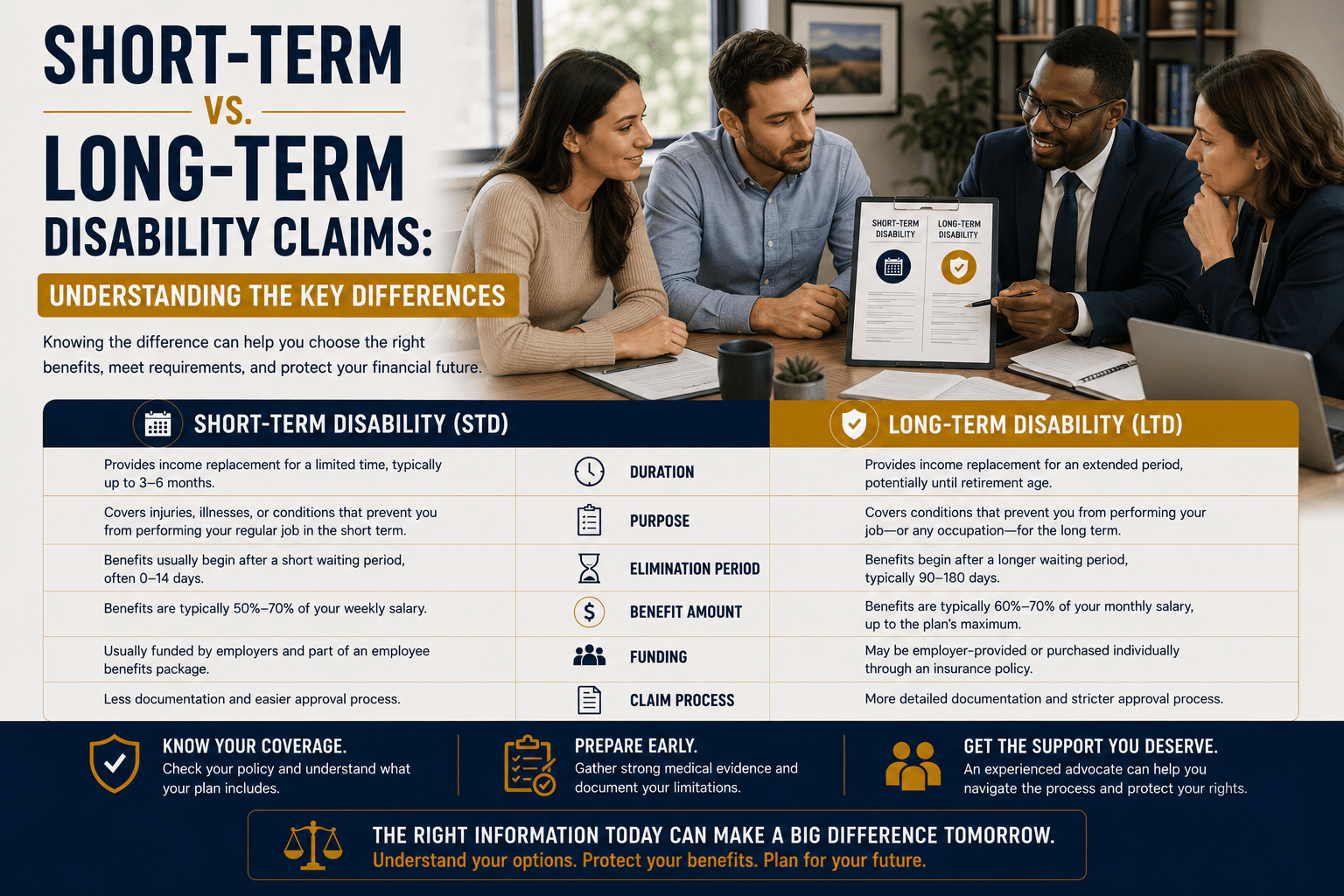
Comparing Short-Term and Long-Term Disability Claims
| Feature | Short-Term Disability | Long-Term Disability |
|---|---|---|
| Purpose | Temporary income support | Extended income replacement |
| Typical Duration | Weeks to several months | Months, years, or longer |
| Medical Conditions | Temporary illnesses or injuries | Long-lasting or permanent conditions |
| Documentation | Medical evidence supporting temporary disability | Comprehensive evidence demonstrating ongoing impairment |
| Reviews | Often shorter review periods | Periodic reassessments may continue over time |
Specific benefit periods and eligibility requirements vary depending on the applicable policy or program.
Waiting Periods
Many disability programs include a waiting period before benefits begin.
For short-term disability claims, the waiting period may be relatively brief.
Long-term disability coverage often begins only after:
- Short-term disability benefits end
- A specified elimination period expires
- Policy conditions are satisfied
Understanding waiting periods helps applicants prepare financially during the early stages of a disability.
Medical Documentation Requirements
Both claim types rely heavily on medical evidence.
However, long-term disability claims often require more extensive documentation because the expected duration of the condition is significantly longer.
Supporting records may include:
- Physician reports
- Specialist evaluations
- Diagnostic imaging
- Laboratory results
- Rehabilitation records
- Treatment history
- Functional capacity assessments
For long-term claims, reviewers frequently examine whether the condition is expected to improve, remain stable, or progressively worsen.
Functional Limitations
Regardless of the claim type, reviewers generally evaluate how the medical condition affects daily activities and work-related tasks.
Examples include:
- Standing
- Walking
- Sitting
- Lifting
- Driving
- Concentrating
- Communicating
- Performing repetitive movements
Long-term claims often require ongoing evidence demonstrating that these limitations continue over time.
Income Replacement
Disability benefits are generally designed to replace a portion of lost income rather than providing full salary replacement.
The amount depends on:
- Insurance policy terms
- Benefit program rules
- Employment arrangements
- Coverage limits
Applicants should carefully review their policy or benefit documentation to understand how payments are calculated.
Ongoing Reviews
Short-term disability claims often conclude once recovery is documented and the individual returns to work.
Long-term disability claims may involve periodic reviews to determine whether:
- The medical condition has changed.
- Treatment remains appropriate.
- Functional abilities have improved.
- Continued eligibility requirements are satisfied.
These reviews help ensure that benefits remain consistent with the applicant’s current medical situation.
Returning to Work
For many people receiving short-term disability benefits, returning to work is the expected outcome.
Healthcare providers may recommend:
- Graduated return-to-work plans
- Modified duties
- Reduced working hours
- Workplace accommodations
Long-term disability claims may also involve return-to-work planning where medical improvement occurs, although this depends on the individual’s condition and capabilities.
Common Misunderstandings
Several misconceptions often create confusion.
“Short-term disability automatically becomes long-term disability.”
Not necessarily.
A separate application, additional medical evidence, or different eligibility criteria may apply depending on the policy or benefit program.
“Long-term disability means permanent disability.”
Not always.
Some long-term disabilities improve over time, allowing individuals to return to work after extended treatment or rehabilitation.
“Every disability insurance policy provides the same benefits.”
Coverage varies significantly between insurers, employers, and government programs.
Applicants should always review the specific terms of their policy.
Tips for Preparing Either Type of Claim
Whether applying for short-term or long-term disability benefits, several practical steps can strengthen the application.
These include:
- Seeking prompt medical attention.
- Following recommended treatment plans.
- Keeping copies of medical records.
- Recording symptoms regularly.
- Organizing documentation chronologically.
- Responding quickly to requests for additional information.
- Reviewing eligibility requirements carefully.
Good preparation supports a smoother claims process regardless of the expected duration of the disability.
The Role of Communication
Maintaining clear communication with healthcare providers, employers, insurers, or benefit administrators is an important part of managing a disability claim.
Applicants should promptly report:
- Changes in medical condition
- Updated contact information
- New treatment recommendations
- Changes in work status
Accurate communication helps prevent misunderstandings and supports timely claim administration.
Looking Toward the Future
Medical advancements, improved rehabilitation techniques, and evolving workplace accommodations continue changing how disability claims are managed.
Digital health records, telemedicine, wearable health technology, and advanced diagnostic tools have improved the availability of medical evidence while making communication between healthcare providers and insurers more efficient.
As disability programs continue evolving, applicants who maintain thorough records and understand their coverage are likely to be better prepared throughout the claims process.
Conclusion
Short-term and long-term disability claims share the common goal of providing financial support when medical conditions prevent individuals from working. However, they differ significantly in expected duration, documentation requirements, benefit periods, review processes, and eligibility criteria.
Understanding these distinctions allows applicants to prepare more effectively, gather appropriate medical evidence, and better manage expectations throughout the claims process. Whether recovering from a temporary injury or managing a long-term medical condition, informed preparation remains one of the most valuable tools for navigating disability claims successfully.
Frequently Asked Questions
What is the biggest difference between short-term and long-term disability claims?
The primary difference is the expected duration of the medical condition. Short-term disability covers temporary conditions, while long-term disability addresses conditions expected to last much longer.
Can someone receive both short-term and long-term disability benefits?
In some situations, long-term disability benefits may begin after short-term disability coverage ends, depending on the terms of the applicable insurance policy or benefit program.
Do both types of claims require medical evidence?
Yes. Medical documentation is essential for both short-term and long-term disability claims, although long-term claims often require more extensive ongoing evidence.
Are disability benefits equal to a person’s full salary?
Not usually. Most disability programs provide partial income replacement based on the applicable policy or program rules.
Can a person return to work while receiving disability benefits?
Depending on the circumstances, some individuals may return through modified duties, reduced hours, or gradual return-to-work programs. The applicable rules vary depending on the disability program or insurance policy.