
The modern workforce has changed dramatically over the past two decades. Traditional full-time employment now exists alongside freelance work, consulting, temporary staffing, remote employment, and gig economy opportunities. While these flexible working arrangements offer benefits for both businesses and workers, they have also created one of the most important issues in employment law: employee misclassification.
Determining whether someone is legally considered an employee or an independent contractor affects numerous aspects of the working relationship, including tax obligations, workplace protections, employee benefits, insurance coverage, and legal rights. Because these classifications carry significant legal and financial consequences, governments and regulatory agencies across many countries closely examine worker classification practices.
Employee misclassification can occur intentionally or unintentionally. In either case, an incorrect classification may create challenges for workers, employers, and regulatory authorities alike.
This guide explains what employee misclassification means, why proper classification matters, and the factors commonly considered when determining employment status.
What Is Employee Misclassification?
Employee misclassification occurs when a worker is assigned the wrong legal employment status.
The most common situation involves a worker being classified as an independent contractor when the nature of the working relationship may more closely resemble that of an employee under applicable employment laws.
Proper classification depends on the actual working relationship rather than simply the title used in a contract.
Why Worker Classification Matters
Employment status influences many important legal rights and responsibilities.
Classification may affect:
- Wage protections
- Overtime eligibility
- Paid leave
- Tax responsibilities
- Retirement benefits
- Workplace safety protections
- Workers’ compensation eligibility
- Unemployment benefits
- Employment insurance programs
Because these rights vary significantly between employees and independent contractors, proper classification is an essential aspect of employment law.
Who Is an Employee?
Although definitions differ between jurisdictions, employees generally work under the direction and control of an employer.
Employees often receive:
- Regular wages or salaries
- Workplace benefits
- Scheduled working hours
- Employer supervision
- Ongoing work assignments
- Company equipment
- Paid leave where applicable
Employers typically have greater control over how, when, and where employees perform their work.
Who Is an Independent Contractor?
Independent contractors generally operate their own businesses while providing services to clients.
They often have greater flexibility regarding:
- Working hours
- Methods of performing work
- Client selection
- Business expenses
- Equipment
- Pricing of services
Contractors usually maintain greater independence than employees, although the exact legal standards differ across jurisdictions.
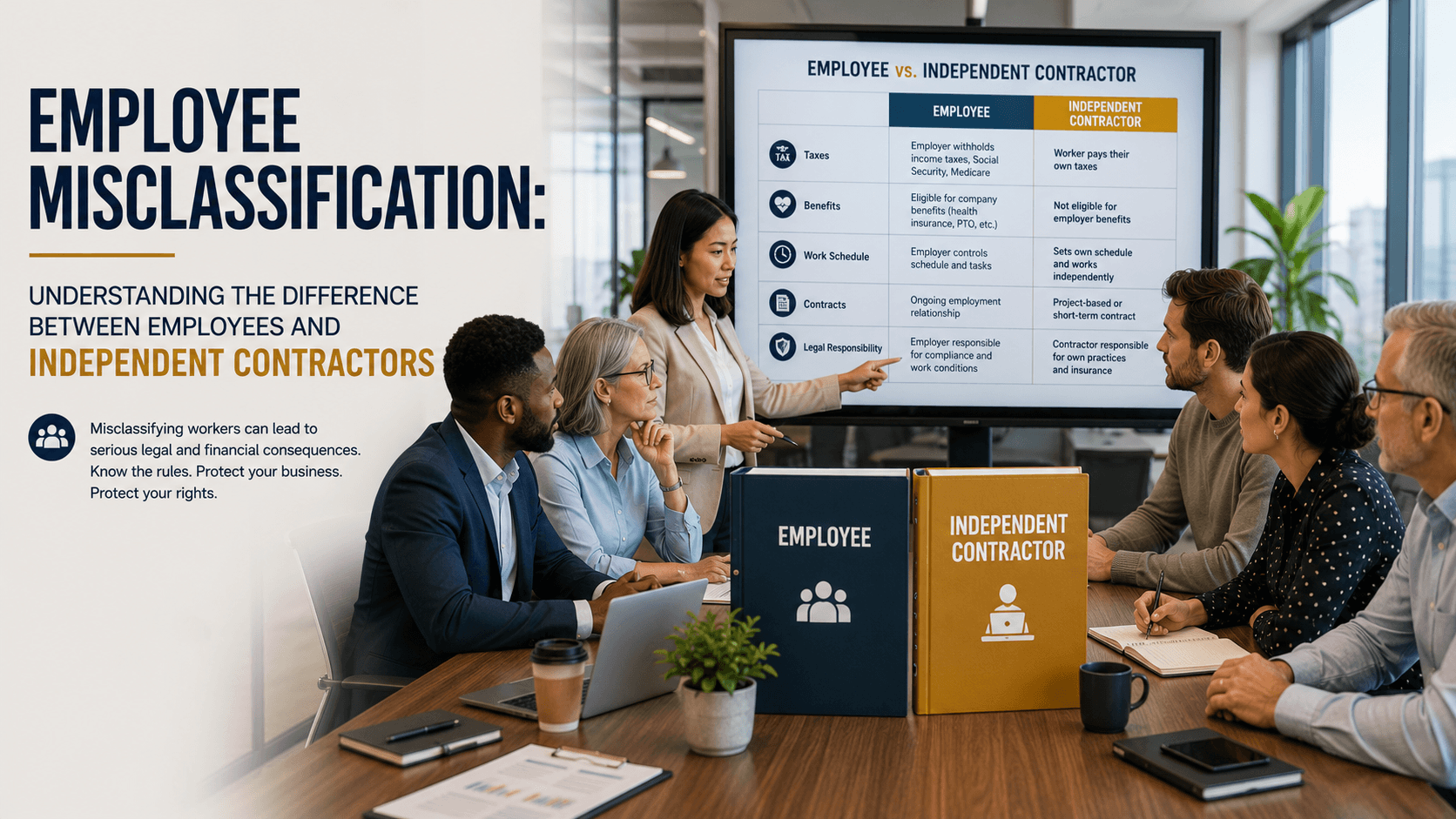
Employee vs. Independent Contractor
| Factor | Employee | Independent Contractor |
|---|---|---|
| Work Schedule | Usually determined by employer | Often self-managed |
| Supervision | Direct employer oversight | Greater independence |
| Equipment | Often provided by employer | Usually provides own equipment |
| Benefits | May receive employment benefits | Generally responsible for own benefits |
| Taxes | Employer often withholds taxes | Usually responsible for own tax obligations |
| Business Risk | Lower | Higher |
No single factor determines employment status. Decision-makers usually evaluate the overall nature of the working relationship.
Common Factors Used to Determine Employment Status
Although legal tests vary internationally, several common considerations frequently appear in employment law.
Degree of Control
One of the most important questions is how much control the hiring organization exercises.
Reviewers may consider:
- Work schedules
- Instructions provided
- Performance monitoring
- Required procedures
- Workplace rules
Greater employer control often suggests an employment relationship.
Financial Independence
Independent contractors generally manage their own businesses.
Considerations may include:
- Ability to work for multiple clients
- Responsibility for business expenses
- Opportunity for profit or loss
- Investment in equipment
- Marketing independent services
These factors help demonstrate business independence.
Nature of the Relationship
Decision-makers may also review:
- Length of the working relationship
- Written agreements
- Ongoing expectations
- Permanency of the arrangement
- Integration into the organization
Long-term, continuous relationships may receive closer examination.
Why Misclassification Happens
Employee misclassification may occur for several reasons.
Sometimes it results from:
- Misunderstanding legal requirements
- Changes in business operations
- Outdated employment practices
- Administrative errors
In other situations, disputes arise because the legal standards are complex and differ between jurisdictions.
Regardless of the reason, proper classification remains important for both employers and workers.
Potential Consequences for Employers
Incorrect worker classification may expose organizations to:
- Tax assessments
- Wage disputes
- Benefit claims
- Regulatory investigations
- Financial penalties
- Administrative costs
- Reputational damage
The exact consequences depend on applicable employment, tax, and labor laws.
Potential Consequences for Workers
Workers may also experience significant effects.
Misclassification may influence:
- Income stability
- Access to employee benefits
- Leave entitlements
- Insurance coverage
- Retirement contributions
- Workplace legal protections
Understanding employment status helps workers better understand the rights associated with their working arrangement.
The Gig Economy and Modern Work
Digital platforms have transformed how people work.
Many individuals now provide services through:
- Ride-sharing platforms
- Delivery services
- Online marketplaces
- Freelance platforms
- Digital consulting businesses
These evolving work arrangements have prompted governments and courts in many countries to reconsider traditional approaches to worker classification.
As technology continues evolving, employment law will likely continue adapting to new forms of work.
Best Practices for Employers
Organizations can reduce classification disputes by:
- Reviewing employment arrangements regularly.
- Maintaining accurate written agreements.
- Evaluating working relationships based on actual practices.
- Training managers on worker classification principles.
- Keeping employment records up to date.
Proactive compliance often reduces legal uncertainty.
Best Practices for Workers
Workers can better understand their employment status by:
- Reviewing written agreements carefully.
- Understanding workplace expectations.
- Keeping records of working arrangements.
- Asking questions when responsibilities change.
- Monitoring changes in work schedules and supervision.
Awareness helps individuals better understand their workplace rights and obligations.
Common Misconceptions
Myth: A contract alone determines employment status.
Not necessarily.
While written agreements are important, many jurisdictions examine the actual working relationship rather than relying solely on contractual language.
Myth: Independent contractors never work exclusively for one client.
Some contractors may have a single major client while still operating as independent businesses.
The overall relationship is generally more important than any single factor.
Myth: Remote workers are always independent contractors.
Remote work alone does not determine employment status.
Many remote workers are employees, while others operate as independent contractors.
Looking Toward the Future
Employment law continues adapting to technological innovation and changing workforce models.
Artificial intelligence, remote work, digital platforms, and international business relationships are creating increasingly complex employment arrangements.
Governments around the world continue reviewing worker classification frameworks to balance business flexibility with appropriate workplace protections.
Organizations that regularly review their employment practices and workers who understand their legal status will be better prepared as employment laws continue to evolve.
Conclusion
Employee misclassification is one of the most significant employment law issues affecting today’s workforce. Correctly distinguishing between employees and independent contractors influences workplace rights, tax obligations, employee benefits, legal protections, and employer responsibilities.
Although the legal standards differ across jurisdictions, the underlying principle remains consistent: employment status should reflect the true nature of the working relationship rather than simply the wording of a contract. By understanding the factors that influence worker classification, both employers and workers can make informed decisions while reducing the risk of future disputes.
Frequently Asked Questions
What is employee misclassification?
Employee misclassification occurs when a worker is assigned the wrong legal employment status, such as being classified as an independent contractor when the working relationship may legally resemble employment.
Why does worker classification matter?
Worker classification affects employee rights, tax responsibilities, workplace protections, benefits, insurance coverage, and employer obligations.
Does a written contract automatically determine employment status?
No. In many jurisdictions, authorities consider the actual working relationship in addition to the written agreement.
Can remote workers be employees?
Yes. Remote work does not automatically make someone an independent contractor. Employment status depends on multiple legal factors.
How can employers reduce the risk of employee misclassification?
Organizations can regularly review working relationships, maintain accurate agreements, train managers, and ensure employment practices align with applicable employment laws.