
Healthy workplaces are built on professionalism, respect, and effective communication. Employees who feel safe and valued are often more engaged, productive, and motivated to contribute to organizational success. Unfortunately, not every workplace maintains this standard. Some employees experience inappropriate behavior that affects their confidence, wellbeing, and ability to perform their jobs.
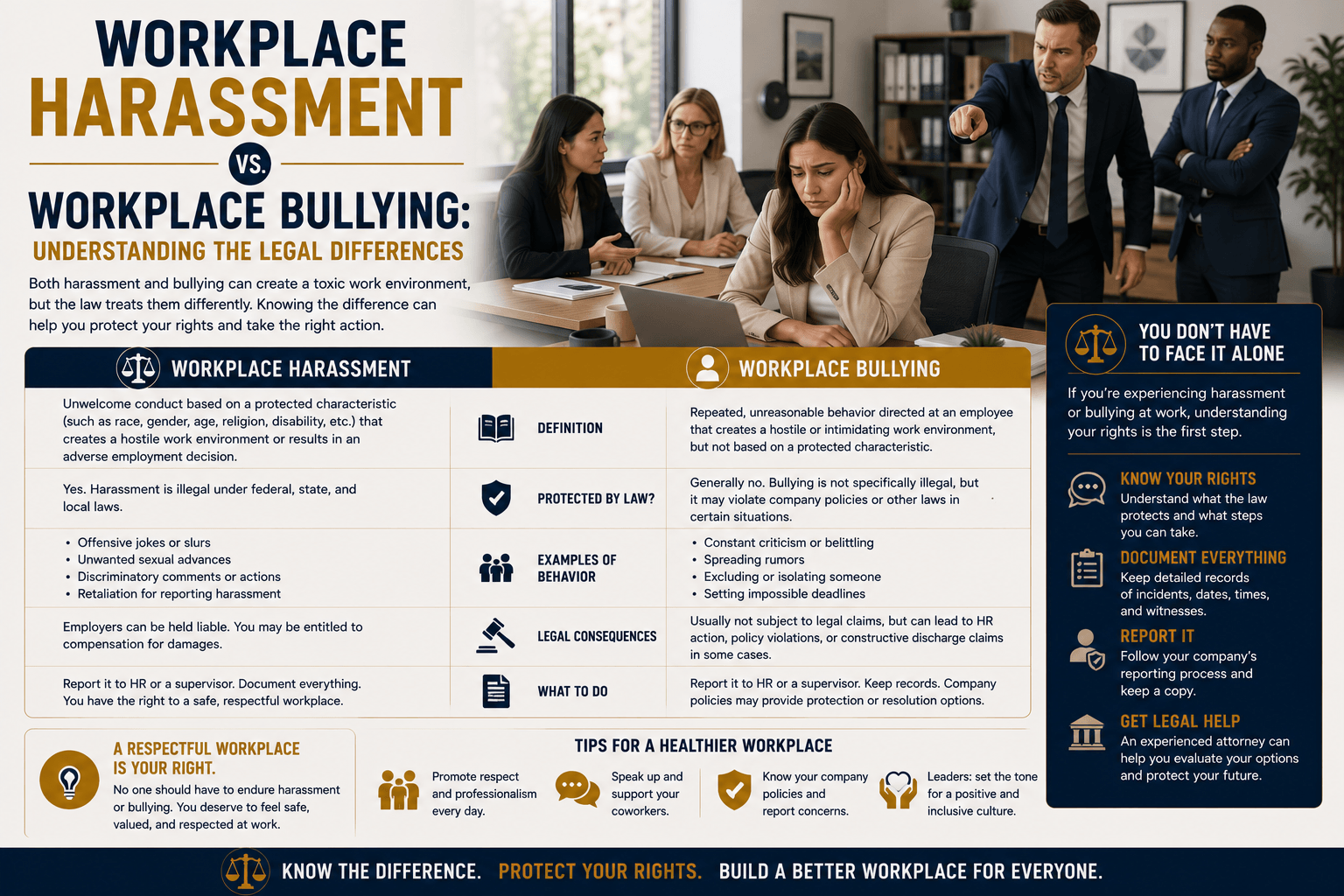
Two terms frequently used to describe these situations are workplace harassment and workplace bullying. Although they are sometimes used interchangeably, they do not always mean the same thing. Understanding the distinction is important because the legal implications, employer responsibilities, and available workplace remedies may differ depending on the circumstances and the laws that apply.
Whether an organization operates in the United States, the United Kingdom, Canada, Australia, or another jurisdiction, promoting respectful workplace behavior benefits both employers and employees. Recognizing unacceptable conduct early can help prevent conflicts from escalating while supporting healthier working environments.
This guide explains the differences between workplace harassment and workplace bullying, explores their potential impact, and outlines practical strategies for prevention and response.
What Is Workplace Harassment?
Workplace harassment generally refers to unwelcome behavior directed toward an employee that relates to a legally protected characteristic under applicable employment laws.
Depending on the jurisdiction, protected characteristics may include:
- Race or ethnicity
- Religion
- Sex or gender
- Pregnancy
- Disability
- Age
- National origin
- Sexual orientation
- Gender identity
- Other legally protected characteristics
Harassment may involve repeated behavior, although a single serious incident may also be sufficient in certain circumstances.
The defining feature is that the conduct is connected to a legally protected characteristic rather than simply being rude or unpleasant.
What Is Workplace Bullying?
Workplace bullying generally refers to repeated unreasonable behavior that intimidates, humiliates, undermines, or isolates another employee.
Unlike workplace harassment, bullying is not always linked to a protected characteristic.
Examples may include:
- Constant criticism
- Public humiliation
- Verbal intimidation
- Deliberate exclusion
- Excessive monitoring
- Spreading rumors
- Unreasonable workloads
- Persistent personal insults
While bullying can seriously affect employee wellbeing, whether it creates a legal claim depends on the applicable employment laws in the relevant jurisdiction.
The Key Difference
The primary distinction is the legal basis of the behavior.
Workplace harassment generally involves conduct connected to legally protected characteristics.
Workplace bullying usually refers to repeated inappropriate behavior that may not involve protected characteristics but still creates an unhealthy work environment.
This distinction often influences:
- Employer obligations
- Internal investigations
- Legal protections
- Complaint procedures
- Potential legal remedies
Comparison: Workplace Harassment vs. Workplace Bullying
| Feature | Workplace Harassment | Workplace Bullying |
|---|---|---|
| Related to protected characteristics | Usually yes | Not necessarily |
| May violate employment laws | Often | Depends on jurisdiction |
| Can involve a single serious incident | Sometimes | Usually involves repeated conduct |
| Internal workplace policies apply | Yes | Yes |
| May affect employee wellbeing | Yes | Yes |
Although these categories differ legally, both can damage workplace culture and employee morale.
Examples of Workplace Harassment
Examples may include:
- Offensive comments about religion or race.
- Unwanted sexual advances.
- Mocking an employee’s disability.
- Repeated discriminatory jokes.
- Derogatory comments about age.
- Harassing messages targeting a protected characteristic.
Such behavior may violate workplace policies and applicable employment laws.
Examples of Workplace Bullying
Bullying behavior may include:
- Constantly interrupting meetings.
- Publicly criticizing an employee.
- Intentionally excluding someone from important discussions.
- Setting unrealistic deadlines to cause failure.
- Persistent verbal aggression.
- Repeated personal insults unrelated to job performance.
Although these actions may not always meet the legal definition of harassment, they can still create significant workplace problems.
The Impact on Employees
Both harassment and bullying may affect employees in multiple ways.
Possible effects include:
- Increased stress
- Reduced confidence
- Anxiety
- Depression
- Lower productivity
- Sleep disturbances
- Reduced job satisfaction
- Higher absenteeism
In severe cases, ongoing workplace mistreatment may contribute to long-term physical or mental health challenges.
The Impact on Employers
Employers are also affected when inappropriate workplace behavior goes unaddressed.
Potential consequences include:
- Reduced employee morale.
- Higher staff turnover.
- Increased absenteeism.
- Lower productivity.
- Damage to organizational reputation.
- Recruitment challenges.
- Workplace conflict.
- Increased legal risk.
Creating respectful workplaces benefits organizations as well as employees.
Employer Responsibilities
Employers play a critical role in preventing harassment and bullying.
Effective workplace practices often include:
- Clear workplace policies.
- Employee training.
- Confidential reporting procedures.
- Prompt investigations.
- Fair disciplinary processes.
- Leadership accountability.
Organizations that respond consistently to workplace concerns often build stronger employee trust.
Employee Responsibilities
Employees also contribute to maintaining respectful workplaces.
Good practices include:
- Treating colleagues professionally.
- Respecting workplace diversity.
- Reporting inappropriate behavior.
- Participating in workplace training.
- Cooperating during investigations.
- Following organizational policies.
Professional communication helps reduce misunderstandings and workplace conflict.
Reporting Workplace Concerns
Employees who experience or witness inappropriate behavior should generally follow the reporting procedures established by their organization.
Depending on workplace policies, concerns may be reported to:
- A direct supervisor.
- Human resources.
- A designated ethics officer.
- Workplace compliance personnel.
- Senior management.
Maintaining records of relevant incidents may assist with internal reviews where appropriate.
Building a Respectful Workplace Culture
Prevention is often more effective than resolving disputes after they occur.
Organizations can strengthen workplace culture by:
- Encouraging respectful communication.
- Providing regular training.
- Promoting diversity and inclusion.
- Supporting open dialogue.
- Addressing concerns promptly.
- Applying workplace policies consistently.
Employees who feel respected are more likely to contribute positively to the organization.
The Role of Technology
Modern workplaces increasingly rely on digital communication.
As a result, inappropriate conduct may occur through:
- Messaging platforms
- Video conferences
- Internal collaboration tools
- Social media interactions
- Workplace chat applications
Employers should ensure that workplace conduct policies apply equally to in-person and digital communication.
Common Misconceptions
Myth: Harassment and bullying are exactly the same.
Although they may appear similar, harassment generally involves protected characteristics, while bullying may not.
Myth: Only managers can engage in harassment or bullying.
Inappropriate behavior may involve supervisors, coworkers, contractors, clients, or other individuals within the workplace.
Myth: Minor incidents should always be ignored.
Addressing concerns early may prevent more serious workplace conflicts from developing.
Looking Toward the Future
As workplaces continue evolving through remote work, hybrid teams, and digital collaboration, organizations face new challenges in maintaining respectful work environments.
Artificial intelligence, virtual communication platforms, and global workforces are creating new considerations regarding employee interactions, workplace investigations, and organizational policies.
Despite these changes, one principle remains constant: workplaces built on respect, fairness, and accountability are better positioned to support employee wellbeing and long-term organizational success.
Conclusion
Workplace harassment and workplace bullying both have the potential to undermine employee wellbeing, workplace morale, and organizational performance. Although the two concepts differ in important legal respects, each deserves serious attention from employers and employees alike.
Understanding the distinction helps organizations develop effective workplace policies while enabling employees to recognize unacceptable conduct and use appropriate reporting procedures. By promoting respectful communication, providing effective training, and responding promptly to workplace concerns, employers can create safer, more inclusive environments where employees are able to perform at their best.
Frequently Asked Questions
What is workplace harassment?
Workplace harassment generally refers to unwelcome conduct connected to a legally protected characteristic, such as race, disability, religion, sex, or age, depending on applicable employment laws.
What is workplace bullying?
Workplace bullying involves repeated unreasonable behavior that intimidates, humiliates, or undermines another employee, even if it is not connected to a protected characteristic.
Can workplace bullying become illegal?
Depending on the jurisdiction and circumstances, bullying may violate employment laws, workplace safety obligations, or organizational policies.
What should employees do if they experience workplace harassment?
Employees should generally follow their employer’s reporting procedures, maintain records of relevant incidents, and cooperate with any workplace investigation.
Why is preventing workplace harassment important?
Preventing harassment helps protect employee wellbeing, improves workplace culture, reduces organizational risk, and promotes respectful and productive working environments.