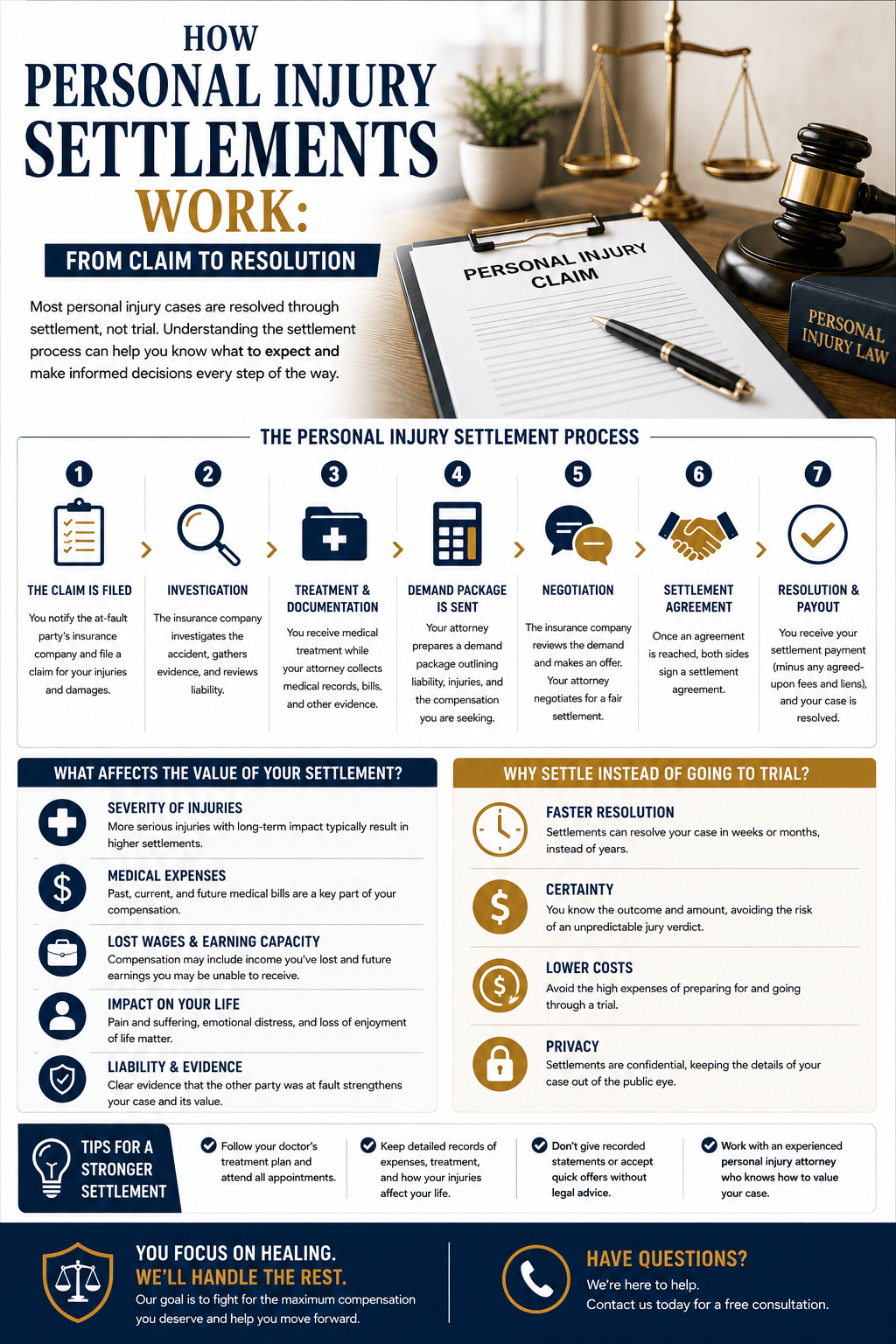

When someone suffers an injury because of an accident or another person’s alleged negligence, the consequences often extend far beyond the initial physical harm. Medical bills begin to accumulate, time away from work may reduce income, rehabilitation can take months or even years, and the emotional effects of an injury may continue long after physical wounds have healed.
Personal injury law seeks to address these losses through various forms of compensation known as damages. In legal terms, damages refer to the monetary compensation that may be awarded to an injured person when liability has been established under applicable law. The goal is generally to place the injured individual, as much as money can, in the position they would have been in had the injury not occurred.
Understanding the different categories of personal injury damages helps individuals better understand how compensation is evaluated and why every personal injury case is unique.
What Are Personal Injury Damages?
Personal injury damages are monetary awards intended to compensate an injured person for losses resulting from an accident or wrongful conduct.
The available damages depend on many factors, including:
- The nature of the injury
- Medical treatment required
- Financial losses
- Long-term impact
- Applicable laws
- Available evidence
- Insurance coverage
- The specific facts of the case
Courts and insurance companies generally evaluate damages based on documented evidence rather than assumptions.
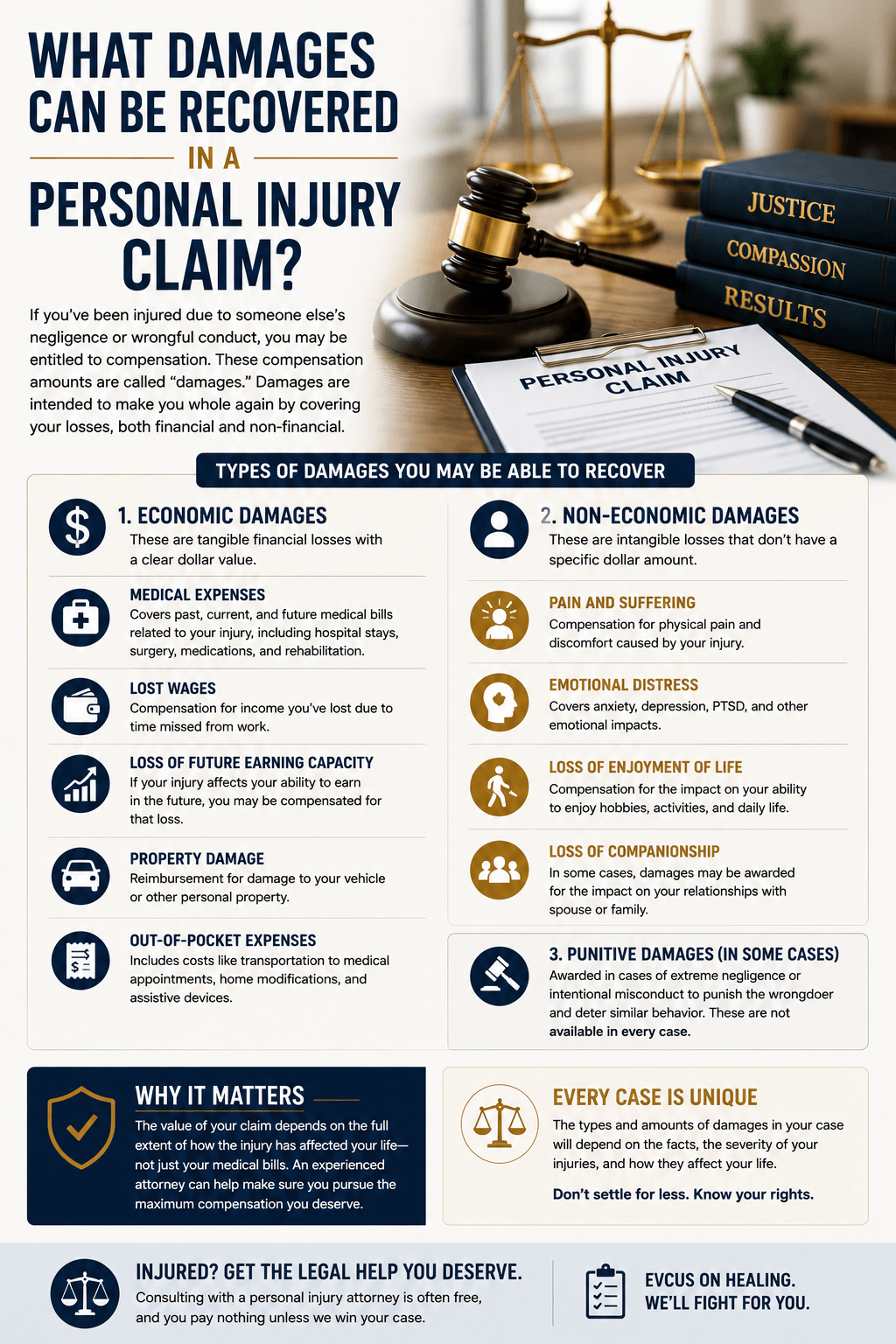
The Main Categories of Personal Injury Damages
Personal injury damages are commonly divided into three broad categories:
- Economic damages
- Non-economic damages
- Punitive damages (available only in limited circumstances under applicable law)
Each category serves a different purpose within the civil justice system.
Economic Damages
Economic damages compensate for measurable financial losses.
Because these losses can often be documented through invoices, receipts, employment records, or expert evaluations, they are sometimes referred to as special damages.
Medical Expenses
Medical treatment frequently represents one of the largest categories of economic damages.
Medical expenses may include:
- Emergency room treatment
- Ambulance services
- Hospital stays
- Physician visits
- Surgical procedures
- Prescription medications
- Physical therapy
- Diagnostic testing
- Medical equipment
- Rehabilitation services
Future medical expenses may also be considered when ongoing treatment is reasonably anticipated.
Lost Wages
An injury may temporarily prevent someone from returning to work.
Compensation for lost wages may include:
- Missed salary
- Hourly wages
- Overtime
- Bonuses
- Commissions
- Self-employment income
Employment records often help document these financial losses.
Loss of Future Earning Capacity
Some injuries create permanent limitations that affect future employment opportunities.
Factors commonly considered include:
- Age
- Occupation
- Education
- Skills
- Medical condition
- Long-term disability
- Expected career progression
Economic experts may evaluate the projected financial impact over a person’s working lifetime.
Property Damage
Some personal injury incidents also involve damage to personal property.
Examples include:
- Vehicle repairs
- Bicycle replacement
- Mobile phones
- Computers
- Eyeglasses
- Clothing
- Other personal belongings
Repair estimates and replacement costs often help establish these losses.
Rehabilitation and Long-Term Care
Serious injuries sometimes require ongoing support beyond initial medical treatment.
Examples include:
- Occupational therapy
- Speech therapy
- Home healthcare
- Mobility equipment
- Home modifications
- Assisted living services
These future costs may become an important part of the overall damages evaluation.
Non-Economic Damages
Not every consequence of an injury can be measured with receipts or invoices.
Non-economic damages compensate for intangible losses that affect an individual’s quality of life.
Pain and Suffering
Pain and suffering refers to the physical discomfort experienced because of an injury.
The severity and duration of pain vary widely depending on:
- Type of injury
- Medical treatment
- Recovery time
- Long-term complications
Because pain is subjective, supporting medical documentation often plays an important role.
Emotional Distress
Accidents may also affect emotional well-being.
Examples include:
- Anxiety
- Depression
- Fear
- Emotional trauma
- Sleep disturbances
- Stress
Mental health professionals may provide evaluations that help document emotional injuries.
Loss of Enjoyment of Life
Some injuries permanently limit participation in activities a person previously enjoyed.
Examples may include:
- Sports
- Hobbies
- Travel
- Recreational activities
- Social events
These changes may become relevant when evaluating the overall impact of an injury.
Loss of Consortium
In some jurisdictions, family relationships may also be affected by serious injuries.
Loss of consortium generally refers to the impact an injury may have on companionship, support, or other aspects of certain close personal relationships, subject to applicable law.
Punitive Damages
Punitive damages differ from compensatory damages.
Rather than compensating the injured person for losses, punitive damages are generally intended to punish particularly egregious conduct and discourage similar behavior in the future.
Punitive damages are not available in every personal injury case.
Their availability depends on:
- Applicable law
- The facts of the case
- The nature of the defendant’s conduct
Because legal standards vary significantly, punitive damages are typically reserved for limited circumstances.
Factors That May Influence Damages
Every personal injury claim is unique.
Several factors may influence the amount of recoverable damages, including:
- Severity of injuries
- Length of recovery
- Medical expenses
- Permanent disability
- Future treatment needs
- Lost earning capacity
- Strength of the evidence
- Applicable laws
- Comparative fault rules
No two cases are identical, which is why damages are evaluated individually.
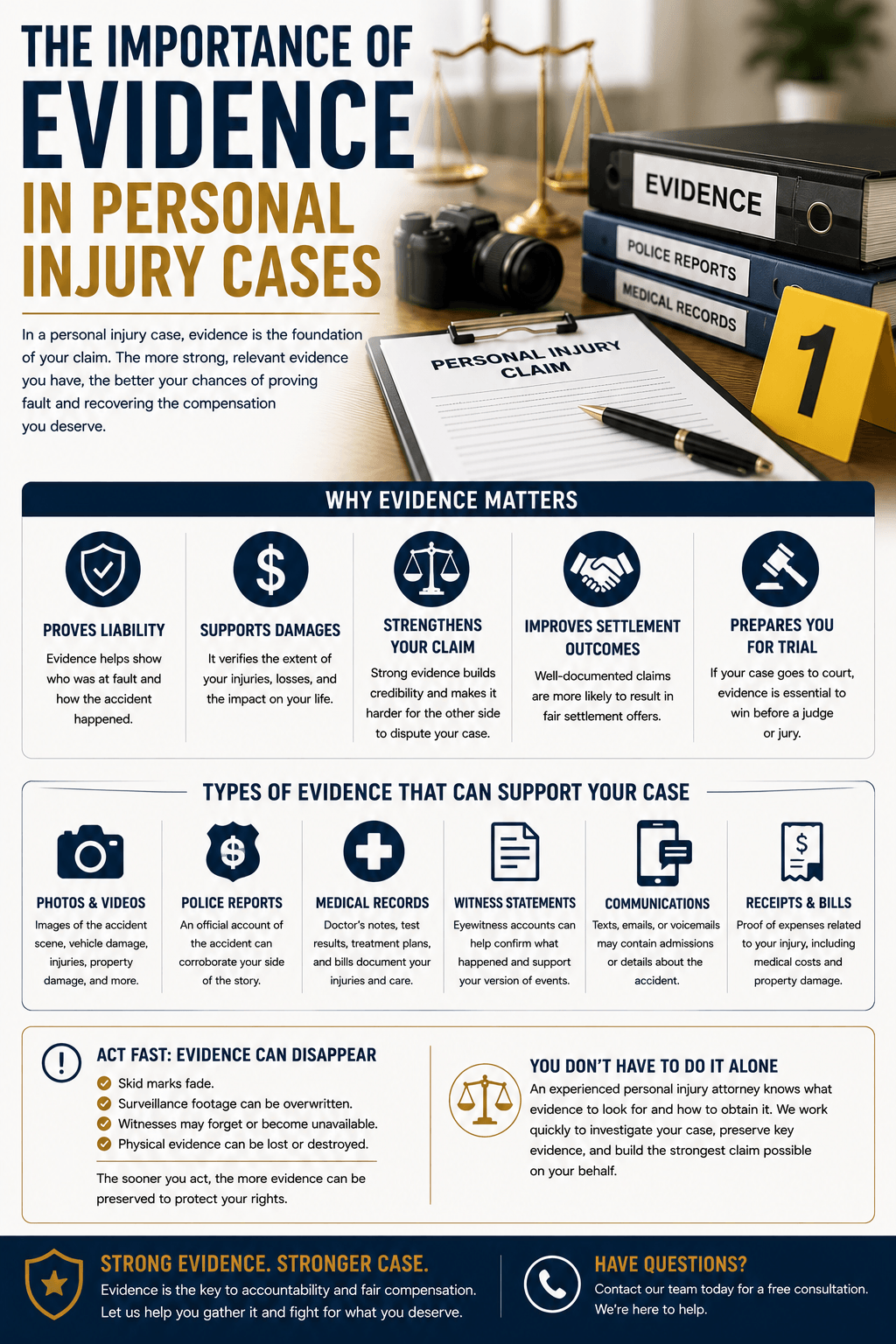
The Importance of Evidence
Evidence plays a central role in establishing damages.
Common forms of documentation include:
- Medical records
- Hospital bills
- Prescription receipts
- Employment records
- Tax returns
- Photographs
- Expert opinions
- Rehabilitation reports
- Witness statements
Thorough documentation helps demonstrate both the financial and personal impact of an injury.
Insurance and Damages
Insurance companies often evaluate damages by reviewing:
- Medical documentation
- Accident reports
- Employment information
- Property damage estimates
- Expert evaluations
- Applicable insurance policies
Settlement discussions frequently involve differing opinions regarding the value of various categories of damages.
Future Damages
Some injuries continue affecting individuals long after the accident.
Future damages may include:
- Ongoing medical care
- Additional surgeries
- Rehabilitation
- Long-term therapy
- Home modifications
- Assistive devices
- Reduced earning capacity
Medical experts and economists often assist in estimating future losses.
Common Misconceptions About Personal Injury Damages
Myth: Every Injury Results in Large Compensation
Compensation varies significantly depending on the severity of the injury, available evidence, applicable laws, and the specific facts of the case.
Myth: Pain and Suffering Can Be Calculated Exactly
Unlike medical bills or lost wages, pain and suffering is subjective and evaluated using various legal and factual considerations rather than a fixed formula.
Myth: Punitive Damages Are Awarded in Every Case
Punitive damages are generally available only in limited situations involving particularly serious misconduct, depending on applicable law.
Myth: Only Medical Bills Matter
Personal injury damages may include many different categories of losses, including lost income, rehabilitation costs, emotional distress, future care needs, and reduced quality of life.
The Future of Personal Injury Damage Evaluation
Advances in technology continue influencing how damages are evaluated.
Emerging developments include:
- Electronic medical records
- Wearable health devices
- Artificial intelligence-assisted claims analysis
- Digital accident reconstruction
- Telemedicine documentation
- Economic forecasting software
- Life-care planning tools
- Data-driven medical assessments
These technologies may improve the accuracy of documenting injuries and estimating long-term financial losses.
Conclusion
Personal injury damages are designed to compensate individuals for the wide-ranging consequences that can follow an accident or injury. Depending on the circumstances and applicable law, damages may include economic losses such as medical expenses and lost wages, non-economic losses such as pain and suffering and emotional distress, and, in limited cases, punitive damages.
Because every injury affects people differently, damages are evaluated based on the specific facts, available evidence, and governing legal standards. Understanding these categories helps individuals appreciate how personal injury claims are assessed and why thorough documentation plays such an important role in determining fair compensation.
Frequently Asked Questions
What are personal injury damages?
Personal injury damages are monetary compensation that may be awarded to an injured person for losses resulting from an accident or another party’s alleged negligence or wrongful conduct.
What is the difference between economic and non-economic damages?
Economic damages compensate measurable financial losses such as medical expenses and lost wages, while non-economic damages address intangible losses such as pain and suffering or emotional distress.
Are future medical expenses recoverable?
Depending on the facts of the case and applicable law, future medical treatment and long-term care costs may be considered when evaluating damages.
What are punitive damages?
Punitive damages are monetary awards that may be available in limited circumstances to punish particularly egregious conduct and discourage similar behavior, rather than to compensate for losses.
Why is documentation important when claiming damages?
Medical records, employment information, receipts, expert evaluations, and other evidence help demonstrate the extent of injuries and financial losses, supporting the assessment of recoverable damages.