
Modern healthcare has transformed the way illnesses are diagnosed, treated, and prevented. Advances in medical technology, pharmaceuticals, surgical techniques, and patient care have significantly improved life expectancy and health outcomes around the world. Even so, healthcare remains a complex field where professionals make countless critical decisions every day. While the vast majority of treatments are delivered safely and effectively, mistakes can occur, and in certain circumstances those mistakes may lead to medical malpractice claims.
Medical malpractice cases are not limited to one specialty or healthcare setting. They may arise in hospitals, clinics, emergency departments, pharmacies, nursing homes, dental practices, or outpatient facilities. However, it is important to recognize that not every medical error amounts to malpractice. Many complications occur despite appropriate care, while others result from risks that are fully understood before treatment begins.
Learning about the types of medical malpractice helps patients better understand how healthcare systems work, why patient safety protocols exist, and how medical professionals strive to reduce preventable harm.
Understanding Medical Malpractice
Medical malpractice generally occurs when a healthcare provider allegedly fails to provide care that meets the accepted professional standard, resulting in injury or harm to a patient.
Although legal requirements vary between jurisdictions, malpractice claims typically involve four essential elements:
- A professional duty of care existed.
- The accepted standard of care was allegedly breached.
- The breach contributed to the patient’s injury.
- The patient experienced measurable damages.
Each case is evaluated according to its own facts, medical evidence, and applicable legal standards.
Why Medical Errors Occur
Healthcare professionals work in environments that often involve:
- Time-sensitive decisions
- Complex medical conditions
- Multiple treatment options
- Emergency situations
- Large multidisciplinary teams
- Rapidly changing patient conditions
Because healthcare is highly complex, many organizations invest heavily in quality improvement initiatives designed to reduce preventable errors while continuously improving patient outcomes.
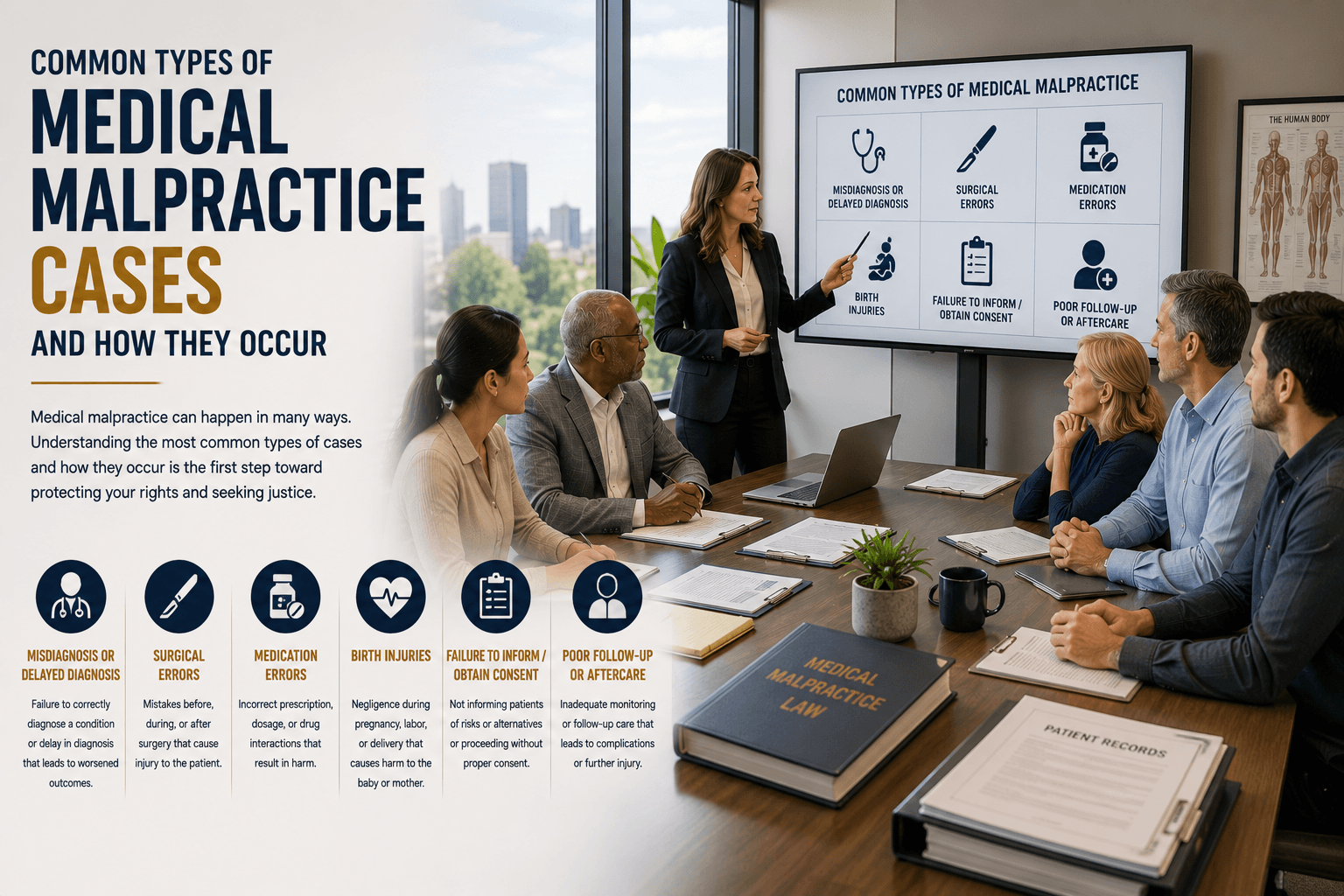
1. Diagnostic Errors
Diagnostic errors are among the most frequently discussed categories of medical malpractice.
Accurate diagnosis is the foundation of effective treatment. When a diagnosis is delayed, missed, or incorrect, patients may receive inappropriate treatment or experience delays in receiving the care they need.
Examples include:
- Misdiagnosis
- Delayed diagnosis
- Failure to diagnose
- Incorrect interpretation of laboratory results
- Failure to recognize warning signs
Diagnostic challenges are particularly common when illnesses share similar symptoms or when rare diseases present in unexpected ways.
Modern healthcare increasingly uses advanced imaging, laboratory testing, and clinical decision-support tools to improve diagnostic accuracy.
2. Surgical Errors
Surgery requires extensive preparation, teamwork, and careful execution.
Although surgical procedures are generally performed safely, mistakes may occur during preoperative planning, the procedure itself, or postoperative care.
Examples include:
- Wrong-site surgery
- Retained surgical instruments
- Damage to nearby organs or tissues
- Inadequate postoperative monitoring
- Failure to recognize surgical complications
Hospitals use standardized surgical safety checklists and verification procedures to minimize these risks.
3. Medication Errors
Medication errors may occur at several stages of patient care.
Potential situations include:
- Prescribing the wrong medication
- Incorrect dosage
- Drug interactions
- Pharmacy dispensing mistakes
- Administration errors
- Failure to review allergy information
Electronic prescribing systems, barcode medication verification, and computerized decision-support tools have significantly reduced many medication-related risks.
4. Birth Injuries
Pregnancy and childbirth involve continuous monitoring of both the parent and the baby.
Medical malpractice allegations may arise when concerns exist regarding:
- Prenatal care
- Labor monitoring
- Delayed cesarean delivery
- Improper use of delivery instruments
- Failure to recognize fetal distress
- Newborn care immediately after birth
Because every pregnancy presents unique medical circumstances, these cases often require detailed review by qualified medical experts.
5. Anesthesia Errors
Administering anesthesia requires specialized knowledge and constant monitoring.
Potential concerns may include:
- Incorrect dosage
- Delayed response to complications
- Airway management problems
- Equipment malfunction
- Inadequate patient monitoring
Advances in monitoring technology have made anesthesia safer than ever before, but continuous vigilance remains essential.
6. Emergency Room Errors
Emergency departments frequently treat patients with life-threatening conditions where rapid decisions are necessary.
Potential issues may involve:
- Delayed treatment
- Failure to order appropriate testing
- Misinterpretation of symptoms
- Communication failures during patient transfer
- Delayed specialist consultation
Emergency physicians often manage numerous patients simultaneously, making effective communication and standardized procedures especially important.
7. Communication Failures
Clear communication plays a central role in patient safety.
Breakdowns in communication may occur between:
- Physicians
- Nurses
- Specialists
- Pharmacists
- Laboratories
- Patients
- Family members
Examples include:
- Incomplete patient handoffs
- Missing laboratory reports
- Unclear discharge instructions
- Failure to communicate test results
- Documentation errors
Healthcare organizations increasingly implement structured communication protocols to reduce misunderstandings.
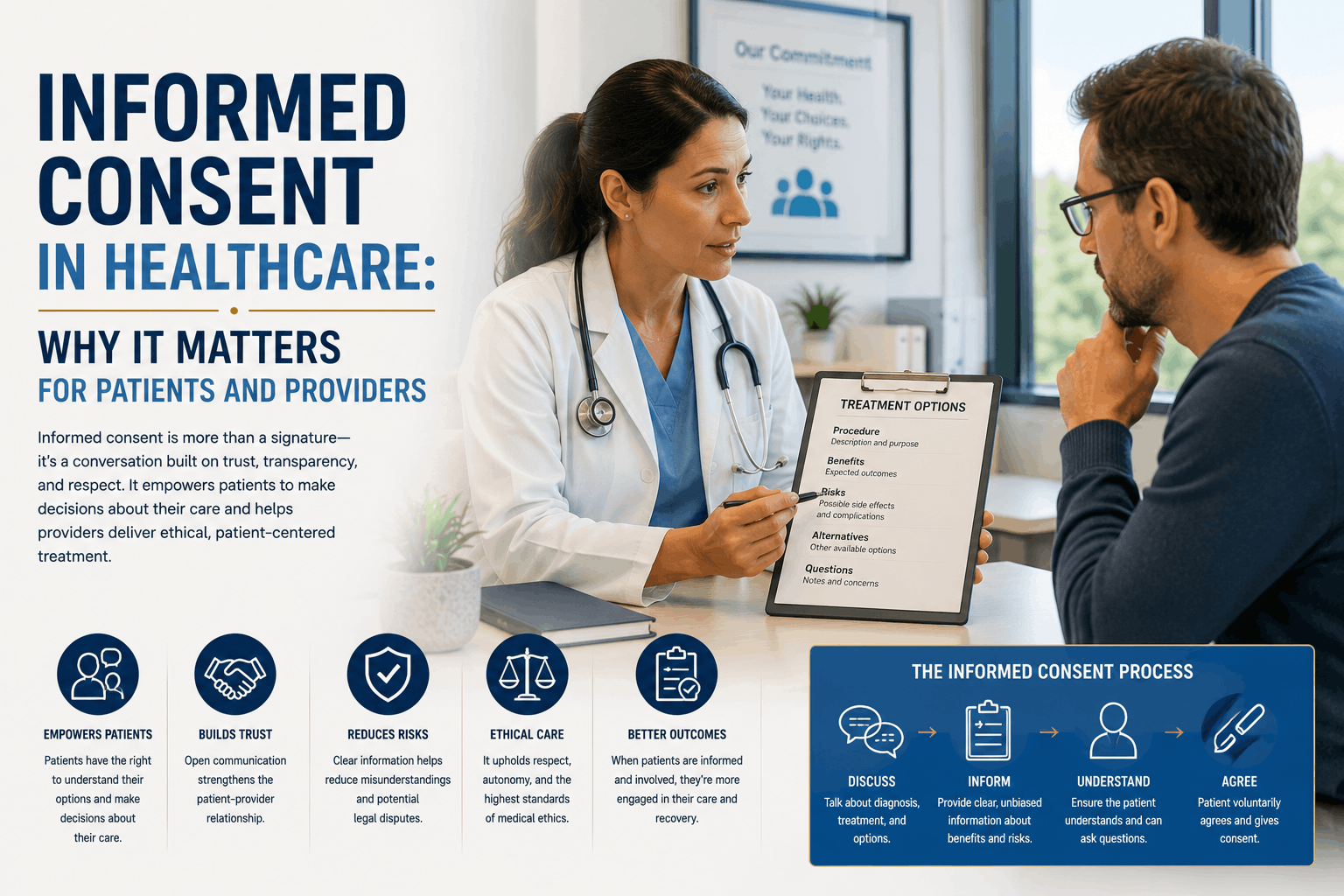
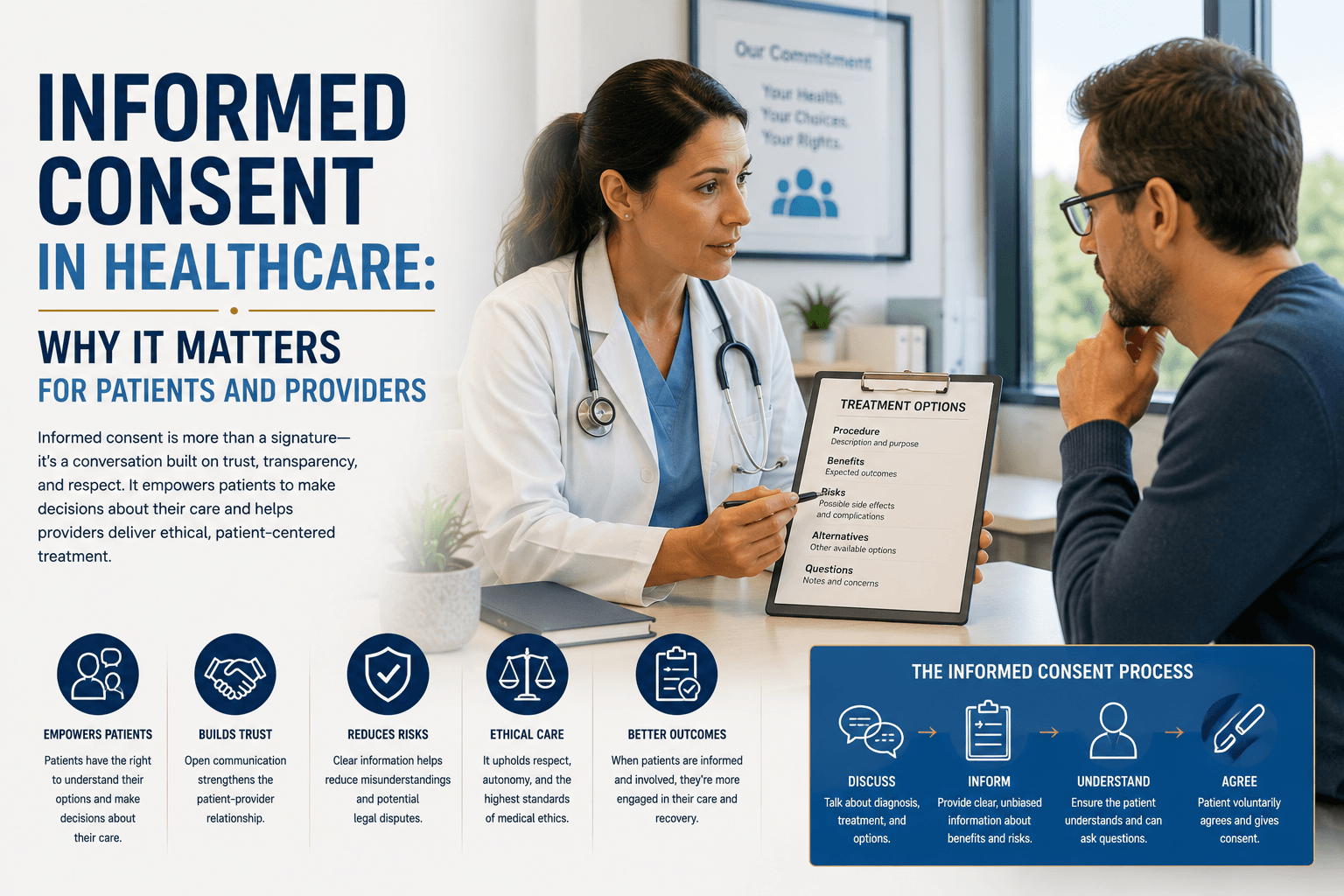
8. Failure to Obtain Informed Consent
Before many medical procedures, patients are generally provided with information regarding:
- The proposed treatment
- Potential benefits
- Known risks
- Available alternatives
- Expected outcomes
This process allows patients to make informed healthcare decisions.
Questions regarding informed consent may arise when there are concerns that patients were not provided sufficient information before treatment.
9. Hospital-Acquired Infections
Healthcare facilities maintain extensive infection prevention programs.
Despite these efforts, infections may occasionally occur during hospitalization.
Patient safety measures commonly include:
- Sterilization procedures
- Hand hygiene protocols
- Isolation precautions
- Equipment disinfection
- Antibiotic stewardship programs
Whether a hospital-acquired infection results from negligence depends upon the specific medical and factual circumstances of each case.
10. Laboratory and Diagnostic Testing Errors
Laboratory services support nearly every area of medicine.
Potential issues may include:
- Delayed test processing
- Specimen identification errors
- Incorrect reporting
- Lost samples
- Failure to communicate abnormal findings
Modern laboratories use automated systems and multiple quality-control procedures to improve accuracy.
Contributing Factors
Medical malpractice rarely results from a single issue.
Several factors may contribute simultaneously, including:
- High patient volumes
- Complex medical conditions
- Incomplete information
- Human error
- Equipment failures
- System-wide communication challenges
- Documentation problems
- Workflow interruptions
Understanding these contributing factors allows healthcare organizations to strengthen safety systems rather than focusing solely on individual mistakes.
The Importance of Patient Safety Culture
Today’s healthcare institutions emphasize continuous improvement.
Patient safety initiatives often include:
- Staff education
- Simulation training
- Electronic health records
- Incident reporting systems
- Root cause analysis
- Team-based communication strategies
- Standardized treatment protocols
These programs help reduce preventable errors while improving the overall quality of care.
Preventing Medical Malpractice Through Better Healthcare Systems
While no healthcare system can completely eliminate the possibility of medical errors, continuous improvements in technology, education, communication, and organizational culture have significantly reduced many preventable risks.
Today, hospitals, clinics, and healthcare providers invest substantial resources in quality improvement programs designed to enhance patient safety and deliver more consistent care.
Some of the most effective prevention strategies include:
- Standardized clinical guidelines
- Electronic health record (EHR) systems
- Medication verification technology
- Surgical safety checklists
- Continuing medical education
- Peer review programs
- Infection prevention initiatives
- Team-based communication protocols
These measures help healthcare professionals identify potential risks before they affect patients.
The Role of Patients in Safer Healthcare
Patient safety is a partnership between healthcare professionals and patients.
Individuals can actively participate in their care by:
- Providing complete and accurate medical histories.
- Sharing information about allergies and current medications.
- Asking questions when treatment plans are unclear.
- Following prescribed instructions carefully.
- Attending recommended follow-up appointments.
- Reporting new or worsening symptoms promptly.
- Keeping copies of important medical records.
Well-informed patients often contribute to better communication and more effective healthcare outcomes.
Technology and the Future of Patient Safety
Medical technology continues to reshape healthcare around the world.
Several innovations are helping reduce medical errors while improving diagnostic accuracy and treatment quality.
Artificial Intelligence
Artificial intelligence (AI) increasingly assists healthcare providers by analyzing medical images, identifying patterns in patient data, and supporting clinical decision-making.
Although AI can improve efficiency, healthcare professionals remain responsible for reviewing recommendations and exercising independent medical judgment.
Electronic Health Records
Electronic health records allow healthcare teams to quickly access important patient information, including:
- Previous diagnoses
- Medications
- Allergies
- Laboratory results
- Imaging studies
- Treatment history
Improved access to accurate information helps reduce duplication, medication conflicts, and communication errors.
Telemedicine
Virtual healthcare has expanded access to medical services, particularly for patients living in remote or underserved communities.
Healthcare providers continue developing best practices for telemedicine regarding:
- Patient assessment
- Documentation
- Follow-up care
- Privacy protection
- Clinical communication
As virtual care becomes increasingly common, professional standards continue evolving to maintain patient safety.
Common Misconceptions About Medical Malpractice
Misunderstandings about medical malpractice are widespread. Understanding the facts helps patients develop realistic expectations about healthcare and legal accountability.
Myth: Every Medical Complication Is Medical Malpractice
Medical treatment always involves some degree of risk.
Unexpected complications may occur even when healthcare professionals provide appropriate care that meets accepted professional standards.
Myth: Medical Malpractice Only Happens During Surgery
Although surgical errors receive significant public attention, malpractice claims may involve many different areas of healthcare, including:
- Diagnosis
- Medication management
- Emergency medicine
- Obstetrics
- Anesthesia
- Laboratory services
- Nursing care
- Radiology
- Pharmacy services
Healthcare is a collaborative process involving many professionals.
Myth: Modern Technology Eliminates Medical Errors
Technology has greatly improved healthcare quality, but it does not replace professional judgment.
Even advanced systems require:
- Accurate data entry
- Proper equipment maintenance
- Effective communication
- Clinical oversight
- Ongoing staff training
Technology is most effective when combined with skilled healthcare professionals and strong organizational safety practices.
Myth: Only Physicians Can Be Responsible for Medical Malpractice
Medical care is delivered by multidisciplinary teams.
Depending on the circumstances, malpractice claims may involve:
- Hospitals
- Nurses
- Pharmacists
- Dentists
- Laboratories
- Clinics
- Radiology departments
- Other licensed healthcare providers
Each professional is generally evaluated according to the standards applicable to their role and responsibilities.
Why Medical Malpractice Law Matters
Medical malpractice law serves several important purposes beyond resolving individual disputes.
It helps:
- Encourage professional accountability.
- Promote patient safety.
- Support high standards of healthcare practice.
- Improve risk management procedures.
- Encourage continuous quality improvement.
- Strengthen public confidence in healthcare systems.
Many improvements in modern healthcare—including enhanced surgical checklists, medication safety systems, and communication protocols—have been influenced by lessons learned from patient safety research and malpractice investigations.
Looking Ahead
Healthcare continues evolving through scientific discovery and technological innovation.
Future developments likely to influence medical malpractice include:
- Artificial intelligence-assisted diagnostics
- Robotic surgery
- Precision medicine
- Wearable health monitoring devices
- Predictive analytics
- Genomic medicine
- Advanced clinical decision-support systems
As these technologies become more widely adopted, healthcare providers, regulators, and legal systems will continue refining professional standards to balance innovation with patient safety and accountability.
Conclusion
Medical malpractice encompasses a wide range of situations in which questions arise regarding whether healthcare professionals met the accepted standard of care. Common categories include diagnostic errors, surgical mistakes, medication errors, birth-related complications, anesthesia concerns, communication failures, emergency care issues, and laboratory errors. While these categories help explain how malpractice claims may develop, it is important to remember that not every medical error or unfavorable outcome constitutes negligence.
Modern healthcare organizations work continuously to improve patient safety through better technology, standardized procedures, education, and teamwork. At the same time, medical malpractice law plays an essential role in encouraging accountability, supporting professional standards, and helping healthcare systems learn from preventable mistakes.
By understanding the most common types of medical malpractice and the factors that contribute to them, patients can become more informed participants in their healthcare while appreciating the ongoing efforts made by healthcare professionals to deliver safe, effective, and compassionate care.
Frequently Asked Questions
What are the most common types of medical malpractice?
Common categories include diagnostic errors, surgical mistakes, medication errors, birth injuries, anesthesia-related issues, emergency room errors, communication failures, and laboratory or diagnostic testing mistakes.
Does every medical error qualify as malpractice?
No. Medical malpractice generally requires evidence that a healthcare provider failed to meet the accepted standard of care and that the failure caused injury or harm.
Why are diagnostic errors common in malpractice cases?
Diagnosis can be challenging because many illnesses have similar symptoms. Delayed, missed, or incorrect diagnoses may affect treatment decisions and patient outcomes.
How do hospitals help prevent medical malpractice?
Hospitals use patient safety initiatives such as electronic health records, medication verification systems, surgical safety checklists, infection control programs, staff training, and quality improvement measures to reduce preventable errors.
Can patients help reduce the risk of medical errors?
Yes. Patients can contribute by sharing accurate medical information, asking questions, following treatment instructions, attending follow-up appointments, and maintaining clear communication with their healthcare providers.