
Consumers rely on manufacturers to produce products that are not only functional but also reasonably safe to use. However, even the safest products can present certain risks when they are used improperly or when their inherent dangers are not clearly understood. For this reason, product warnings and safety instructions are an essential part of modern product design and consumer protection.
Whether purchasing a household cleaner, operating power tools, taking prescription medication, or using children’s products, consumers expect to receive clear information about potential hazards. Warning labels, instruction manuals, packaging notices, and safety symbols help users understand how to use products responsibly while minimizing avoidable risks.
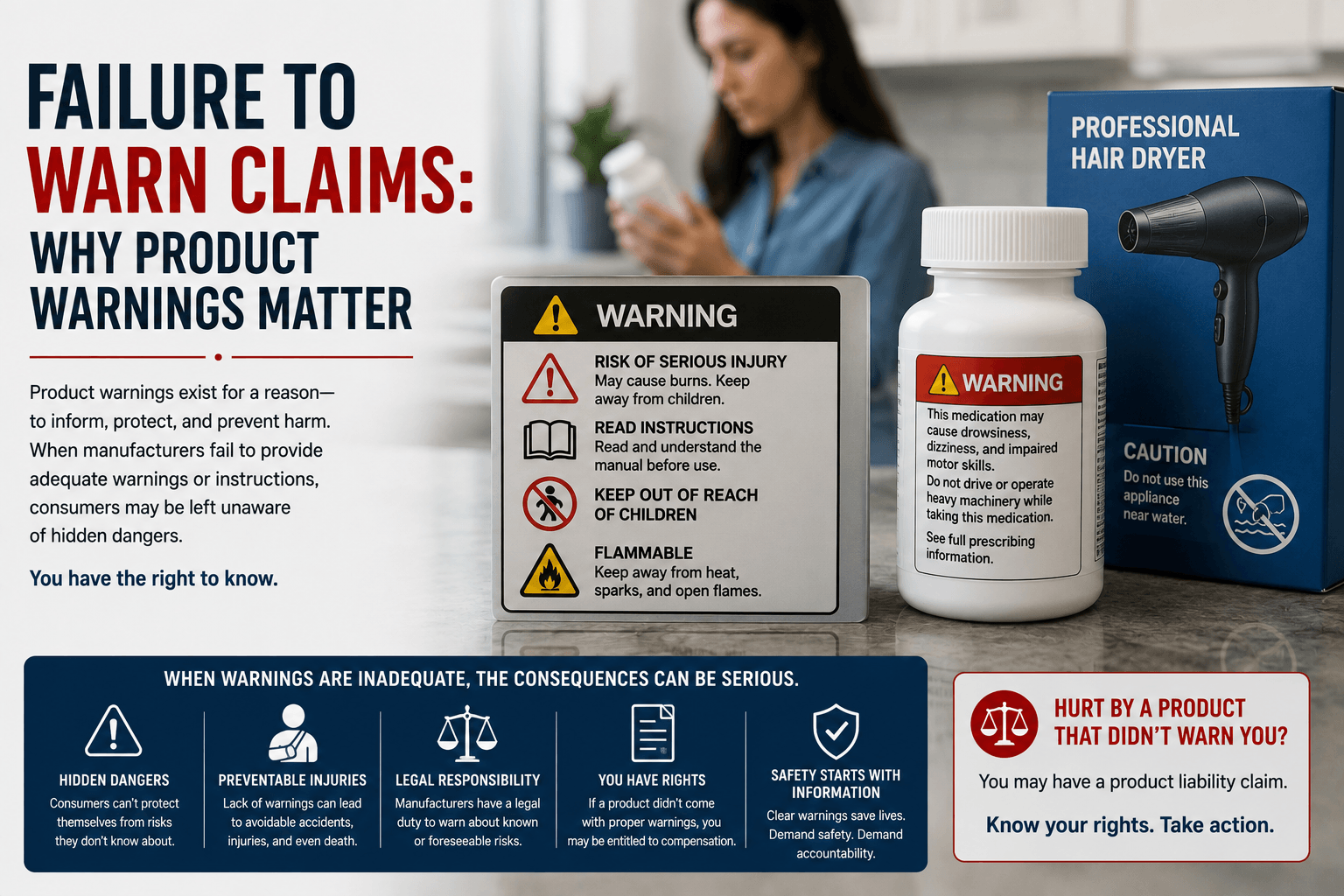
When questions arise about whether adequate warnings were provided, they may become the subject of what are commonly known as failure to warn claims. These claims represent one category of product liability law and focus on whether consumers received sufficient information to make informed decisions about using a product safely.
Understanding the purpose of product warnings helps consumers recognize their importance while highlighting the responsibilities manufacturers have in communicating known or reasonably foreseeable risks.
What Is a Failure to Warn Claim?
A failure to warn claim generally involves allegations that a manufacturer, distributor, or another party in the supply chain did not provide adequate warnings or instructions regarding a product’s potential risks.
Unlike manufacturing or design defect claims, the product itself may function exactly as intended. Instead, the concern focuses on whether users were given enough information to understand potential hazards and use the product safely.
Failure to warn claims may involve:
- Missing warning labels
- Incomplete safety instructions
- Unclear hazard information
- Failure to explain proper product use
- Inadequate maintenance guidance
- Missing information about foreseeable risks
The specific legal standards vary depending on the jurisdiction and the facts of each case.
Why Product Warnings Are Important
Warnings are designed to communicate information that may not be obvious to the average consumer.
Effective warnings help users:
- Understand potential hazards.
- Operate products safely.
- Avoid preventable injuries.
- Perform proper maintenance.
- Store products correctly.
- Recognize emergency situations.
- Make informed purchasing decisions.
Clear communication contributes significantly to overall product safety and consumer confidence.
Types of Product Warnings
Manufacturers use different types of warnings depending on the nature of the product and the level of potential risk.
Safety Labels
These labels appear directly on products and alert users to important hazards before use.
Examples include:
- Electrical hazard warnings
- High-temperature notices
- Sharp blade warnings
- Choking hazard labels
- Flammable material warnings
Instruction Manuals
Instruction manuals provide detailed guidance regarding:
- Assembly
- Installation
- Operation
- Cleaning
- Maintenance
- Troubleshooting
- Safe storage
Comprehensive instructions help consumers use products correctly throughout their lifespan.
Packaging Warnings
Some safety information appears on product packaging before purchase or use.
Common examples include:
- Age recommendations
- Chemical warnings
- Allergy information
- Storage instructions
- Expiration dates
- Safe disposal guidance
Packaging warnings are especially important for food products, medications, and household chemicals.
Digital Safety Information
As technology evolves, manufacturers increasingly provide additional safety information through:
- QR codes
- Mobile applications
- Online user manuals
- Instructional videos
- Product registration websites
These resources supplement traditional warning labels and provide access to updated safety information.
Industries Where Warnings Are Especially Important
Pharmaceuticals
Prescription and over-the-counter medications often include detailed information regarding:
- Dosage instructions
- Side effects
- Drug interactions
- Contraindications
- Storage requirements
Because medications directly affect human health, accurate warnings are essential.
Medical Devices
Medical devices may require instructions regarding:
- Proper installation
- Device maintenance
- Cleaning procedures
- Potential complications
- Emergency precautions
Healthcare providers also educate patients on the safe use of many medical devices.
Household Chemicals
Cleaning products frequently contain chemicals that require careful handling.
Warning labels commonly address:
- Protective equipment
- Ventilation requirements
- Safe storage
- First aid measures
- Mixing restrictions
- Child safety precautions
Power Tools and Machinery
Equipment capable of causing serious injury often includes extensive safety guidance.
Manufacturers typically provide warnings concerning:
- Protective clothing
- Safe operating procedures
- Maintenance schedules
- Emergency shutdown procedures
- Proper training requirements
Children’s Products
Manufacturers of children’s products often include warnings regarding:
- Recommended age ranges
- Small parts
- Assembly requirements
- Supervision recommendations
- Weight limits
- Safe usage instructions
These warnings help parents and caregivers reduce foreseeable risks.
Characteristics of Effective Product Warnings
An effective warning should do more than simply mention danger. It should provide meaningful information that allows consumers to make informed decisions.
Well-designed warnings are generally:
Clear
Simple language helps consumers quickly understand the message.
Visible
Warnings should be easy to locate before and during product use.
Specific
Rather than using vague language, warnings should identify the particular hazard involved.
Understandable
Manufacturers often use internationally recognized symbols alongside written instructions to improve comprehension.
Durable
Labels should remain readable throughout the product’s expected lifespan whenever practical.
Responsibilities of Manufacturers
Manufacturers invest significant resources in identifying product risks during development.
Their responsibilities may include:
- Conducting safety testing.
- Evaluating foreseeable hazards.
- Developing warning labels.
- Preparing user instructions.
- Updating safety information when necessary.
- Monitoring post-market safety reports.
- Improving labeling as new information becomes available.
Product safety is an ongoing process that continues even after products enter the marketplace.
The Role of Consumers
Consumers also contribute to product safety by using products responsibly.
Helpful practices include:
- Reading instruction manuals.
- Following warning labels.
- Registering products when applicable.
- Performing recommended maintenance.
- Keeping products away from children when required.
- Using appropriate protective equipment.
- Checking for product recalls.
Following safety guidance reduces preventable accidents and extends product life.
Product Recalls and Updated Warnings
Occasionally, manufacturers identify additional risks after products have been sold.
When this happens, companies may issue:
- Updated warning labels
- Safety bulletins
- Product recalls
- Repair programs
- Replacement parts
- Revised instruction manuals
These actions demonstrate a commitment to improving consumer safety when new information becomes available.
Technology and Product Safety Communication
Modern technology has expanded how manufacturers communicate safety information.
Examples include:
- Smart packaging
- Interactive digital manuals
- Safety notification apps
- Product registration systems
- Automated recall alerts
- Online instructional videos
These tools allow manufacturers to communicate updates more efficiently than traditional printed materials alone.
Common Misconceptions About Product Warnings
Myth: A Warning Eliminates All Responsibility
Providing a warning does not automatically protect a manufacturer from every legal claim. Warnings must generally be appropriate, understandable, and relevant to the product’s foreseeable risks.
Myth: Every Product Requires Extensive Warning Labels
The type and amount of information required depends on the product, its intended use, and the nature of the potential risks.
Myth: Consumers Never Need to Read Instructions
Many products contain important safety information that cannot reasonably be understood without reading the provided instructions. Ignoring warnings may increase the likelihood of accidents.
Myth: Digital Instructions Replace Physical Labels
Although digital resources provide valuable supplemental information, important safety warnings often remain necessary directly on the product or its packaging to ensure immediate visibility.
The Future of Product Warnings
Advances in technology continue transforming product safety communication.
Emerging developments include:
- Augmented reality safety guides
- Artificial intelligence-assisted user support
- Interactive product labels
- Multilingual digital instructions
- Smart warning systems
- Connected consumer products
- Personalized safety notifications
These innovations may improve how consumers receive and understand product safety information while supporting safer product use.
Conclusion
Product warnings play a vital role in helping consumers use products safely and responsibly. From household cleaners and prescription medications to power tools and children’s products, clear instructions and hazard warnings allow users to recognize potential risks and make informed decisions.
Failure to warn claims focus on whether manufacturers adequately communicated foreseeable dangers associated with their products. While every product and legal case is unique, effective warnings remain an essential component of product safety, consumer education, and responsible manufacturing.
As products become increasingly advanced, manufacturers continue improving how they communicate safety information through clearer labels, digital resources, and innovative technologies. Ultimately, informed consumers and well-designed warning systems contribute to a safer marketplace for everyone.
Frequently Asked Questions
What is a failure to warn claim?
A failure to warn claim generally involves allegations that adequate safety warnings or instructions were not provided for a product, potentially affecting its safe use.
Are warning labels required on every product?
Not every product requires the same type of warning. The appropriate warnings depend on the product’s characteristics, intended use, and reasonably foreseeable risks.
What makes a product warning effective?
Effective warnings are clear, visible, specific, understandable, and provide practical guidance that helps consumers avoid foreseeable hazards.
Can digital instructions replace printed warnings?
Digital resources are valuable supplements, but important safety information is often still provided directly on the product or its packaging to ensure visibility.
Why should consumers read product instructions?
Instruction manuals and warning labels explain proper use, maintenance, storage, and potential hazards, helping consumers use products safely and reduce preventable risks.