
Every day, consumers purchase and use thousands of products with the expectation that they are reasonably safe for their intended purpose. From household appliances and children’s toys to automobiles, electronics, prescription medications, and medical devices, products play an essential role in everyday life. While the overwhelming majority of products perform as intended, defects can sometimes occur during design, manufacturing, or marketing, potentially creating safety risks for consumers. Product liability is an area of civil law that addresses situations where defective or unreasonably dangerous products allegedly cause injury or damage.
Product liability laws encourage manufacturers, distributors, retailers, and other businesses to prioritize consumer safety while providing a legal framework for resolving disputes when product-related injuries occur.
Understanding how product liability works helps consumers make informed purchasing decisions and appreciate the responsibilities businesses have throughout a product’s lifecycle.
What Is Product Liability?
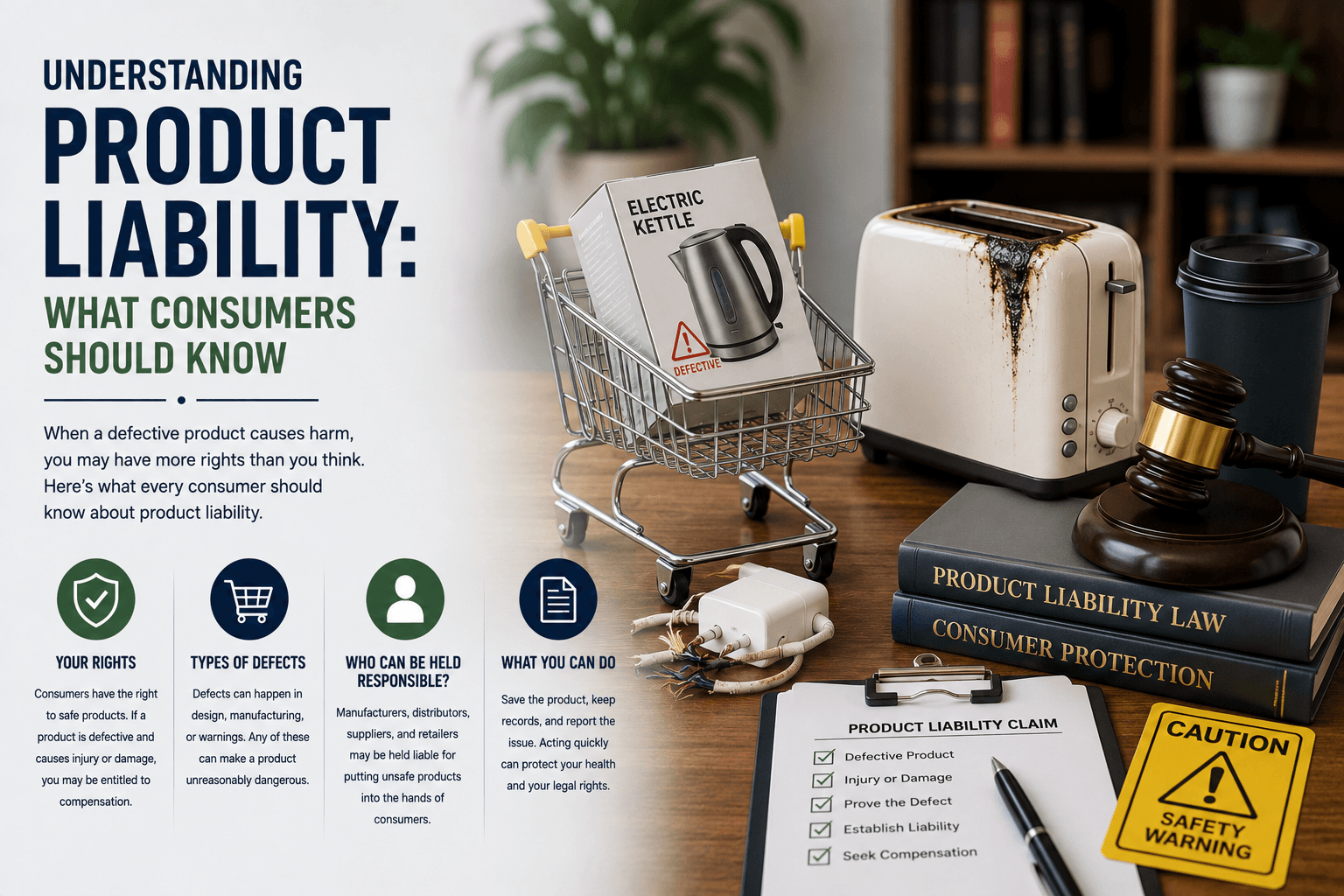
Product liability refers to the legal responsibility that manufacturers and others in the supply chain may have when a defective product allegedly causes harm to a consumer.
Although laws vary by jurisdiction, product liability generally focuses on whether a product was reasonably safe when it entered the marketplace and whether any defects contributed to an injury or loss.
Product liability cases commonly involve:
- Consumer goods
- Motor vehicles
- Medical devices
- Prescription medications
- Children’s products
- Industrial equipment
- Electronics
- Household appliances
- Food and beverage products
Each case depends on its own facts, evidence, and applicable legal standards.
Why Product Liability Laws Matter
Modern manufacturing involves complex global supply chains. Products may be designed in one country, manufactured in another, assembled elsewhere, and sold worldwide.
Product liability laws serve several important purposes:
- Encouraging product safety
- Promoting quality control
- Supporting consumer confidence
- Encouraging clear product instructions
- Improving manufacturing standards
- Providing accountability when safety concerns arise
These laws benefit both consumers and responsible businesses by promoting safer products across industries.
The Three Main Types of Product Defects
Most product liability claims involve one of three primary categories of defects.
1. Design Defects
A design defect exists when the product’s design itself allegedly creates an unreasonable safety risk, even if every unit is manufactured exactly as intended.
Examples may include:
- An unstable ladder design
- A vehicle with a rollover-prone design
- An electronic device with inadequate ventilation
- A children’s product containing foreseeable hazards
Design defects affect every product manufactured according to that design.
2. Manufacturing Defects
Manufacturing defects occur when mistakes arise during production, assembly, or quality control.
Examples include:
- Cracked components
- Missing safety features
- Contaminated products
- Improper assembly
- Defective electrical wiring
- Faulty welds
Unlike design defects, manufacturing defects may affect only certain production batches or individual products.
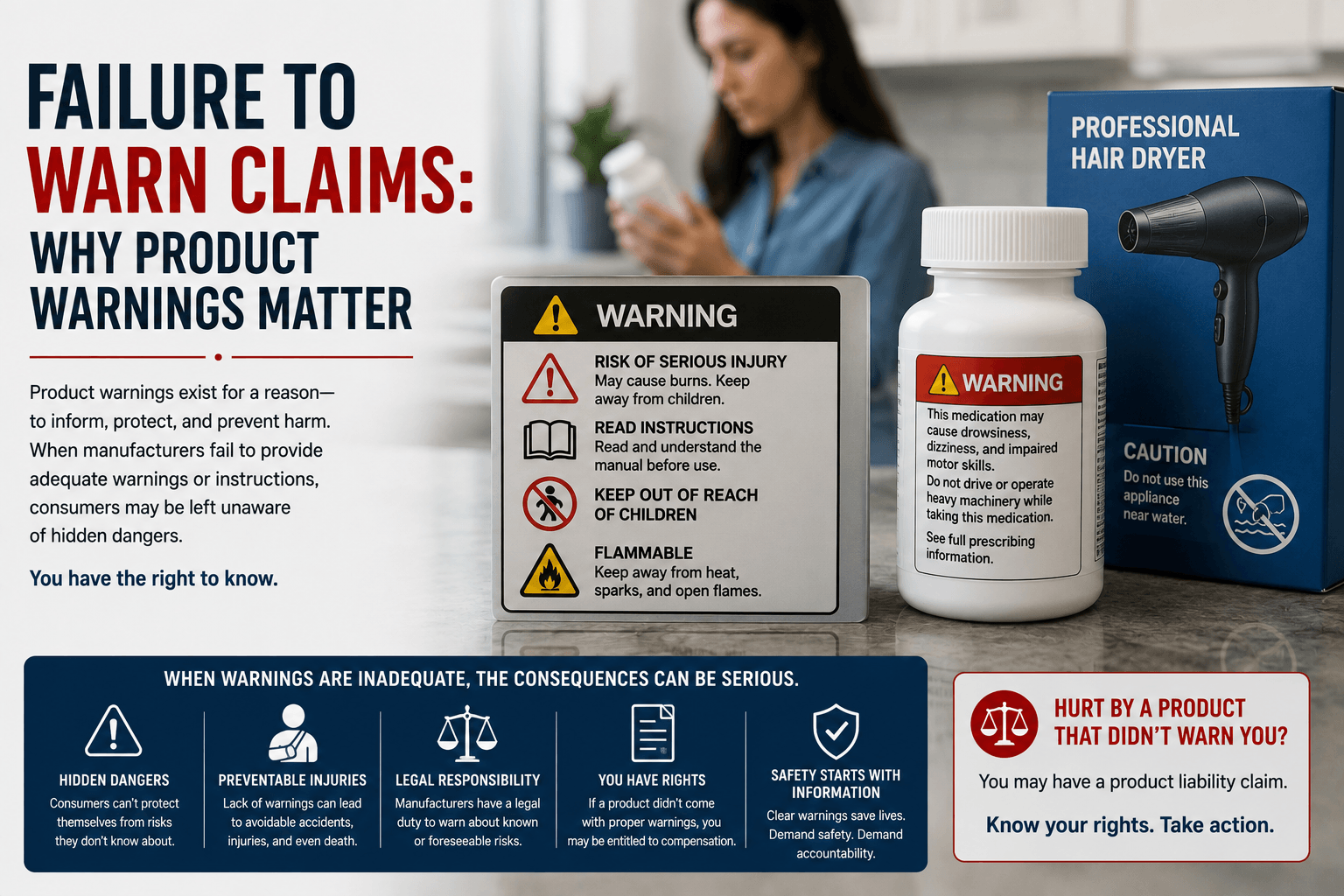
3. Marketing Defects (Failure to Warn)
Some products involve unavoidable risks even when properly designed and manufactured.
In these situations, manufacturers often provide:
- Safety warnings
- Usage instructions
- Hazard labels
- Age recommendations
- Storage guidance
- Maintenance instructions
Questions may arise when warnings are allegedly inadequate, unclear, or omitted altogether.
Products Commonly Involved in Liability Claims
Product liability cases may involve a wide variety of products, including:
Consumer Electronics
Examples include:
- Smartphones
- Laptop computers
- Chargers
- Batteries
- Kitchen appliances
- Power tools
Safety concerns may involve overheating, electrical hazards, or component failures.
Motor Vehicles
Vehicles contain thousands of individual components.
Potential concerns may involve:
- Braking systems
- Airbags
- Tires
- Steering systems
- Fuel systems
- Electronic controls
Automotive manufacturers conduct extensive testing to improve vehicle safety before products reach consumers.
Medical Devices
Medical devices undergo regulatory review before entering the marketplace.
Examples include:
- Hip implants
- Cardiac devices
- Surgical mesh
- Insulin pumps
- Joint replacements
Because these products directly affect patient health, safety monitoring often continues after approval.
Pharmaceuticals
Prescription medications provide significant medical benefits but may also involve known risks.
Manufacturers generally conduct clinical testing while regulatory agencies evaluate safety and effectiveness before approval.
Post-market safety monitoring continues throughout a medication’s lifecycle.
Children’s Products
Children’s products often receive heightened safety attention because young users may be unable to recognize hazards.
Examples include:
- Toys
- Car seats
- Cribs
- High chairs
- Strollers
- Playground equipment
Manufacturers typically follow strict safety standards during product development.
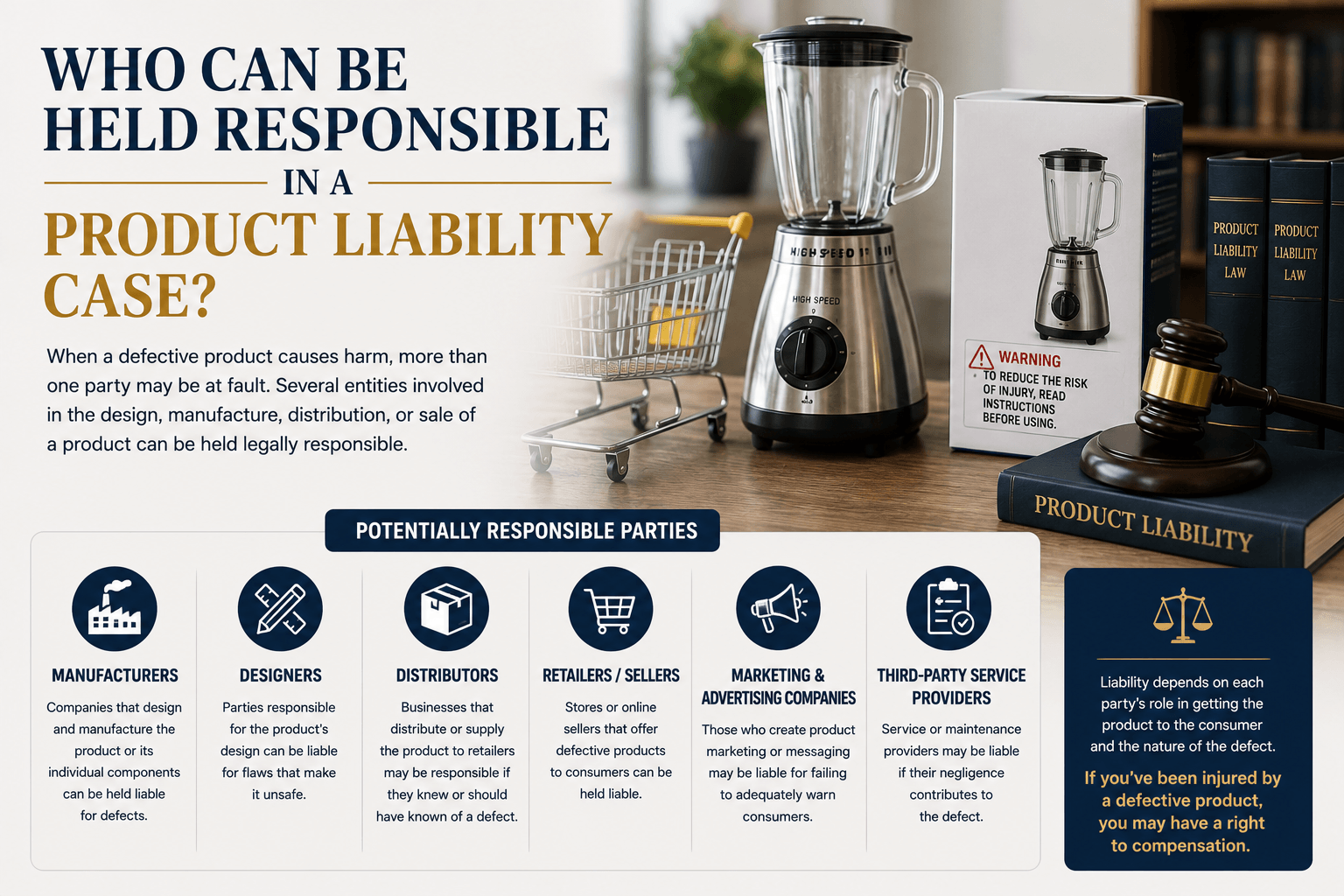
Who May Be Responsible?
Product liability is not always limited to the company that manufactured the product.
Depending on the circumstances, responsibility may potentially involve:
- Product designers
- Manufacturers
- Component suppliers
- Assembly companies
- Importers
- Distributors
- Wholesalers
- Retailers
The specific parties involved vary depending on the facts of each case and the applicable laws.
How Product Safety Is Evaluated
Before products reach consumers, companies often perform extensive testing.
Safety evaluations may include:
- Mechanical testing
- Chemical analysis
- Electrical testing
- Durability assessments
- Stress testing
- Consumer usability studies
- Risk assessments
Many industries also comply with mandatory safety regulations and voluntary industry standards.
The Importance of Product Warnings
Even well-designed products may involve certain risks if used improperly.
Clear warnings help consumers understand:
- Safe operating procedures
- Age restrictions
- Maintenance requirements
- Potential hazards
- Proper storage
- Emergency precautions
Effective warnings are an important component of overall product safety.
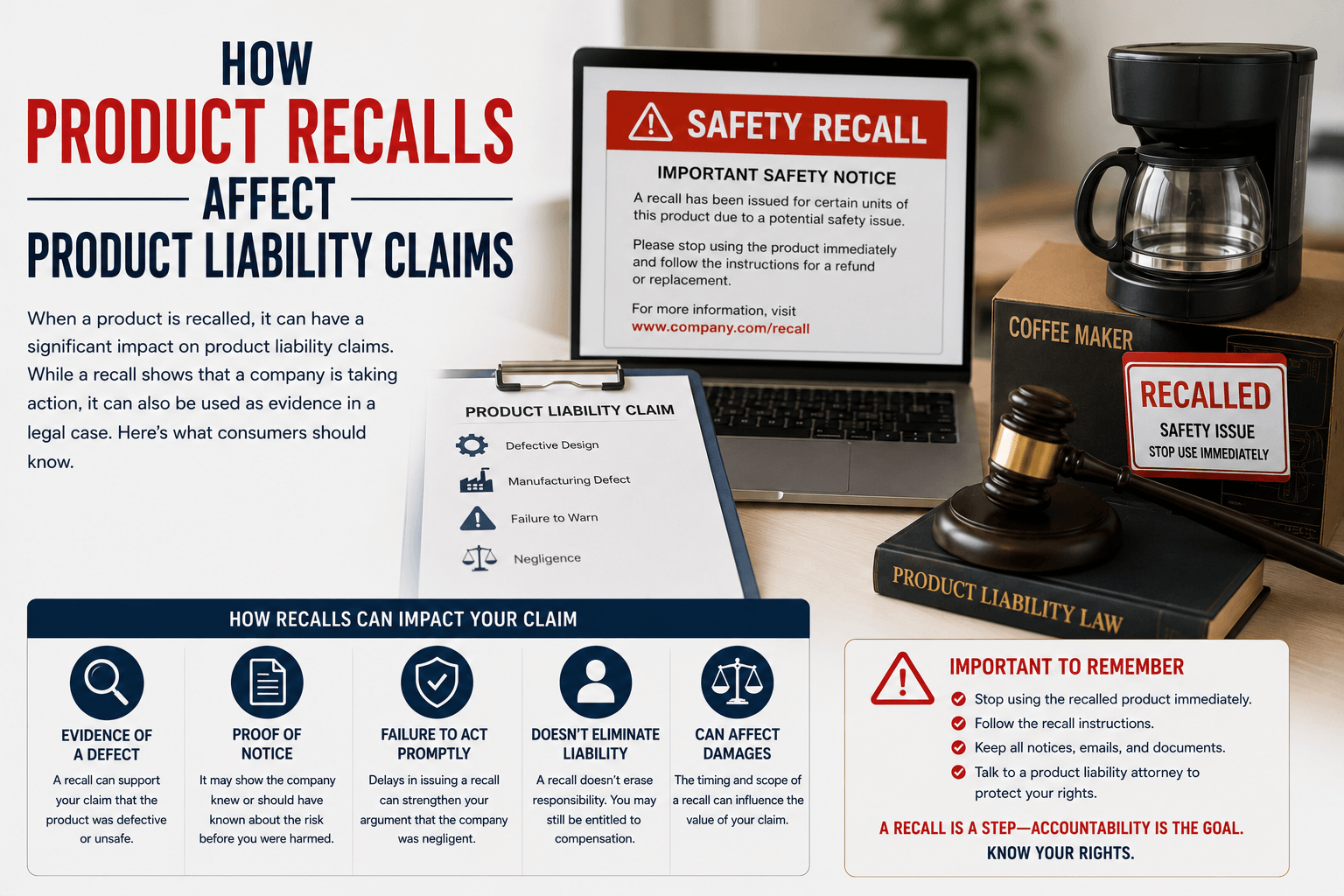
Product Recalls
Occasionally, manufacturers identify safety concerns after products have entered the marketplace.
When this occurs, companies may initiate product recalls to:
- Repair products
- Replace defective units
- Offer refunds
- Provide updated safety instructions
Recalls demonstrate the importance of ongoing product safety monitoring even after products become available to consumers.
The Role of Evidence in Product Liability Cases
Product liability cases often rely on multiple forms of evidence.
Examples include:
- The product itself
- Purchase records
- Product manuals
- Safety warnings
- Maintenance records
- Expert engineering analysis
- Medical records
- Photographs
- Witness statements
Experts may evaluate whether a product performed as intended and whether any alleged defect contributed to the reported injury.
Consumer Responsibilities
Consumers also play an important role in product safety.
Helpful practices include:
- Reading product instructions.
- Following warning labels.
- Performing recommended maintenance.
- Registering products when appropriate.
- Monitoring product recall notices.
- Using products only as intended.
- Keeping proof of purchase for important items.
Responsible product use helps reduce preventable accidents while supporting safe product performance.
Common Misconceptions About Product Liability
Myth: Every Product Accident Is Caused by a Defect
Not every accident results from a defective product. Some incidents may occur because of improper use, lack of maintenance, normal wear and tear, or circumstances unrelated to the product itself.
Myth: Only Manufacturers Can Be Involved
Depending on the circumstances, several businesses within the product distribution chain may have responsibilities relating to product safety.
Myth: A Product Recall Automatically Means Liability
A recall is generally a safety measure designed to address potential concerns. While recalls may become relevant in certain cases, they do not automatically establish legal liability.
Myth: New Products Cannot Have Defects
Even newly released products undergo continuous monitoring after entering the market. Manufacturers may identify previously unknown issues through ongoing quality assurance, consumer feedback, or regulatory oversight.
The Future of Product Liability
Technology continues transforming product development and consumer safety.
Emerging innovations include:
- Artificial intelligence-assisted quality control
- Smart sensors
- Internet of Things (IoT) devices
- Autonomous vehicles
- 3D manufacturing
- Robotics
- Advanced materials
- Predictive safety analytics
As products become increasingly sophisticated, manufacturers and regulators continue adapting safety standards to address new technologies and evolving consumer expectations.
Conclusion
Product liability plays an essential role in promoting consumer safety by encouraging responsible product design, manufacturing, marketing, and quality control. Whether a case involves an alleged design defect, manufacturing issue, or inadequate warning, product liability law provides a structured framework for evaluating safety concerns while balancing the interests of consumers and businesses.
Understanding the basics of product liability helps consumers recognize the importance of product safety, proper usage, and informed purchasing decisions. At the same time, it highlights the responsibility shared by manufacturers, distributors, retailers, and consumers in creating a safer marketplace for everyone.
Frequently Asked Questions
What is product liability?
Product liability refers to the legal responsibility that may arise when a defective or unreasonably dangerous product allegedly causes injury or damage.
What are the three main types of product defects?
The three primary categories are design defects, manufacturing defects, and marketing defects (including inadequate warnings or instructions).
Can retailers be involved in product liability cases?
Depending on the applicable laws and circumstances, retailers, distributors, manufacturers, and other businesses in the supply chain may all have responsibilities relating to product safety.
What is the purpose of a product recall?
Product recalls are intended to address potential safety concerns by repairing, replacing, or removing products from the marketplace when necessary.
How can consumers improve product safety?
Consumers can improve safety by reading instructions, following warning labels, using products as intended, performing recommended maintenance, and staying informed about product recalls.