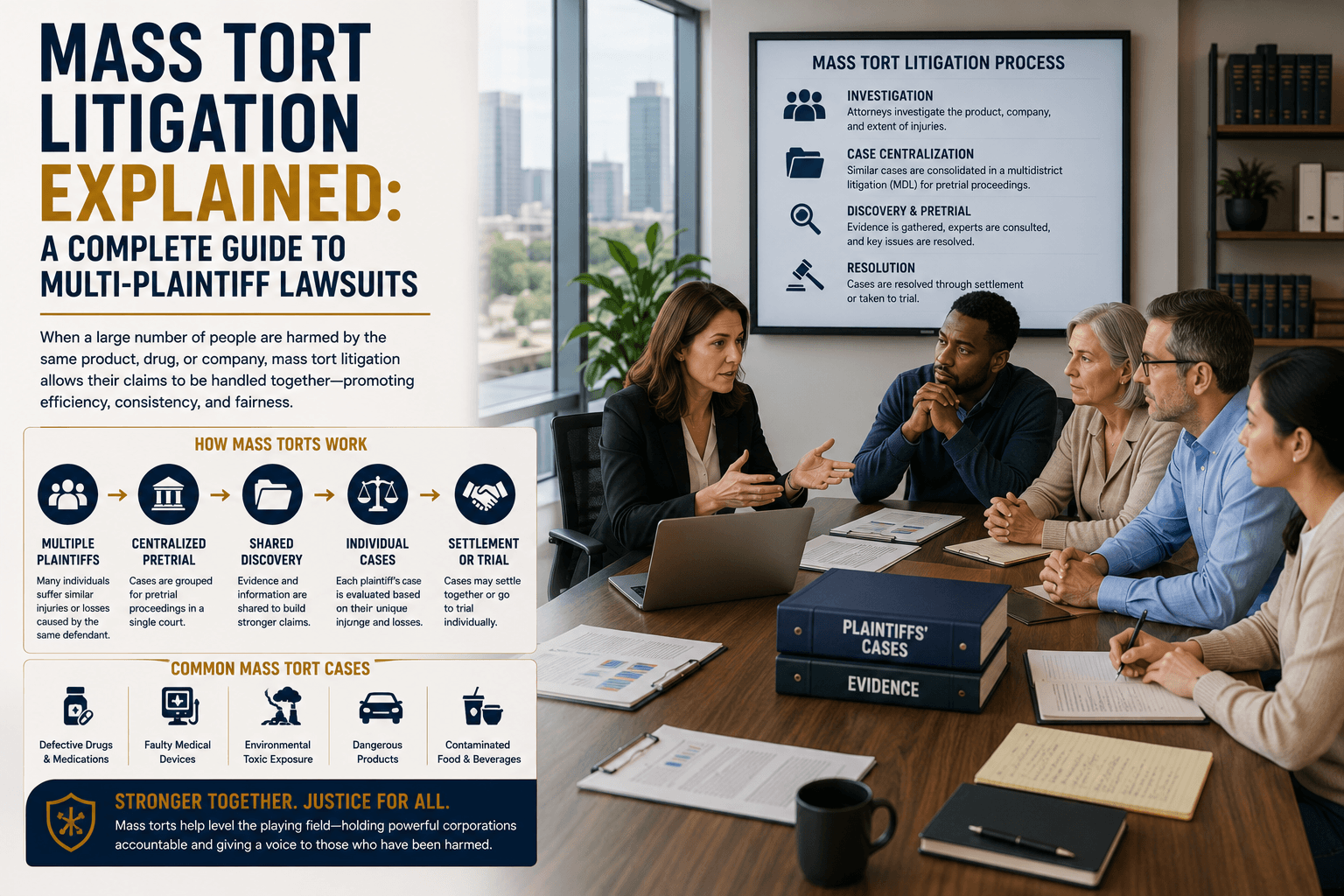


Mass tort litigation allows numerous individuals to pursue legal claims arising from the same product, medication, environmental hazard, or other common source of alleged harm. While these cases involve many plaintiffs, not everyone affected by a similar event automatically qualifies to participate. Each individual must generally meet certain legal and factual requirements before becoming part of a mass tort proceeding. Understanding mass tort case eligibility is important because every claim is evaluated on its own merits.
Unlike some collective legal actions where members are grouped together under a single lawsuit, mass tort litigation preserves individual claims. This means each plaintiff typically needs evidence connecting their injuries to the product, event, or conduct at the center of the litigation.
Whether a case involves a defective medical device, a recalled pharmaceutical product, toxic environmental exposure, or another widespread incident, eligibility depends on more than simply using a product or being present at a particular location. This guide explains the factors commonly considered when determining eligibility, the role of evidence, and why individualized claims remain central to mass tort litigation.
What Does “Eligibility” Mean in a Mass Tort Case?
Mass tort case eligibility refers to whether an individual’s circumstances satisfy the legal and factual requirements necessary to pursue an individual claim within a broader mass tort proceeding.
Although legal standards vary between jurisdictions and individual cases, eligibility generally involves demonstrating a meaningful connection between:
- The alleged harmful product or event
- The individual’s exposure or use
- The claimed injuries or losses
Every claim is evaluated independently, even when many plaintiffs are involved.
Why Eligibility Matters
Mass tort litigation seeks to balance efficiency with fairness.
Courts coordinate common legal issues while ensuring that each plaintiff’s claim is supported by evidence. Eligibility requirements help maintain that balance by ensuring claims are based on factual circumstances rather than assumptions or speculation.
Establishing eligibility also helps:
- Preserve judicial efficiency
- Prevent unsupported claims
- Improve consistency during litigation
- Protect the rights of all parties involved
Common Types of Mass Tort Cases
Eligibility questions arise across many different types of litigation, including:
- Defective prescription medications
- Medical device litigation
- Toxic chemical exposure
- Environmental contamination
- Dangerous consumer products
- Industrial accidents
- Defective automotive components
- Catastrophic transportation incidents
Although these cases differ, the general principles of eligibility remain similar.
Factors Commonly Considered
No single factor automatically determines whether someone qualifies to join a mass tort.
Instead, several considerations are often evaluated together.
1. Exposure to the Alleged Source
The first question usually involves whether the individual was exposed to the product, medication, substance, or event involved in the litigation.
Examples include:
- Using a specific prescription medication
- Receiving a particular medical device
- Purchasing a recalled product
- Living near an environmental contamination site
- Working in an affected industrial facility
Evidence of exposure forms the foundation of many mass tort claims.
2. Documented Injury
Exposure alone is not always enough.
Many cases also require evidence that the individual experienced a qualifying injury or medical condition allegedly associated with the product or event.
Supporting documentation may include:
- Medical diagnoses
- Hospital records
- Physician reports
- Laboratory testing
- Imaging studies
- Treatment records
The specific medical criteria depend on the nature of the litigation.
3. Timing
Timing often plays an important role in eligibility.
Courts and legal professionals may examine:
- When the product was used
- Date of exposure
- Onset of symptoms
- Medical diagnosis
- Treatment timeline
A clear chronological relationship may become an important part of evaluating a claim.
4. Causation
One of the most significant issues in mass tort litigation is causation.
Causation generally involves determining whether the alleged product, substance, or event could reasonably have contributed to the claimed injuries.
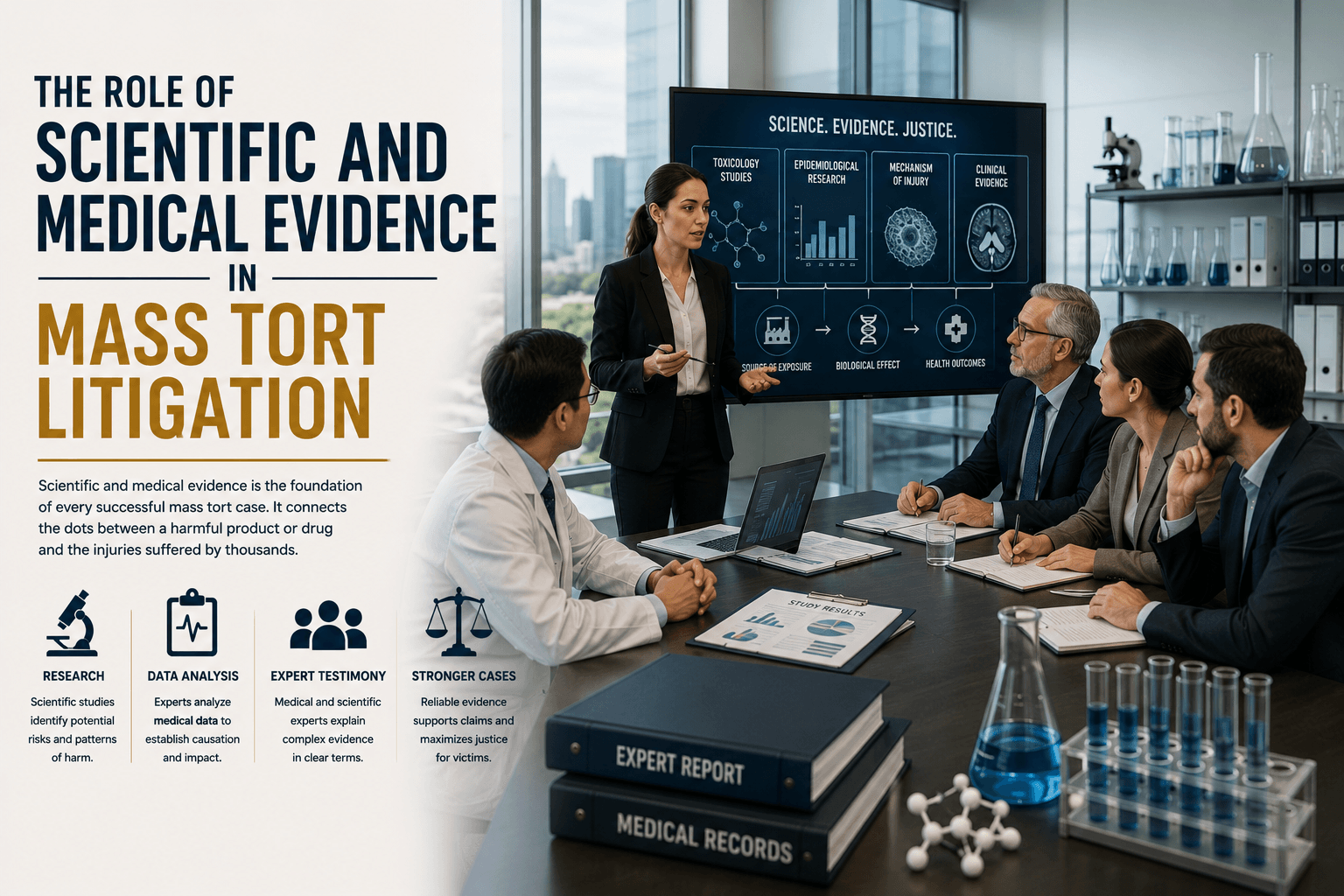
Scientific evidence, medical records, and expert testimony frequently play an important role in this analysis.
Evidence Commonly Used
Every plaintiff’s case depends on evidence supporting their individual claim.
Examples include:
Medical Records
Medical documentation often provides evidence regarding:
- Diagnosis
- Treatment
- Prognosis
- Physician observations
- Medical history
Product Documentation
Where applicable, individuals may retain:
- Purchase receipts
- Product packaging
- Prescription records
- Pharmacy documentation
- Device identification numbers
These materials may help establish product use.
Employment Records
In occupational exposure cases, relevant documents may include:
- Employment history
- Job descriptions
- Workplace safety records
- Exposure reports
- Payroll records
These records may help establish the circumstances surrounding workplace exposure.
Environmental Evidence
Certain environmental cases may involve:
- Residential history
- Water quality reports
- Environmental testing
- Property records
- Government inspection reports
Such evidence may assist in establishing exposure to hazardous substances.
Individual Circumstances Matter
One of the defining characteristics of mass tort litigation is individualized evaluation.
Even if two plaintiffs:
- Used the same medication,
- Purchased the same product,
- Worked at the same facility,
their claims may differ because of:
- Age
- Medical history
- Severity of injuries
- Duration of exposure
- Financial losses
- Recovery outcomes
For this reason, courts generally evaluate damages individually rather than assuming every plaintiff experienced identical harm.
The Role of Expert Witnesses
Many mass tort cases involve highly technical issues.
Experts may assist in explaining:
- Medical conditions
- Engineering failures
- Product design
- Toxicology
- Epidemiology
- Scientific research
Expert testimony often helps courts evaluate complex evidence that requires specialized knowledge.
Why Documentation Is Important
Accurate documentation helps establish:
- Exposure
- Injury
- Treatment
- Financial losses
- Timeline of events
Keeping organized records may improve the accuracy and efficiency of evaluating individual claims.
Common Misconceptions
Myth: Anyone Who Used the Product Automatically Qualifies.
Not necessarily.
Many cases require evidence of both product use and a qualifying injury connected to the alleged defect or exposure.
Myth: Every Plaintiff Must Have Exactly the Same Injury.
Mass tort litigation often involves varying degrees of injury.
Plaintiffs may experience different medical outcomes while still participating in the same litigation.
Myth: Eligibility Guarantees Compensation.
Eligibility simply means an individual may have grounds to participate in the litigation.
The outcome of every claim depends on the evidence, applicable laws, and the specific facts presented.
Best Practices for Potential Plaintiffs
Individuals who believe they may qualify for a mass tort proceeding should consider maintaining organized documentation.
Useful records may include:
- Medical records
- Treatment receipts
- Insurance documentation
- Product information
- Employment records
- Photographs where appropriate
- Correspondence related to the incident
Maintaining complete records can simplify the evaluation of a claim if legal proceedings arise.
How Courts Manage Large Numbers of Claims
Although every plaintiff maintains an individual case, courts often coordinate:
- Discovery
- Expert testimony
- Scientific evidence
- Legal motions
- Pretrial hearings
This coordinated approach improves efficiency while allowing each person’s claim to be evaluated independently.
Looking Toward the Future
As technology, healthcare, manufacturing, and environmental science continue advancing, future mass tort litigation is expected to become even more evidence-driven.
Digital health records, wearable medical devices, electronic prescription systems, environmental monitoring technologies, and artificial intelligence are transforming how evidence is collected and analyzed.
These developments may improve the accuracy of determining eligibility while enabling courts to evaluate increasingly complex scientific questions more efficiently.
Conclusion
Mass tort eligibility involves far more than simply being affected by a widely reported event or product. Each plaintiff must generally demonstrate a connection between the alleged source of harm and their individual injuries through reliable evidence and supporting documentation.
Although eligibility requirements vary depending on the nature of the litigation and the applicable legal system, individualized evaluation remains one of the defining characteristics of mass tort proceedings. Understanding these principles helps explain why evidence, medical records, timelines, and expert analysis play such an important role in determining whether an individual may participate in a mass tort case.
Frequently Asked Questions
What does mass tort eligibility mean?
Mass tort eligibility refers to whether an individual meets the legal and factual requirements necessary to pursue an individual claim arising from the same product, event, or source involved in a mass tort proceeding.
Does using a product automatically qualify someone for a mass tort?
No. Many cases require evidence of both exposure to the product and a qualifying injury connected to the alleged harm.
Why are medical records important in mass tort cases?
Medical records help establish diagnoses, treatment history, injury severity, and the timeline of medical events relevant to an individual’s claim.
Do all plaintiffs need identical injuries?
No. One of the defining features of mass tort litigation is that plaintiffs may experience different injuries and damages while pursuing separate legal claims.
What types of evidence are commonly reviewed?
Evidence may include medical records, prescription history, product documentation, employment records, environmental reports, expert testimony, and other materials supporting the individual’s claim.