
Starting a new job is an exciting milestone, but before the first day of work, many employees are asked to sign an employment contract. While it may seem like a routine administrative step, an employment contract is one of the most important documents in the employer-employee relationship. It establishes expectations, defines responsibilities, and outlines many of the rights and obligations that apply throughout the course of employment.
Unfortunately, many people sign employment agreements without fully understanding what they contain. Others assume that every employment contract is identical, when in reality the terms can vary significantly depending on the employer, industry, role, and applicable employment laws.
Whether someone is beginning their first job, changing careers, or accepting a senior leadership position, understanding the key components of an employment contract can help avoid misunderstandings and provide greater confidence when entering a new workplace.
This guide explains what employment contracts are, why they matter, and the key terms every employee should understand before signing.
What Is an Employment Contract?
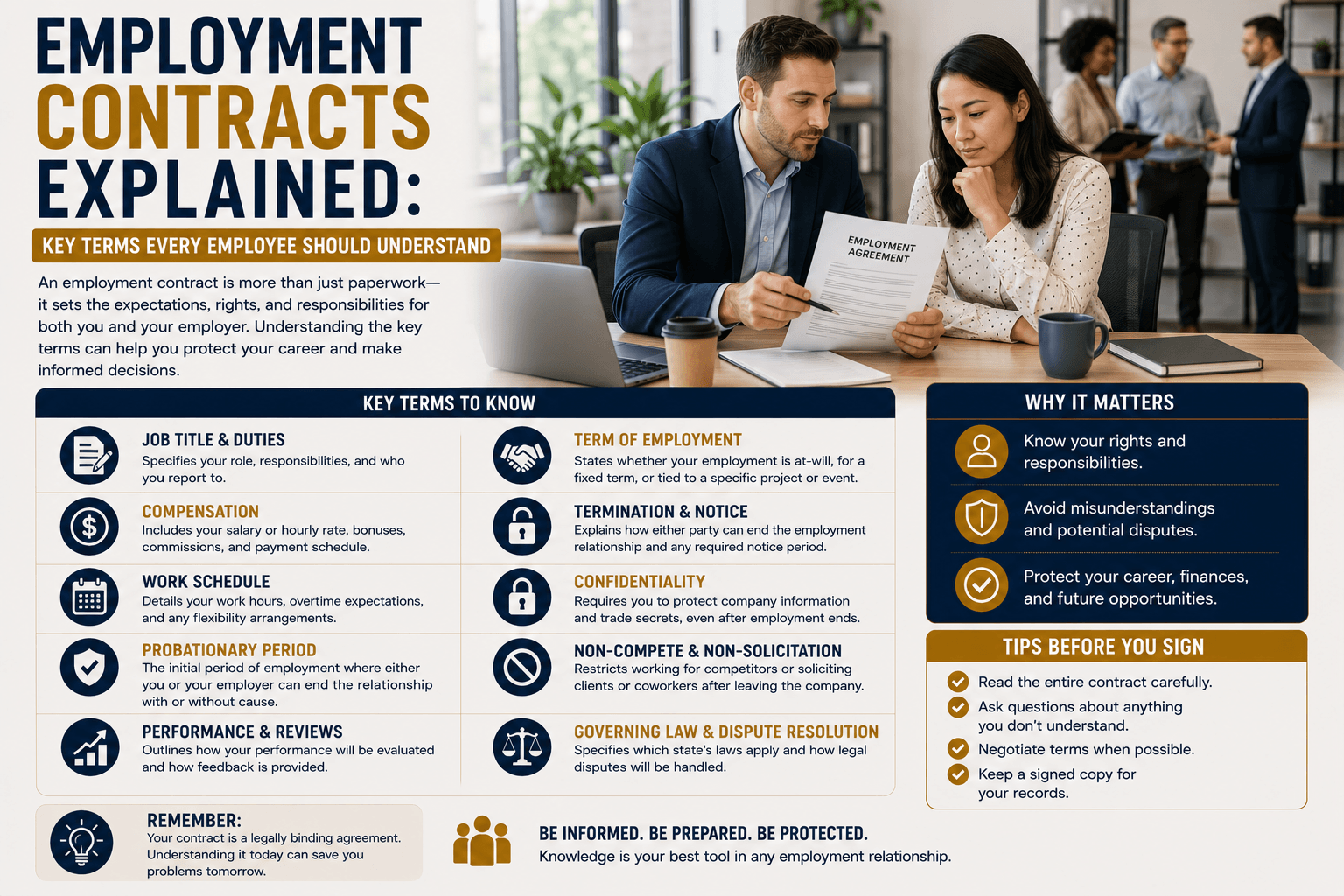
An employment contract is a legally binding agreement that sets out the terms and conditions governing the relationship between an employer and an employee.
Depending on the jurisdiction, employment contracts may be:
- Written agreements
- Digital agreements
- Fixed-term contracts
- Permanent employment contracts
- Part-time employment agreements
- Temporary employment contracts
- Casual employment agreements
Some employment relationships may also include implied contractual terms created through workplace policies or applicable employment laws.
Why Employment Contracts Matter
Employment contracts provide clarity for both parties.
They help define:
- Job expectations
- Compensation
- Working hours
- Employee benefits
- Workplace policies
- Confidentiality obligations
- Notice requirements
- Procedures for ending employment
Clear agreements often reduce misunderstandings and provide a reference point if workplace questions arise later.
Job Title and Position
Most employment contracts begin by identifying:
- The employee’s job title
- Department
- Reporting structure
- General duties
While responsibilities may evolve over time, the contract usually establishes the primary role the employee is expected to perform.
Compensation and Salary
Compensation is one of the most closely reviewed sections of any employment agreement.
This section may include:
- Base salary
- Hourly wage
- Overtime eligibility
- Commission arrangements
- Performance bonuses
- Payment schedule
- Pay review policies
Employees should understand not only how much they will be paid but also how compensation may change over time.
Working Hours
Employment contracts frequently outline expected working arrangements.
Examples include:
- Standard weekly hours
- Shift schedules
- Flexible working arrangements
- Remote work expectations
- Overtime policies
- Break periods
Clear working hour provisions help both employers and employees manage expectations.
Employee Benefits
Benefits often form an important part of the overall compensation package.
Depending on the employer and applicable laws, benefits may include:
- Health insurance
- Retirement plans
- Paid annual leave
- Sick leave
- Parental leave
- Professional development opportunities
- Employee assistance programs
- Wellness initiatives
Employees should carefully review eligibility requirements and any waiting periods associated with benefit programs.
Probationary Periods
Some employment contracts include a probationary or introductory period.
During this time:
- Performance may be evaluated more closely.
- Additional training may be provided.
- Either party may have different notice obligations depending on applicable laws.
The rules governing probation vary between jurisdictions and employment agreements.
Confidentiality Clauses
Many employers require employees to protect confidential business information.
Confidentiality clauses may cover:
- Trade secrets
- Customer information
- Financial data
- Business strategies
- Proprietary technology
- Internal communications
Employees should understand what information is considered confidential and how these obligations may continue after employment ends.
Intellectual Property
For certain roles, particularly those involving research, technology, design, writing, or product development, employment contracts may include intellectual property provisions.
These clauses often explain:
- Ownership of work created during employment
- Rights to inventions
- Copyright ownership
- Software development
- Creative works
Employees working in innovation-focused industries should review these provisions carefully.
Non-Competition Clauses
Some contracts contain non-competition clauses that restrict certain business activities after employment ends.
Depending on the jurisdiction, these clauses may address:
- Geographic limitations
- Time restrictions
- Industry-specific competition
The enforceability of non-compete clauses varies significantly between countries and legal systems.
Non-Solicitation Clauses
Employment contracts may also include non-solicitation provisions.
These clauses often restrict former employees from:
- Recruiting coworkers
- Contacting existing clients
- Soliciting customers
- Using confidential business relationships
Again, enforceability depends on applicable employment laws.
Performance Expectations
Many agreements reference workplace expectations relating to:
- Professional conduct
- Performance standards
- Company policies
- Compliance requirements
- Ethical behavior
Employees are generally expected to familiarize themselves with workplace policies referenced in the contract.
Notice Periods
Employment contracts commonly explain how employment may end.
Notice provisions often specify:
- Required notice before resignation
- Employer notice obligations
- Payment in lieu of notice where applicable
- Procedures for ending employment
Understanding notice requirements helps both parties manage employment transitions more effectively.
Termination Provisions
Contracts frequently describe situations that may lead to termination.
These may include:
- Poor performance
- Serious misconduct
- Business restructuring
- Redundancy
- Breach of contract
The agreement may also explain the procedures that apply before employment ends.
Dispute Resolution
Some employment contracts include provisions describing how workplace disputes may be addressed.
Methods may include:
- Internal grievance procedures
- Mediation
- Arbitration
- Court proceedings, where permitted
Understanding dispute resolution procedures helps employees know what options may be available if disagreements arise.
Common Mistakes Employees Make
Before signing an employment contract, employees sometimes overlook important details.
Common mistakes include:
- Reading only the salary section.
- Ignoring restrictive clauses.
- Failing to ask questions.
- Assuming verbal promises automatically become contractual terms.
- Not keeping a signed copy of the agreement.
Taking time to review the contract carefully can prevent future misunderstandings.
Tips Before Signing an Employment Contract
Employees can prepare by:
- Reading every section carefully.
- Asking questions about unclear language.
- Confirming verbal agreements are documented.
- Reviewing workplace policies referenced in the contract.
- Keeping a signed copy for personal records.
Careful preparation supports informed decision-making.
Digital Employment Contracts
Modern hiring increasingly relies on electronic contracts.
Digital agreements offer:
- Faster onboarding
- Secure document storage
- Electronic signatures
- Simplified record management
Although the format has changed, employees should review digital contracts with the same level of attention as traditional paper agreements.
Looking Toward the Future
Employment contracts continue evolving as workplaces adopt remote work, flexible schedules, artificial intelligence, and international employment arrangements.
Future agreements are likely to include more detailed provisions addressing:
- Remote work expectations
- Data security
- Cybersecurity responsibilities
- Artificial intelligence tools
- Digital privacy
- Cross-border employment
As employment relationships become increasingly global and technology-driven, clear contractual terms will remain essential for protecting both employers and employees.
Conclusion
Employment contracts form the foundation of the employer-employee relationship by clearly defining expectations, responsibilities, and legal obligations. From compensation and working hours to confidentiality, benefits, notice periods, and dispute resolution procedures, every section plays an important role in shaping the employment experience.
Understanding these key terms allows employees to make informed decisions before accepting a position while helping employers establish transparent and productive workplace relationships. Although employment laws vary between jurisdictions, carefully reviewing an employment contract remains one of the most important steps anyone can take before beginning a new role.
Frequently Asked Questions
What is an employment contract?
An employment contract is a legally binding agreement that outlines the rights, responsibilities, and terms governing the relationship between an employer and an employee.
Why should employees read employment contracts carefully?
Carefully reviewing the agreement helps employees understand their compensation, benefits, responsibilities, confidentiality obligations, notice requirements, and other important terms before accepting a position.
What information is usually included in an employment contract?
Most employment contracts include job duties, salary, working hours, benefits, confidentiality provisions, notice periods, termination procedures, and workplace policies.
Are digital employment contracts legally valid?
In many jurisdictions, electronic employment contracts and digital signatures are legally recognized, provided they comply with applicable laws.
Can employment contracts differ between employers?
Yes. Employment contracts vary depending on the employer, industry, job role, employment type, and the employment laws that apply in the relevant jurisdiction.