
Medical records in malpractice cases are among the most valuable sources of information in modern healthcare. They document a patient’s medical history, symptoms, diagnoses, treatments, medications, laboratory results, and follow-up care, creating a comprehensive timeline of the healthcare journey. Beyond supporting patient treatment, these records also play a critical role in evaluating the quality of care provided.
In medical malpractice cases, documentation often becomes one of the most important forms of evidence. Courts, legal professionals, medical experts, and healthcare providers rely on medical records to understand what occurred during treatment, the decisions that were made, and whether the care provided met accepted professional standards.
Accurate documentation benefits everyone involved. It helps healthcare providers deliver consistent care, allows patients to receive appropriate treatment across different facilities, and provides an objective record when questions arise regarding medical decisions. Understanding the role of medical records helps patients appreciate why careful documentation is an essential part of quality healthcare.
What Are Medical Records?
Medical records are organized collections of information created throughout a patient’s healthcare experience. They provide a chronological history of medical care and serve as the primary source of communication between healthcare professionals.
Depending on the healthcare setting, medical records may include:
- Patient demographics
- Medical history
- Family health history
- Physical examination findings
- Physician and nursing notes
- Laboratory results
- Diagnostic imaging reports
- Prescription records
- Surgical reports
- Consultation notes
- Hospital discharge summaries
- Follow-up treatment plans
- Immunization records
- Allergy information
Each entry helps create a complete picture of the patient’s health and treatment.
Why Medical Records Matter in Malpractice Cases
Medical malpractice cases often involve complex questions about diagnosis, treatment, communication, and clinical decision-making.
Medical records in malpractice cases help answer important questions such as:
- What symptoms did the patient report?
- What examinations were performed?
- Which tests were ordered?
- What diagnosis was documented?
- What treatment was recommended?
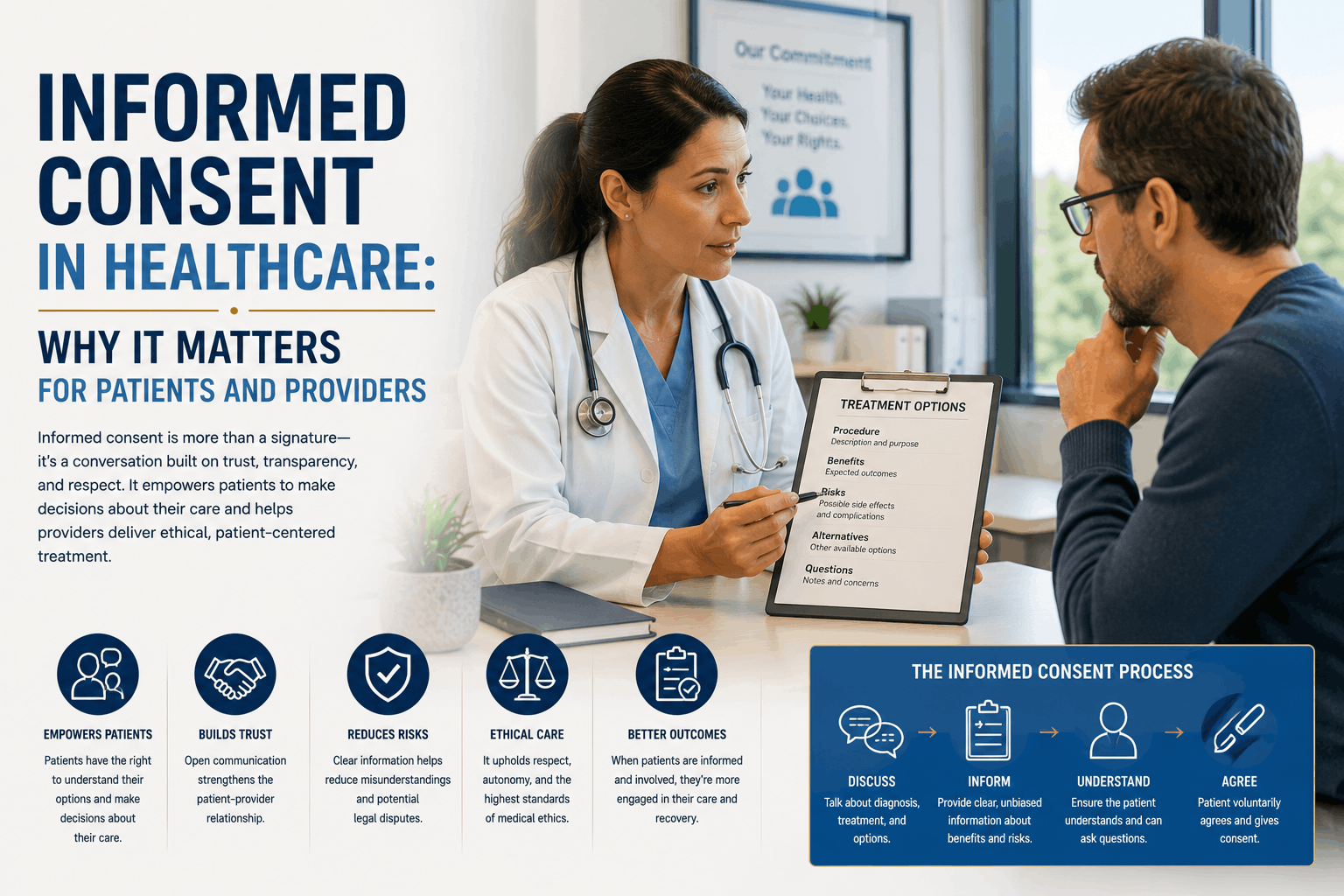
- Were risks and alternatives discussed?
- Were follow-up instructions provided?
- How did the patient’s condition change over time?
Rather than relying solely on memory, courts and medical experts examine written documentation to better understand the sequence of events.
Medical Records as Objective Evidence
One of the primary reasons medical records in malpractice cases are so valuable is that they are generally created during the course of treatment, often before any legal dispute exists.
Because they document events as they occur, they can provide an objective account of:
- Clinical observations
- Medical decision-making
- Diagnostic findings
- Treatment recommendations
- Patient responses
- Progress over time
Although medical records may not answer every question, they frequently serve as the foundation for evaluating healthcare decisions.
Types of Documentation Commonly Reviewed
Physician Notes
Physician notes document:
- Patient complaints
- Examination findings
- Clinical impressions
- Diagnostic reasoning
- Treatment recommendations
These notes help explain why particular medical decisions were made.
Nursing Documentation
Nurses frequently document:
- Vital signs
- Medication administration
- Patient observations
- Pain assessments
- Changes in condition
- Communication with physicians
Nursing records often provide detailed information about day-to-day patient care.
Laboratory Reports
Laboratory records include:
- Blood test results
- Urine testing
- Pathology reports
- Microbiology findings
- Genetic testing
These reports help confirm or rule out medical conditions.
Diagnostic Imaging
Imaging documentation may include:
- X-rays
- CT scans
- MRI studies
- Ultrasounds
- Mammograms
- PET scans
Radiology reports often play an important role in diagnostic evaluations.
Medication Records
Medication documentation may contain:
- Prescribed medications
- Dosages
- Administration times
- Allergies
- Adverse reactions
- Medication changes
These records help establish whether medications were prescribed and administered appropriately.
Electronic Health Records (EHRs)
Most healthcare organizations now use Electronic Health Records (EHRs) instead of traditional paper charts.
EHR systems offer several advantages:
- Faster access to patient information
- Improved communication between healthcare providers
- Reduced handwriting errors
- Better medication tracking
- Integrated laboratory and imaging results
- Enhanced continuity of care
Electronic systems also maintain detailed audit trails that record when entries are created or modified, supporting transparency and accountability.
The Importance of Accurate Documentation
Good documentation supports both patient care and legal review.
Healthcare providers are encouraged to document information that is:
- Accurate
- Complete
- Timely
- Clear
- Objective
- Legible
- Consistent
Well-maintained records help reduce misunderstandings and improve communication among healthcare teams.
Missing or Incomplete Records
Incomplete documentation can make it more difficult to understand what occurred during treatment.
Examples of incomplete documentation may include:
- Missing progress notes
- Undocumented conversations
- Absent medication records
- Incomplete discharge instructions
- Missing laboratory reports
Incomplete records do not automatically indicate negligence, but they may complicate the evaluation of medical care.
Altered Medical Records
Healthcare providers are expected to maintain accurate and truthful documentation.
Modern electronic record systems generally track:
- The date and time entries are made
- User identification
- Subsequent corrections or updates
- Audit history
Corrections are sometimes necessary to fix legitimate documentation errors, but they should follow established professional procedures. Maintaining transparency in documentation helps preserve the integrity of medical records.
How Medical Experts Use Records
Medical experts often review records to evaluate:
- Clinical decision-making
- Diagnostic processes
- Treatment timelines
- Communication between providers
- Compliance with accepted standards of care
Their analysis helps explain technical medical information in an understandable manner during legal proceedings.
Confidentiality and Patient Privacy
Medical records contain highly sensitive personal information.
Healthcare organizations have a responsibility to protect patient confidentiality by:
- Restricting unauthorized access
- Using secure electronic systems
- Training staff on privacy practices
- Following applicable privacy laws and regulations
- Maintaining secure record storage
Patients generally have rights regarding access to their own medical records, although procedures vary by jurisdiction.
Best Practices for Patients
Patients can also help maintain accurate healthcare records.
Helpful steps include:
- Keeping copies of important test results
- Maintaining a list of current medications
- Recording allergies
- Saving discharge instructions
- Tracking specialist appointments
- Reporting changes in symptoms promptly
- Reviewing personal information for accuracy
Well-organized personal health information can improve communication with healthcare providers and support continuity of care.
The Future of Medical Documentation
Healthcare documentation continues to evolve through advances in digital technology.
Emerging developments include:
- Artificial intelligence-assisted documentation
- Voice recognition systems
- Cloud-based medical records
- Patient portals
- Mobile health applications
- Wearable device integration
These innovations aim to improve documentation accuracy while reducing administrative workload and enhancing patient engagement.
As technology continues advancing, secure and reliable documentation will remain central to effective healthcare delivery.
Common Misconceptions
Myth: A Signed Consent Form Is the Only Important Record
Consent forms are important, but they represent only one part of the patient’s overall medical record. Progress notes, diagnostic reports, medication records, and treatment documentation are equally valuable.
Myth: Electronic Records Cannot Contain Errors
Although electronic systems improve efficiency, they still rely on accurate data entry and careful review by healthcare professionals.
Myth: Patients Cannot Access Their Medical Records
In many jurisdictions, patients have legal rights to request and review their own medical records, subject to applicable laws and procedures.
Myth: Better Documentation Only Protects Healthcare Providers
Accurate documentation benefits everyone. It supports patient safety, improves communication, assists future treatment, and provides a reliable record of the care received.
Conclusion
Medical records are far more than administrative documents—they are the foundation of modern healthcare communication and an essential source of evidence in medical malpractice cases. From physician notes and laboratory reports to imaging studies and electronic health records, accurate documentation helps explain the clinical decisions made throughout a patient’s treatment.
In malpractice cases, these records provide valuable insight into diagnosis, treatment, communication, and the overall standard of care. They also promote continuity of care, improve patient safety, and support transparency within healthcare systems.
As healthcare technology continues to evolve, maintaining accurate, complete, and secure medical records will remain one of the most important responsibilities shared by healthcare professionals and institutions. Reliable documentation ultimately benefits patients, providers, and the healthcare system as a whole.
Frequently Asked Questions
Why are medical records important in malpractice cases?
Medical records provide documented evidence of diagnoses, treatments, clinical decisions, medications, and patient care, helping experts and courts evaluate healthcare services.
What information is included in medical records?
Medical records may include patient history, examination findings, physician notes, nursing documentation, laboratory results, imaging reports, prescriptions, surgical records, and follow-up care.
Can electronic health records be used as legal evidence?
Yes. Electronic health records are widely used in healthcare and may serve as important evidence because they document treatment and often include audit trails showing when information was entered or updated.
Can patients request copies of their medical records?
In many jurisdictions, patients have the right to request access to their medical records, subject to applicable privacy laws and healthcare procedures.
How do accurate medical records improve patient care?
Complete and accurate records support better communication between healthcare providers, reduce medical errors, improve treatment continuity, and help ensure informed clinical decision-making.