
Every product available to consumers begins with an idea. Engineers create a design, manufacturers build the product, quality assurance teams inspect it, and retailers make it available for purchase. Throughout this process, businesses invest significant time and resources to ensure products are safe, reliable, and suitable for their intended use.
Despite these efforts, defects can sometimes occur. Some problems originate during the product’s design, while others happen during manufacturing. Although these two types of defects are often discussed together, they are fundamentally different and may have different implications in product liability cases.
Understanding the manufacturing defects vs design defects helps consumers, businesses, and legal professionals better evaluate product safety concerns. It also highlights the importance of quality control, engineering standards, and ongoing product improvement throughout the manufacturing process.
Understanding Product Defects
A product defect is generally a condition that makes a product less safe than consumers would reasonably expect when it is used as intended or in a reasonably foreseeable manner.
Not every product malfunction is caused by a legal defect. Products may fail because of normal wear and tear, improper maintenance, misuse, unauthorized modifications, or accidental damage. Product liability cases typically focus on whether the product itself contained a defect when it entered the marketplace.
The two most commonly discussed categories are:
- Design defects
- Manufacturing defects
Although both involve product safety, they arise at different stages of product development.
What Is a Design Defect?
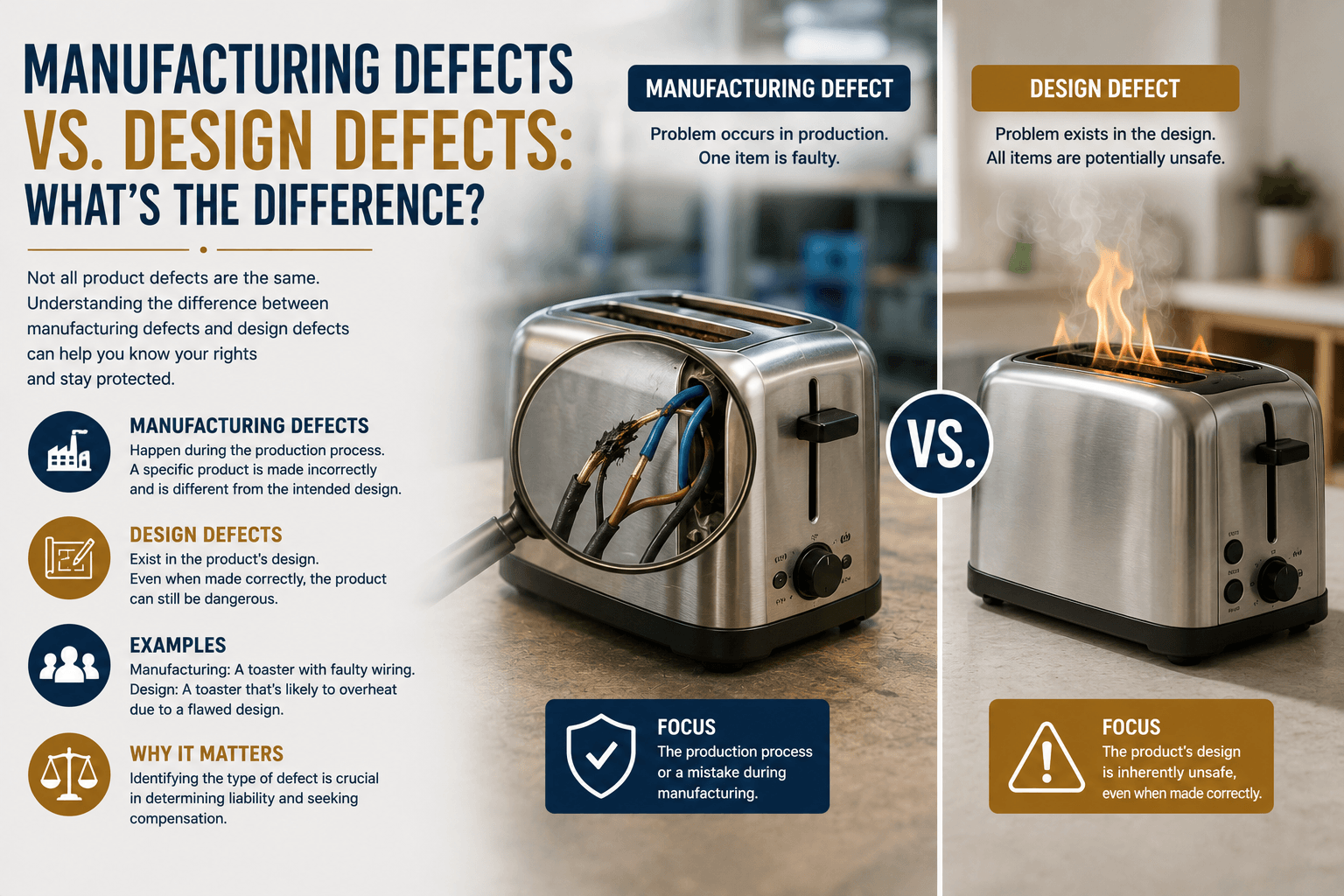
A design defect exists when the product’s blueprint or engineering concept allegedly contains an unreasonable safety risk. In this situation, every product manufactured according to that design may contain the same potential problem, even if it was assembled perfectly.
In simple terms, the issue is not how the product was built—it is how the product was originally designed.
Examples of Possible Design Defects
Examples may include:
- A chair designed with an unstable base that tips over easily.
- A ladder that lacks adequate structural support.
- A vehicle with a fuel tank placement that increases fire risk during certain collisions.
- Protective equipment that fails to provide the expected level of safety.
- Children’s furniture designed without adequate stability features.
Because the design itself is shared across every unit, a design defect can potentially affect an entire product line.
Characteristics of Design Defects
Design defects often share several common characteristics:
- The problem exists before manufacturing begins.
- Every unit produced according to the design may contain the same issue.
- The product may function normally but still present an unreasonable safety risk.
- Alternative, safer designs may be considered during product evaluation.
These cases often involve engineering analysis and risk assessment to determine whether a safer practical design was available at the time the product was developed.
What Is a Manufacturing Defect?
A manufacturing defect occurs when a product’s design is safe, but an error happens during production, assembly, or quality control.
Unlike a design defect, only certain units may be affected. The product’s original design remains sound, but mistakes during manufacturing create unintended hazards.
Examples of Possible Manufacturing Defects
Examples include:
- Missing bolts or fasteners.
- Improper welding.
- Cracked plastic components.
- Faulty electrical wiring.
- Contaminated food or pharmaceutical products.
- Incorrect assembly of mechanical parts.
- Defective batteries.
- Missing safety guards on machinery.
In many situations, only a specific production batch or manufacturing facility is affected.
Characteristics of Manufacturing Defects
Manufacturing defects generally have several distinguishing features:
- The design itself is appropriate.
- Errors occur during production.
- Only certain products may contain the defect.
- Quality control systems are intended to identify these problems before products reach consumers.
Manufacturing defects often result from isolated production issues rather than flaws in the product’s engineering.
Key Differences Between Manufacturing Defects and Design Defects
Although both may become relevant in product liability cases, understanding the distinction is essential.
| Design Defects | Manufacturing Defects |
|---|---|
| Originate during product design | Originate during production or assembly |
| Affect the entire product design | Usually affect specific units or batches |
| Engineering concept may be unsafe | Design is generally safe |
| Every properly manufactured unit may contain the same issue | Only improperly manufactured products are affected |
| Focuses on safer alternative designs | Focuses on production or quality control errors |
This distinction often guides engineers, safety experts, and legal professionals when evaluating defective product claims.
Industries Where These Defects Commonly Occur
Automotive Industry
Vehicle manufacturers invest heavily in engineering, crash testing, and quality assurance.
Potential design issues may involve vehicle stability, braking systems, or structural integrity, while manufacturing issues may include improperly installed components or defective parts supplied during production.
Consumer Electronics
Electronic devices contain numerous interconnected components.
Design concerns may involve overheating caused by inadequate ventilation, whereas manufacturing defects could involve damaged wiring, faulty circuit boards, or defective batteries.
Medical Devices
Medical devices require rigorous testing before reaching patients.
Examples include implants, infusion pumps, surgical instruments, and diagnostic equipment.
Because these products directly affect patient health, both design safety and manufacturing precision are critical.
Household Products
Products such as kitchen appliances, ladders, furniture, and power tools may involve both categories of defects.
Engineering choices influence long-term safety, while manufacturing quality determines whether each product is assembled correctly.
Children’s Products
Manufacturers of children’s products follow particularly strict safety standards.
Design defects might involve foreseeable hazards, while manufacturing defects may result from missing components, weak materials, or assembly errors.
The Role of Quality Control
Quality control serves as one of the most important safeguards against manufacturing defects.
Manufacturers often use:
- Automated inspections
- Material testing
- Production monitoring
- Statistical sampling
- Equipment calibration
- Supplier evaluations
- Employee training
- Final product inspections
These procedures help identify problems before products reach consumers.
However, no manufacturing process is entirely free from risk, particularly when millions of products are produced each year.
Product Testing Before Market Release
Before introducing products to consumers, companies frequently perform extensive testing.
Common testing methods include:
- Durability testing
- Stress testing
- Environmental testing
- Electrical safety testing
- Chemical analysis
- Mechanical performance testing
- Consumer usability studies
Testing helps manufacturers identify potential design concerns early in the development process, reducing the likelihood of defects after products reach the market.
How Defects Are Identified
Not every defect is discovered before a product is sold.
Potential issues may be identified through:
- Customer feedback
- Warranty claims
- Internal quality audits
- Safety inspections
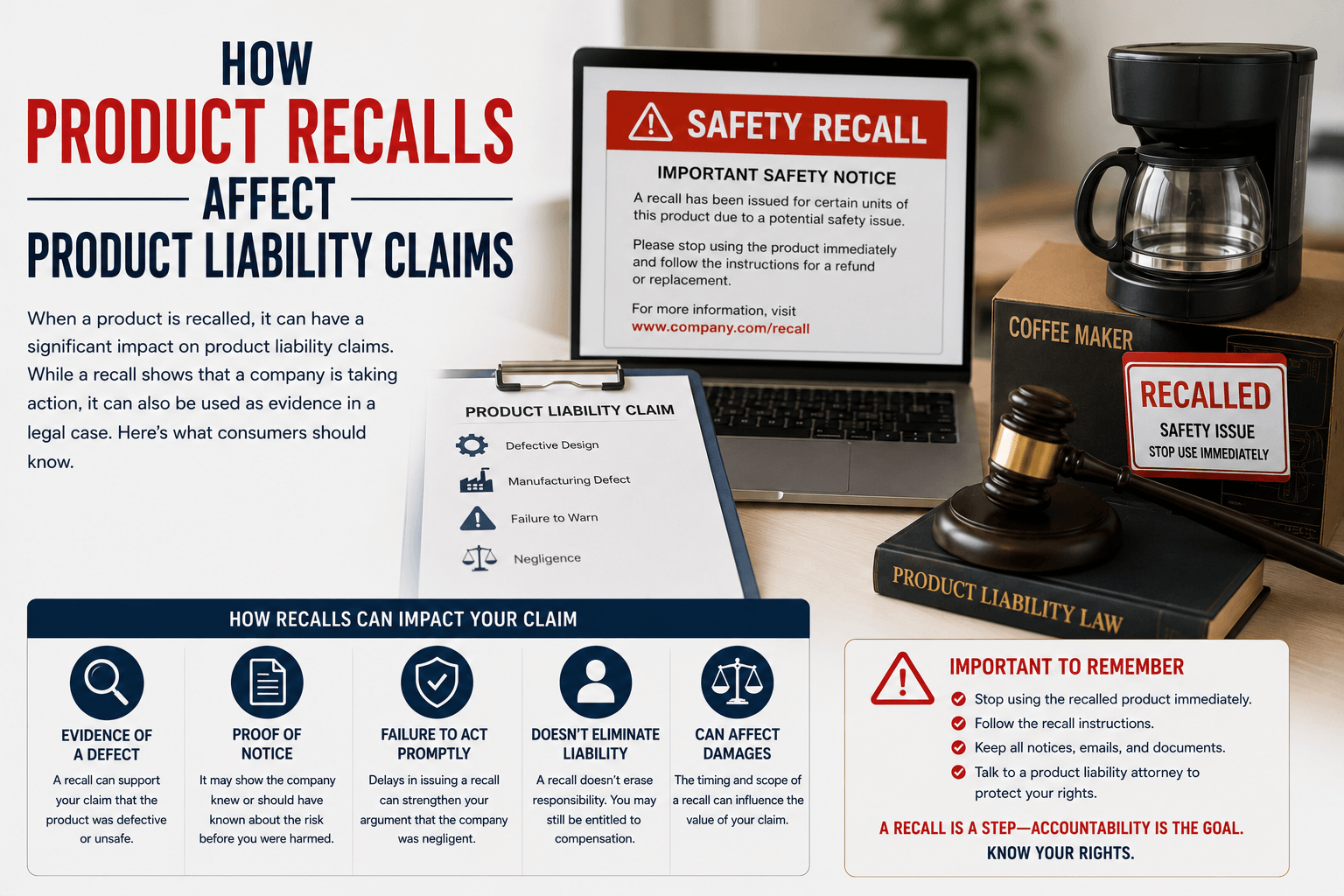
- Product recalls
- Regulatory investigations
- Independent testing
- Industry reporting systems
When safety concerns emerge, manufacturers often investigate whether the issue is isolated or affects a broader range of products.
Product Recalls and Corrective Actions
If a significant defect is identified, manufacturers may take corrective action to reduce risks to consumers.
Depending on the situation, corrective actions may include:
- Product recalls
- Safety notices
- Repair programs
- Replacement products
- Software updates
- Design improvements
- Updated warning labels
These actions demonstrate an ongoing commitment to consumer safety and continuous product improvement.
Common Misconceptions
Myth: Every Product Failure Indicates a Design Defect
Products can fail for many reasons, including improper use, accidental damage, lack of maintenance, or normal wear over time. A failure alone does not necessarily indicate that the product’s design was defective.
Myth: Manufacturing Defects Affect Every Product
Manufacturing defects usually affect only certain units, production batches, or facilities. Other products built from the same design may function exactly as intended.
Myth: Design Defects Can Be Fixed Through Better Manufacturing
If the design itself creates an unreasonable safety risk, improving manufacturing quality alone may not eliminate the underlying issue. Design changes may be required to address the concern.
Myth: Modern Manufacturing Eliminates All Defects
Today’s manufacturing technologies are more advanced than ever, but no production system can completely eliminate the possibility of defects. Continuous testing, inspections, and quality improvement remain essential.
The Future of Product Safety
Emerging technologies are helping manufacturers identify potential defects earlier than ever before.
Innovations include:
- Artificial intelligence-assisted quality control
- Machine vision inspection systems
- Predictive maintenance
- Digital product simulations
- Smart manufacturing
- Robotics
- Internet of Things (IoT) monitoring
- Advanced materials engineering
These technologies support safer product development while reducing manufacturing errors and improving consistency across production lines.
Conclusion
Manufacturing defects and design defects represent two distinct categories of product safety issues, each arising at different stages of a product’s lifecycle. Design defects originate during product development and may affect every unit produced, while manufacturing defects occur during production and usually impact only specific products or batches.
Understanding these differences is important for consumers, manufacturers, engineers, and legal professionals alike. It highlights the critical roles of thoughtful product design, rigorous testing, quality control, and continuous improvement in creating safer products.
As manufacturing technologies continue to evolve, businesses remain committed to strengthening safety standards, improving production processes, and delivering products that meet the expectations of consumers around the world.
Frequently Asked Questions
What is the main difference between a design defect and a manufacturing defect?
A design defect originates in the product’s blueprint or engineering concept and may affect every unit, while a manufacturing defect occurs during production and usually affects only specific products or batches.
Can a product have both a design defect and a manufacturing defect?
Yes. In some situations, a product may contain a flawed design while also experiencing production-related problems that create additional safety concerns.
How do manufacturers reduce manufacturing defects?
Manufacturers use quality control systems, automated inspections, employee training, equipment maintenance, supplier evaluations, and final product testing to identify production issues before products reach consumers.
Why are design defects more difficult to correct?
Because the issue exists within the product’s original design, correcting it often requires engineering changes, redesign, additional testing, and updated manufacturing processes.
Do all product failures result from defects?
No. Products may fail because of misuse, accidental damage, improper maintenance, or normal wear and tear. Determining whether a legal defect exists depends on the specific facts and circumstances.