
When consumers purchase a product, they rarely think about the long journey it took before reaching the store shelf or online marketplace. Behind every product is a complex network of designers, manufacturers, suppliers, distributors, importers, retailers, and logistics providers working together to bring that product to market. While this system allows businesses to produce and deliver goods efficiently, it also means that responsibility for product safety may extend beyond a single company.
Product liability law recognizes that defective products can result from issues occurring at different stages of a product’s lifecycle. In some situations, responsibility may involve the company that designed the product, while in others it may involve a manufacturer, supplier, distributor, or retailer. Determining who may be legally responsible depends on the specific facts of each case, the nature of the alleged defect, and the laws that apply in the relevant jurisdiction.
Understanding the different parties involved in product liability helps consumers appreciate how product safety is managed throughout the supply chain and why accountability plays an important role in consumer protection.
Understanding Product Liability Responsibility
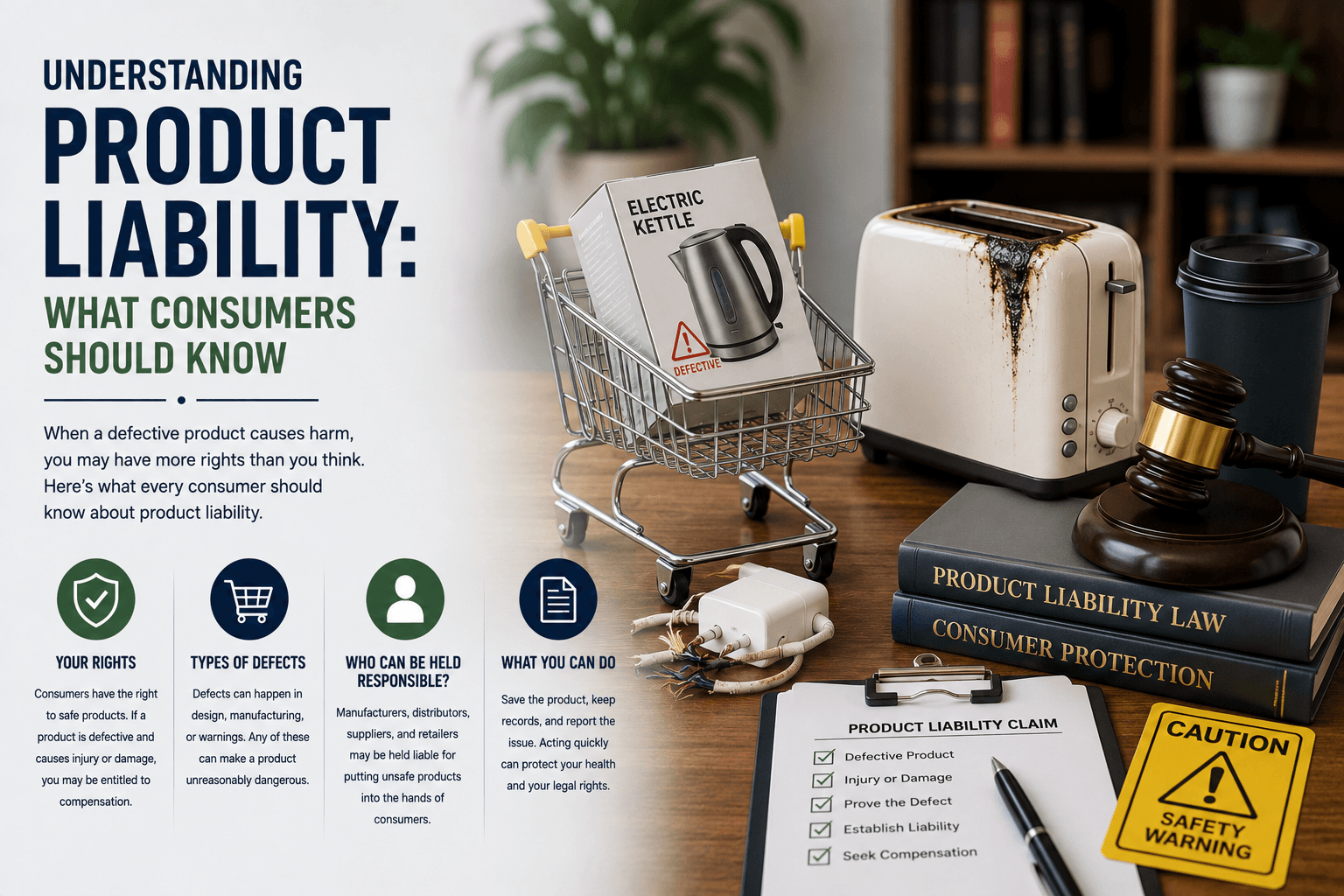
Product liability cases generally focus on whether a product was defective or unreasonably dangerous when it entered the marketplace and whether that condition allegedly contributed to an injury or loss.
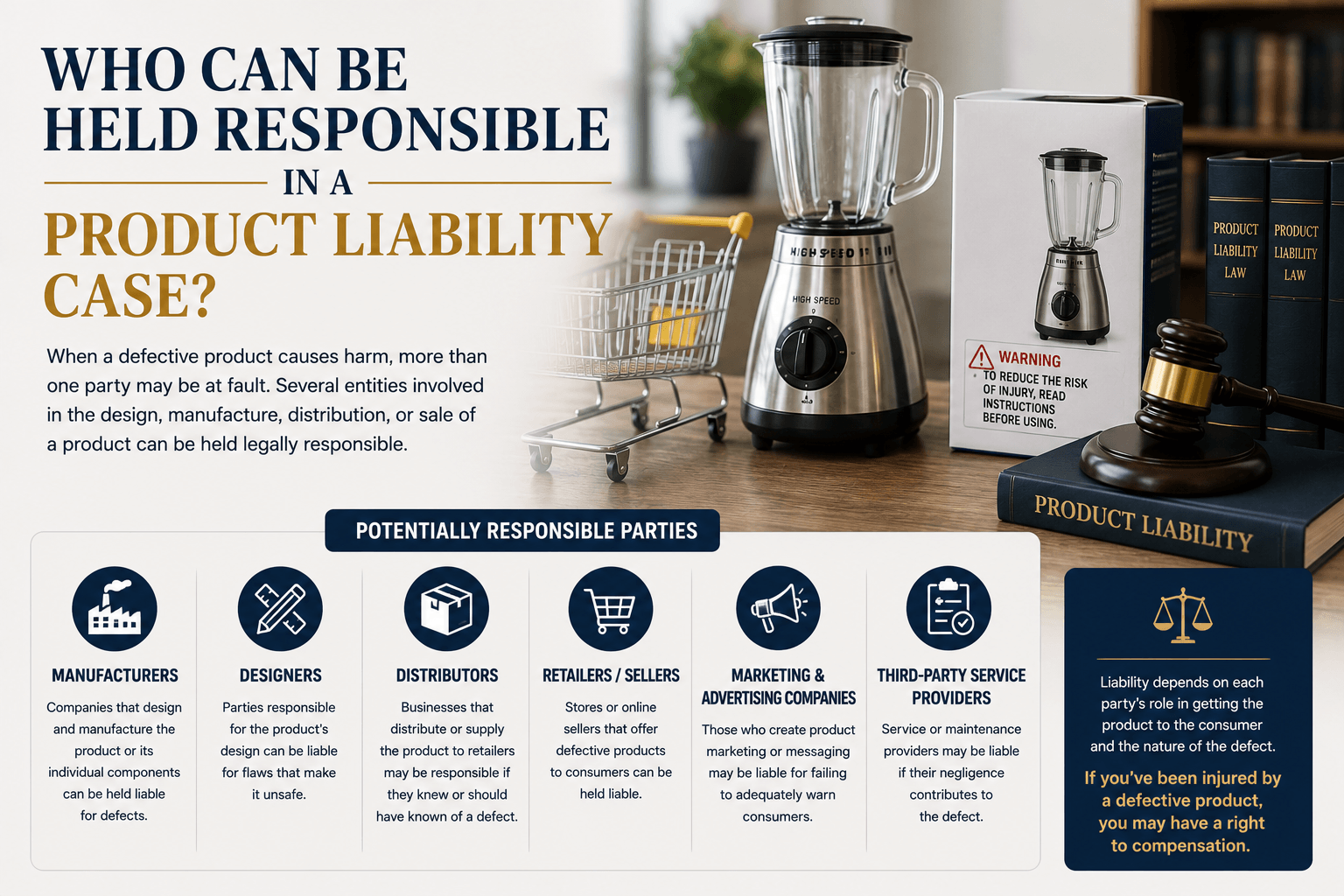
Because products often pass through multiple businesses before reaching consumers, responsibility may involve more than one party.
Potential participants in the supply chain include:
- Product designers
- Manufacturers
- Component suppliers
- Assembly companies
- Importers
- Wholesalers
- Distributors
- Retailers
- Private-label businesses
The involvement of each party depends on its role in the development, production, and distribution of the product.
Product Designers
Every product begins with a design.
Engineers and designers make decisions regarding:
- Materials
- Dimensions
- Structural integrity
- Safety features
- Intended use
- Performance standards
- Risk reduction measures
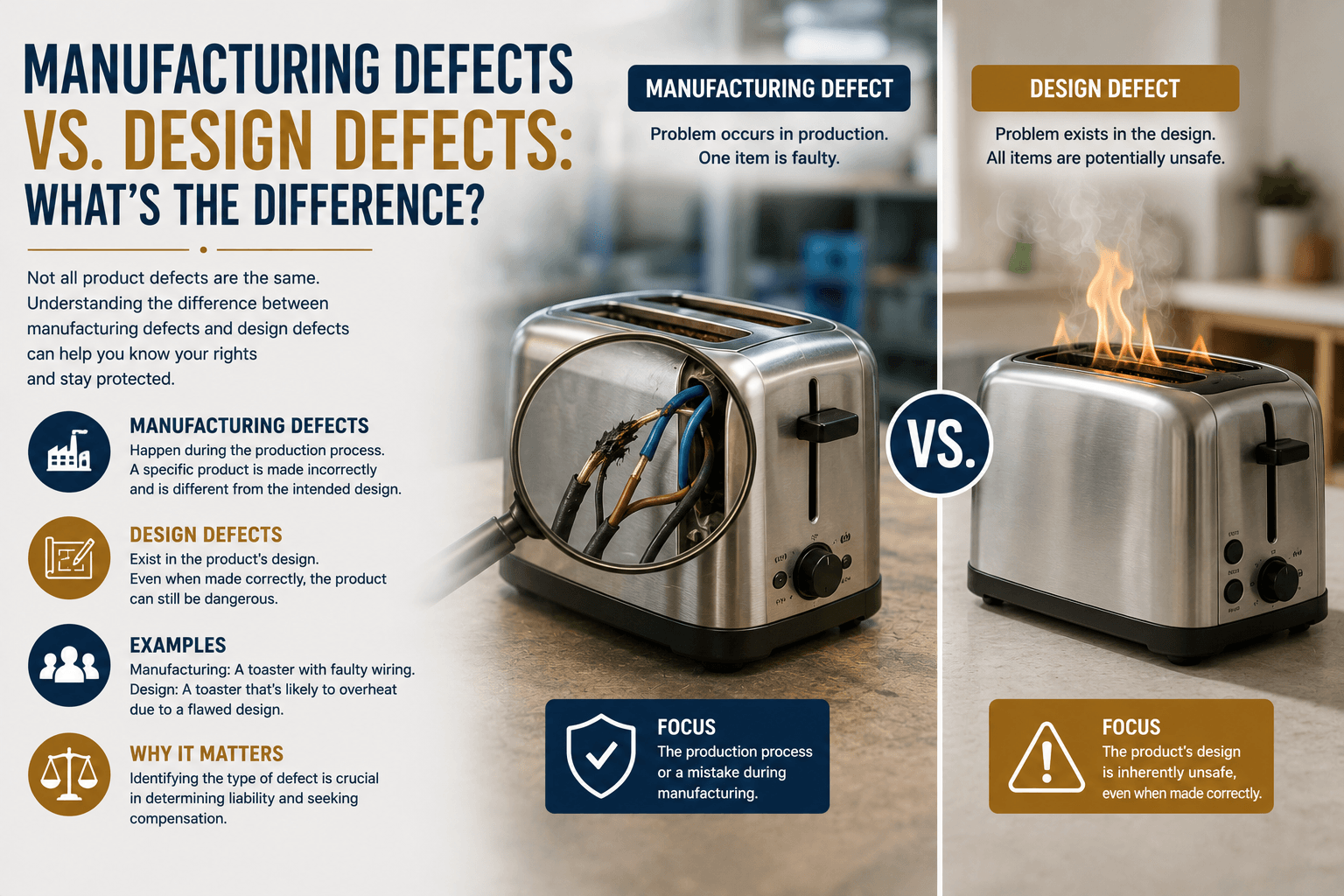
If concerns arise regarding the product’s original engineering concept, attention may focus on the design process itself.
Designers often conduct:
- Risk assessments
- Prototype testing
- Safety evaluations
- Consumer usability studies
- Regulatory compliance reviews
Their goal is to identify foreseeable hazards before products enter mass production.
Manufacturers
Manufacturers convert product designs into finished goods.
Their responsibilities commonly include:
- Material selection
- Production processes
- Assembly
- Quality control
- Equipment maintenance
- Employee training
- Product testing
- Final inspections
Manufacturing facilities often operate under strict quality assurance systems designed to reduce production-related defects.
Errors during manufacturing may affect:
- Structural integrity
- Electrical safety
- Mechanical performance
- Chemical composition
- Product durability
Maintaining consistent production standards is one of the manufacturer’s primary responsibilities.
Component Suppliers
Many products contain components supplied by specialized companies.
Examples include:
- Vehicle braking systems
- Electronic circuit boards
- Batteries
- Medical device components
- Pharmaceutical ingredients
- Mechanical fasteners
- Safety sensors
If a component itself contains a defect, the supplier may become an important part of the overall product evaluation.
Because modern products often contain hundreds or thousands of individual components, supplier quality management has become increasingly important.
Assembly Companies
In some industries, one company manufactures components while another assembles the final product.
Assembly companies are generally responsible for ensuring:
- Correct installation of components
- Compliance with engineering specifications
- Proper calibration
- Functional testing
- Final quality verification
Assembly errors can create product safety concerns even when every individual component functions correctly.
Importers
Global trade has expanded dramatically over recent decades.
Many products sold in one country are manufactured elsewhere before being imported for domestic sale.
Importers often play an important role by:
- Selecting overseas manufacturers
- Verifying compliance with local regulations
- Managing product documentation
- Coordinating product testing
- Ensuring regulatory certification where required
Importers help bridge international manufacturing and domestic consumer markets.
Distributors and Wholesalers
Distributors and wholesalers serve as intermediaries between manufacturers and retailers.
Their responsibilities may include:
- Product storage
- Transportation
- Inventory management
- Product handling
- Distribution logistics
Although these businesses often do not manufacture products, their role in maintaining product quality during transportation and storage may be relevant under certain circumstances.
Retailers
Retailers provide products directly to consumers.
These businesses include:
- Department stores
- Specialty retailers
- Home improvement stores
- Pharmacies
- Supermarkets
- Online retailers
Retailers generally rely upon manufacturers and suppliers to provide safe products while also complying with applicable consumer protection requirements.
Depending on the jurisdiction and circumstances, retailers may sometimes become involved in product liability claims.
Private-Label Brands
Many retailers sell products under their own private-label or store-brand names.
Although another company may manufacture the product, consumers often associate it with the retailer’s brand.
Private-label businesses typically work closely with manufacturing partners regarding:
- Product specifications
- Quality standards
- Packaging
- Safety testing
- Branding
- Regulatory compliance
Their involvement varies depending on how products are developed and marketed.
Online Marketplaces
E-commerce has changed how consumers purchase products.
Online marketplaces connect buyers with:
- Manufacturers
- Independent sellers
- Importers
- International suppliers
- Small businesses
As online commerce continues expanding, courts and lawmakers continue examining how responsibility should be allocated among digital platforms, third-party sellers, and manufacturers.
This remains an evolving area of product liability law in many countries.
How Responsibility Is Evaluated
Determining responsibility in a product liability case often requires careful examination of several factors.
These may include:
- The product’s design
- Manufacturing records
- Quality control procedures
- Product testing
- Safety warnings
- Supply chain documentation
- Regulatory compliance
- Expert analysis
Rather than assuming responsibility rests with one party, investigators often evaluate each stage of the product’s development and distribution.
The Role of Product Documentation
Product documentation helps explain how products were developed and manufactured.
Important records may include:
- Engineering drawings
- Design specifications
- Manufacturing logs
- Quality assurance reports
- Inspection records
- Supplier certifications
- Product testing data
- Safety evaluations
These documents assist experts in understanding how the product was intended to function and whether established procedures were followed.
Product Safety Standards
Many industries operate under detailed safety standards and technical regulations.
Manufacturers frequently comply with:
- Engineering standards
- Industry guidelines
- Government regulations
- Product certification requirements
- Material testing standards
- Performance benchmarks
Compliance with applicable standards supports product safety but may not resolve every question regarding product performance.
Why Multiple Parties May Be Involved
Modern manufacturing is highly collaborative.
A single consumer product may involve:
- Designers in one country
- Component suppliers in another
- Manufacturing facilities elsewhere
- International shipping companies
- Domestic distributors
- Local retailers
Because multiple businesses contribute to the final product, several parties may become relevant when evaluating how a product entered the marketplace.
Common Misconceptions
Myth: Only the Manufacturer Can Be Responsible
Manufacturers are important participants, but other businesses within the supply chain may also have responsibilities depending on the facts and applicable laws.
Myth: Retailers Never Have Responsibilities
Retailers generally do not manufacture products, but their role may still become relevant in certain product liability situations depending on local legal standards.
Myth: Imported Products Have No Accountability
Imported products remain subject to consumer protection laws in the countries where they are sold. Importers and other businesses may have responsibilities relating to regulatory compliance and product safety.
Myth: A Product Can Have Only One Responsible Party
Some product liability cases involve multiple companies because products pass through several stages before reaching consumers.
The Future of Product Liability Responsibility
Global supply chains continue becoming more interconnected.
Emerging trends influencing product liability include:
- International manufacturing partnerships
- Artificial intelligence-assisted quality control
- Smart products
- Connected devices
- Autonomous technologies
- Blockchain supply chain tracking
- Enhanced product traceability
- Sustainability-focused manufacturing
These developments may improve transparency while helping businesses identify product safety concerns more quickly.
Conclusion
Product liability extends beyond the company that manufactures a finished product. Designers, component suppliers, assembly companies, importers, distributors, retailers, and private-label businesses all play important roles in bringing products to consumers. Depending on the circumstances, one or more of these parties may become relevant when evaluating product safety and legal responsibility.
Understanding how responsibility is distributed throughout the supply chain highlights the collaborative nature of modern manufacturing and reinforces the importance of quality control, safety testing, regulatory compliance, and effective communication. As products and global supply chains continue to evolve, maintaining high safety standards remains a shared responsibility that ultimately benefits consumers and businesses alike.
Frequently Asked Questions
Who can be involved in a product liability case?
Depending on the circumstances, product liability cases may involve manufacturers, designers, component suppliers, importers, distributors, wholesalers, retailers, or other businesses involved in the product’s supply chain.
Can more than one company be responsible for a defective product?
Yes. Modern products often pass through multiple businesses before reaching consumers, and responsibility may involve more than one party depending on the facts and applicable laws.
Do retailers have responsibilities for product safety?
Retailers generally rely on manufacturers for product safety, but their role may become relevant in certain situations depending on the jurisdiction and circumstances.
Why are component suppliers important?
Many products contain specialized parts supplied by other companies. If a component contributes to a product defect, the supplier may become relevant during the evaluation of the case.
How do investigators determine responsibility?
They often review engineering designs, manufacturing records, quality control documentation, product testing, supply chain information, safety warnings, and expert analyses to understand how the product was developed and distributed.