
Accidents can happen unexpectedly, whether on the road, at work, in a public place, or even at home. While many incidents result in minor inconveniences, others can lead to significant physical injuries, emotional distress, financial hardship, and long-term medical treatment. When an injury is allegedly caused by another party’s negligence or wrongful conduct, personal injury law provides a legal framework for resolving disputes and, where appropriate, seeking compensation for resulting losses.
Personal injury law is one of the largest areas of civil law and affects millions of people each year. It covers a broad range of situations, from vehicle accidents and slip-and-fall incidents to defective products, medical negligence, workplace accidents, and wrongful death claims. Understanding the fundamentals of personal injury law helps individuals better understand their legal rights, responsibilities, and the legal process that may follow an injury.
This beginner’s guide explains the core principles of personal injury law, common types of cases, the role of negligence, and how personal injury claims are generally handled.
What Is Personal Injury Law?
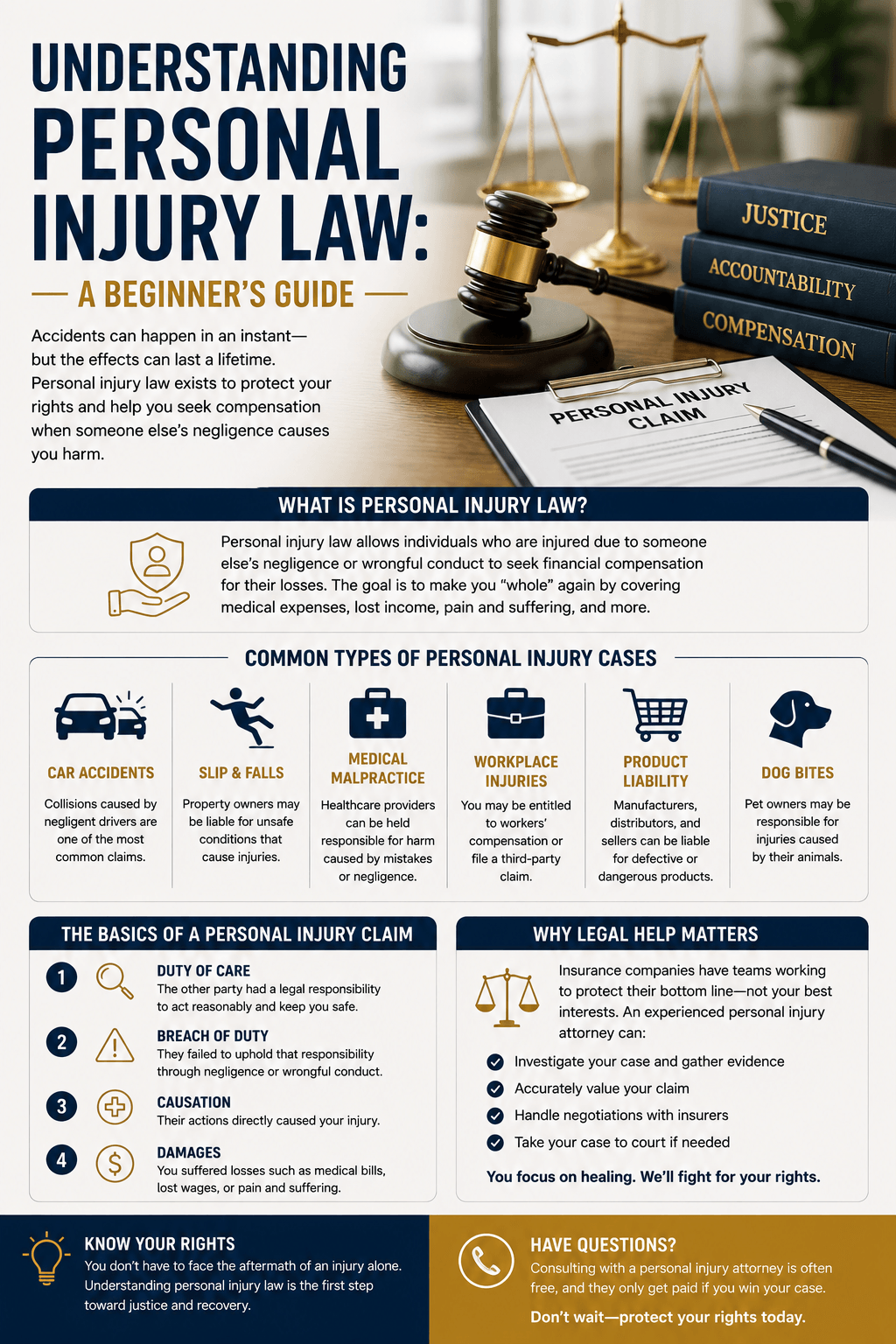
Personal injury law is the area of civil law that addresses situations where an individual suffers harm allegedly caused by another person’s negligence, carelessness, or intentional misconduct.
Unlike criminal law, which focuses on punishing unlawful behavior, personal injury law primarily seeks to compensate injured individuals for losses resulting from an accident or harmful event.
A personal injury claim may involve:
- Physical injuries
- Emotional distress
- Property damage
- Financial losses
- Medical expenses
- Lost income
- Reduced earning capacity
Each case depends on its own facts, evidence, and the laws of the applicable jurisdiction.
The Purpose of Personal Injury Law
Personal injury law serves several important purposes.
These include:
- Providing a legal remedy for injured individuals.
- Encouraging responsible behavior.
- Promoting public safety.
- Holding parties accountable when appropriate.
- Helping injured individuals recover financial losses.
- Encouraging businesses and individuals to maintain safe environments.
The civil justice system aims to balance the interests of both injured parties and those defending against legal claims.
Common Types of Personal Injury Cases
Personal injury law covers many different types of accidents and incidents.
Motor Vehicle Accidents
Vehicle accidents are among the most common personal injury claims.
Examples include:
- Car accidents
- Truck accidents
- Motorcycle accidents
- Bicycle accidents
- Pedestrian accidents
- Bus accidents
These cases often involve questions regarding driver negligence, traffic laws, road conditions, and insurance coverage.
Slip and Fall Accidents
Slip and fall incidents may occur in:
- Grocery stores
- Shopping centers
- Restaurants
- Hotels
- Sidewalks
- Office buildings
- Parking lots
Property owners generally have responsibilities relating to maintaining reasonably safe premises for lawful visitors.
Medical Malpractice
Medical malpractice involves allegations that a healthcare professional failed to provide treatment consistent with the applicable standard of care, resulting in patient harm.
Examples may include:
- Misdiagnosis
- Delayed diagnosis
- Surgical errors
- Medication mistakes
- Birth injuries
These cases often require expert medical testimony.
Product Liability
Defective products may sometimes create safety risks for consumers.
Examples include:
- Defective electronics
- Unsafe children’s products
- Faulty vehicle components
- Medical devices
- Household appliances
Product liability cases may involve design defects, manufacturing defects, or inadequate safety warnings.
Workplace Injuries
Although many workplace injuries are addressed through workers’ compensation systems, certain situations may involve additional personal injury claims depending on the facts and applicable laws.
Dog Bites and Animal Attacks
Some jurisdictions have specific laws addressing injuries caused by animals, including dog bite incidents.
Responsibility depends on local statutes and the circumstances surrounding the event.
Understanding Negligence
Negligence is one of the foundational concepts in personal injury law.
In general, negligence refers to the failure to exercise reasonable care under the circumstances.
Although legal standards vary, many negligence claims involve evaluating several basic elements.
Duty of Care
A duty of care is a legal obligation requiring individuals or organizations to act with reasonable care to avoid causing foreseeable harm to others.
For example:
- Drivers should obey traffic laws.
- Property owners should maintain safe premises.
- Healthcare providers should follow accepted medical standards.
- Manufacturers should produce reasonably safe products.
Breach of Duty
A breach occurs when someone allegedly fails to meet the required standard of care.
Examples may include:
- Distracted driving
- Ignoring hazardous conditions
- Failing to maintain equipment
- Violating safety procedures
Causation
A claimant generally must show that the alleged breach of duty contributed to the injury or damages suffered.
Causation often becomes one of the most closely examined aspects of a personal injury case.
Damages
Personal injury claims generally involve measurable losses, which may include medical expenses, lost wages, property damage, pain and suffering, or other legally recognized damages.
Without legally recognized damages, a negligence claim may not succeed.
What Compensation May Include
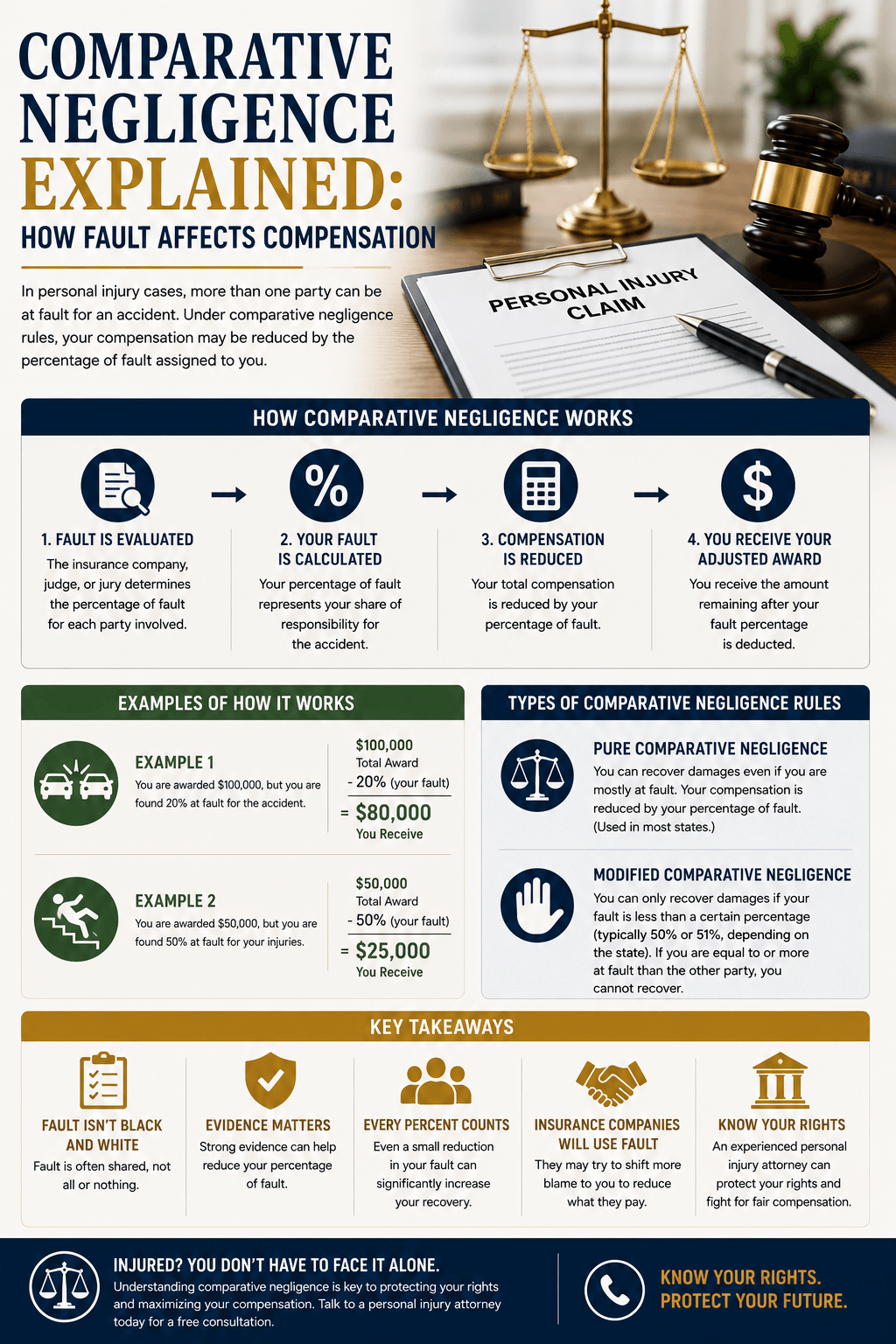
If liability is established under applicable law, compensation may include different categories of damages.
Examples include:
- Medical expenses
- Future medical care
- Lost wages
- Loss of earning capacity
- Rehabilitation costs
- Property damage
- Pain and suffering
- Emotional distress
- Loss of enjoyment of life
The types of damages available vary depending on the jurisdiction and the facts of the case.
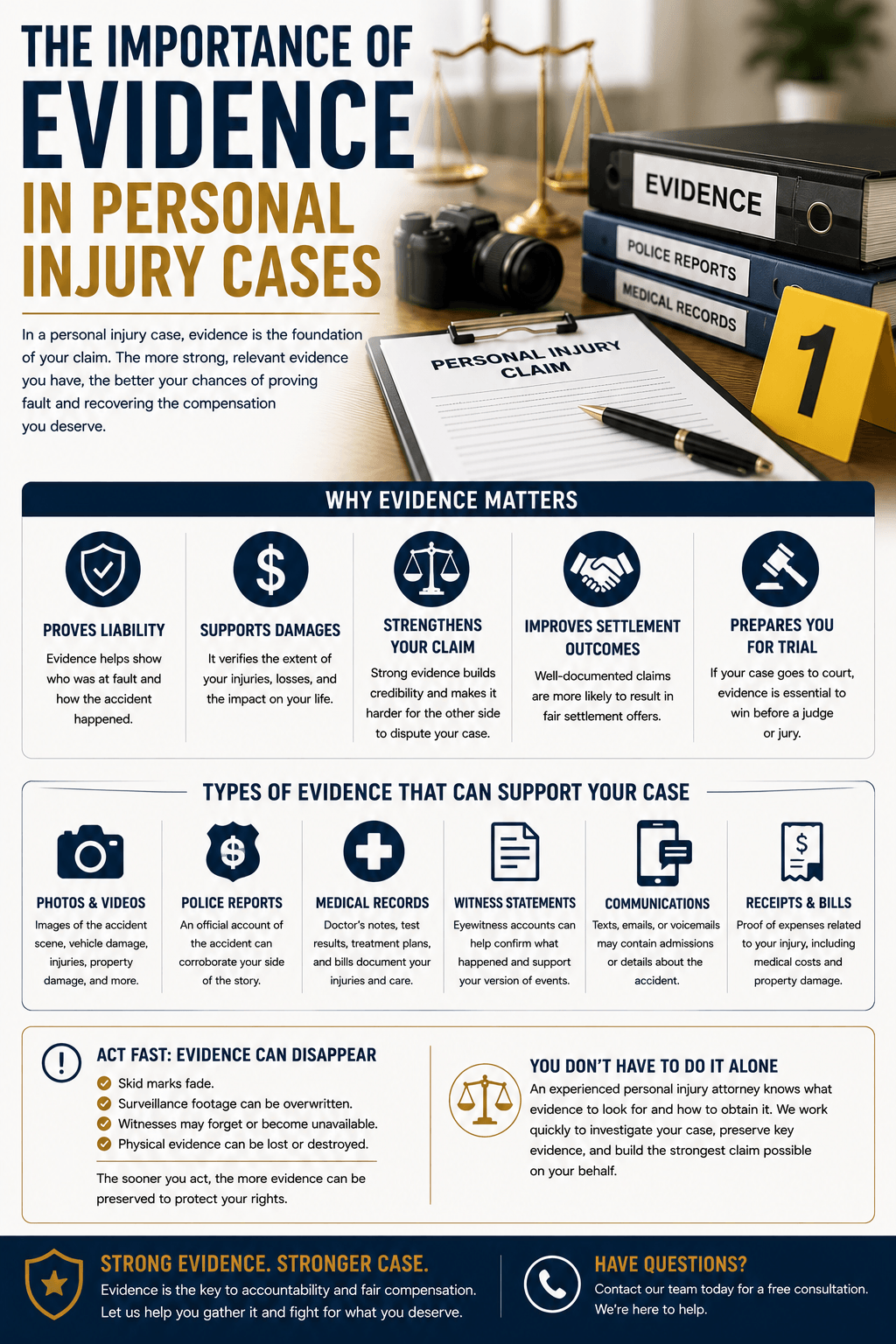
The Importance of Evidence
Evidence plays a central role in personal injury claims.
Common forms of evidence include:
- Medical records
- Photographs
- Videos
- Witness statements
- Accident reports
- Expert opinions
- Employment records
- Repair estimates
- Surveillance footage
Strong documentation helps establish what happened and supports the evaluation of liability and damages.
Insurance and Personal Injury Claims
Many personal injury claims involve insurance companies.
Depending on the situation, insurance may include:
- Auto insurance
- Homeowners insurance
- Commercial liability insurance
- Professional liability insurance
- Product liability insurance
Insurance companies often investigate claims by reviewing evidence, interviewing witnesses, and evaluating applicable policy terms.
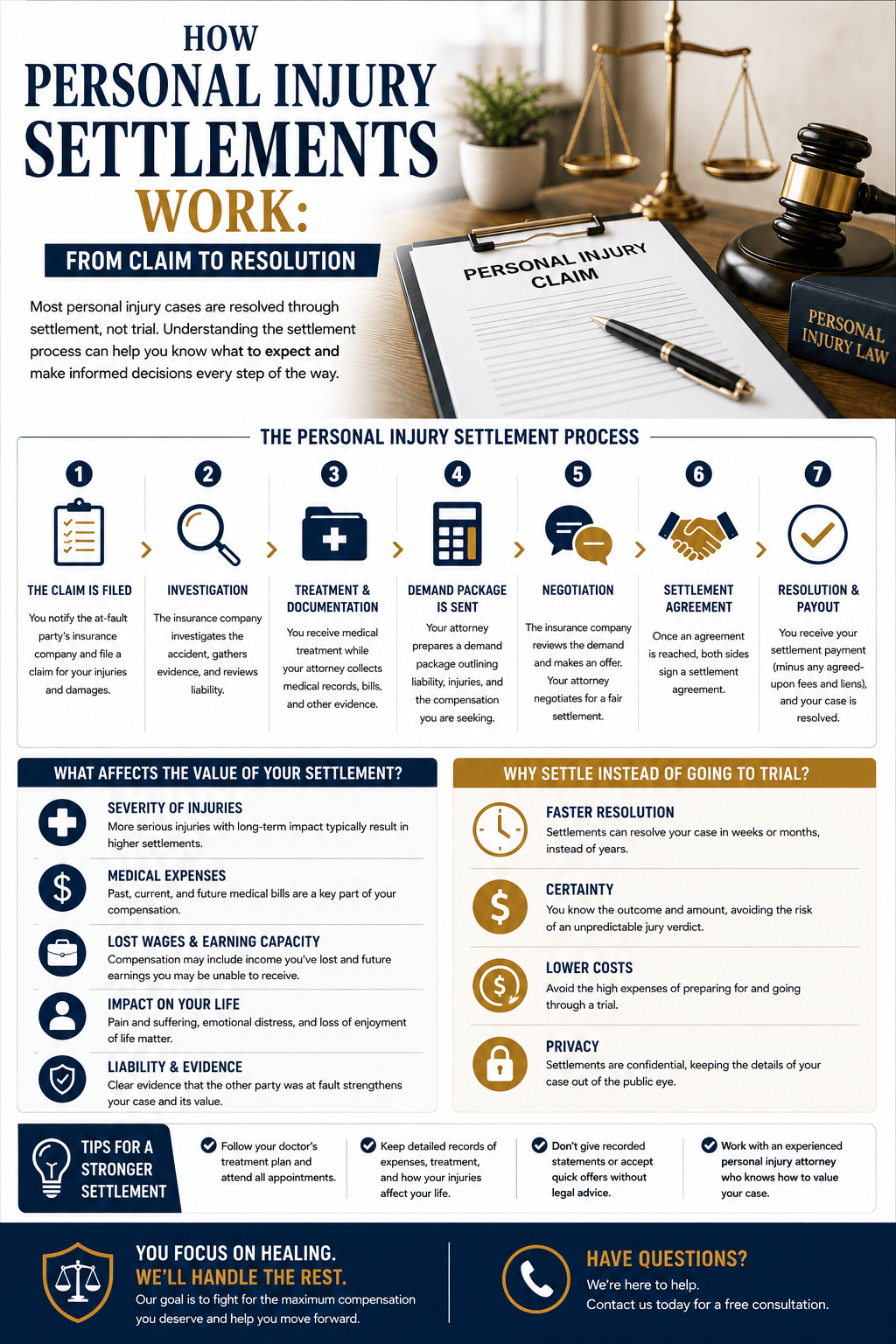
Settlement vs. Trial
Many personal injury claims are resolved through negotiated settlements.
Settlement discussions may occur:
- Before a lawsuit is filed.
- During litigation.
- Through mediation.
- Shortly before trial.
If a settlement cannot be reached, the case may proceed to court, where a judge or jury determines the outcome based on the evidence presented.
Statutes of Limitations
Personal injury claims are generally subject to legal deadlines known as statutes of limitations.
These laws establish the period within which a claim must typically be filed.
The applicable deadline varies depending on:
- The jurisdiction
- The type of claim
- The circumstances of the injury
- Applicable exceptions
Understanding these deadlines is important because filing after the applicable limitation period may affect legal rights.
Common Misconceptions About Personal Injury Law
Myth: Every Accident Leads to a Personal Injury Claim
Not every accident results in legal liability. Many incidents occur without negligence or without legally recoverable damages.
Myth: Personal Injury Cases Always Go to Trial
Most personal injury claims are resolved through settlement negotiations rather than courtroom trials.
Myth: Minor Injuries Never Matter
Even injuries that initially appear minor should be properly evaluated, as some conditions become more apparent over time.
Myth: Personal Injury Law Only Covers Car Accidents
Personal injury law includes many different types of cases, including premises liability, product liability, medical malpractice, workplace incidents, and more.
The Future of Personal Injury Law
Technology continues influencing personal injury litigation.
Emerging developments include:
- Artificial intelligence-assisted evidence review
- Digital accident reconstruction
- Wearable health devices
- Vehicle telematics
- Smart surveillance systems
- Electronic medical records
- Virtual court proceedings
- Advanced data analytics
These innovations may improve evidence collection, case evaluation, and dispute resolution while supporting greater efficiency within the legal system.
Conclusion
Personal injury law provides an important legal framework for addressing injuries allegedly caused by negligence or wrongful conduct. Whether a claim involves a vehicle accident, unsafe property, defective product, or medical treatment, the legal process focuses on evaluating evidence, determining responsibility, and assessing recoverable damages under applicable law.
Understanding the basic principles of personal injury law helps individuals make informed decisions after an accident and appreciate the role the civil justice system plays in resolving disputes. While every case is unique, knowledge of negligence, evidence, insurance, and the legal process provides a strong foundation for understanding how personal injury claims are generally handled.
Frequently Asked Questions
What is personal injury law?
Personal injury law is an area of civil law that addresses claims involving injuries allegedly caused by another party’s negligence, carelessness, or wrongful conduct.
What types of accidents are covered by personal injury law?
Personal injury law may apply to motor vehicle accidents, slip and fall incidents, medical malpractice, defective products, workplace accidents, dog bites, and many other situations involving alleged negligence.
What is negligence in a personal injury case?
Negligence generally refers to the failure to exercise reasonable care under the circumstances, resulting in harm to another person.
Do all personal injury cases go to court?
No. Many personal injury claims are resolved through settlement negotiations before reaching trial.
Why is evidence important in personal injury claims?
Evidence such as medical records, photographs, witness statements, and accident reports helps establish what happened, evaluate liability, and determine the extent of damages.