
Commercial trucks play a vital role in transporting goods across cities, states, and countries. Every day, thousands of tractor-trailers, delivery trucks, tankers, and other commercial vehicles travel alongside passenger vehicles, supporting businesses and keeping supply chains moving. While the trucking industry is essential to modern commerce, accidents involving large commercial vehicles can have serious consequences because of their size, weight, and operating characteristics. Truck accident claims differ from ordinary car accident claims in several important ways.
Commercial trucking is governed by extensive safety regulations, multiple businesses may be involved in operating a single vehicle, and investigations often require specialised evidence. Understanding how truck accident claims work helps individuals appreciate the legal issues that may arise after a collision involving a commercial vehicle.
This guide explains the fundamentals of truck accident claims, common causes of trucking accidents, how liability is evaluated, and why these cases are often more complex than standard motor vehicle accident claims.
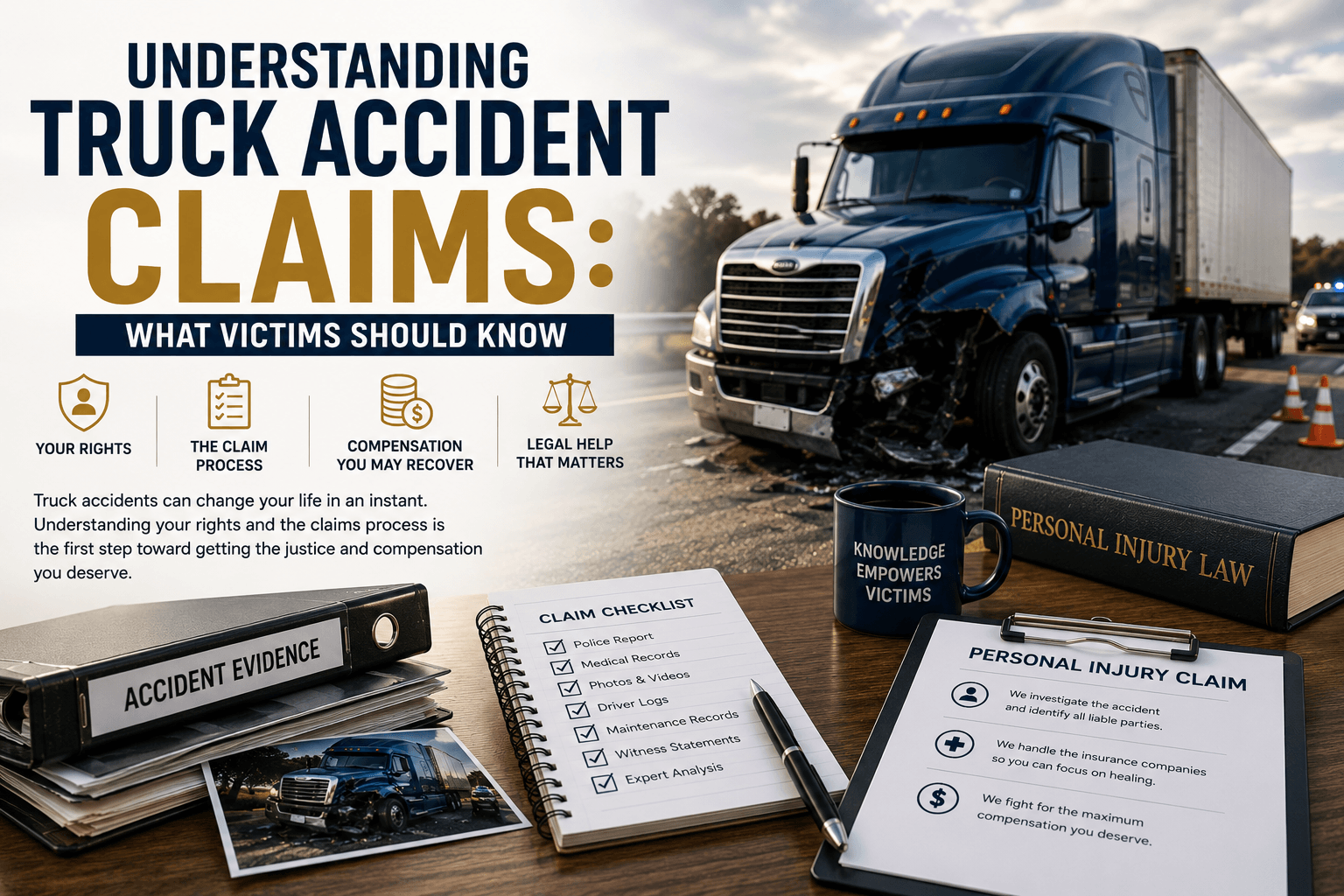
What Is a Truck Accident Claim?
A truck accident claim is a legal claim arising from a collision involving a commercial truck or other large commercial vehicle.
Depending on the circumstances, these claims may involve:
- Personal injuries
- Property damage
- Wrongful death
- Economic losses
- Insurance disputes
- Commercial liability issues
Truck accident claims generally seek to determine how the accident occurred, who may be legally responsible, and what damages may be recoverable under applicable law.
Types of Commercial Trucks
Many different commercial vehicles operate on public roads.
Examples include:
- Tractor-trailers
- Semi-trucks
- Box trucks
- Delivery vehicles
- Flatbed trucks
- Tanker trucks
- Dump trucks
- Garbage trucks
- Cement mixers
- Car carriers
Each vehicle presents unique operational challenges depending on its size, cargo, and intended use.
Why Truck Accidents Are Different
Truck accidents often differ from passenger vehicle collisions because commercial trucks are significantly larger and heavier.
Several factors contribute to this complexity:
- Longer stopping distances
- Larger blind spots
- Greater cargo weight
- Specialized braking systems
- Commercial driving regulations
- Multiple responsible parties
- Extensive maintenance requirements
These factors often require more detailed investigations than ordinary automobile accidents.
Common Causes of Truck Accidents
Commercial truck accidents may result from many different circumstances.
Common contributing factors include:
- Driver fatigue
- Distracted driving
- Speeding
- Poor weather
- Mechanical failures
- Improper maintenance
- Tire failures
- Brake problems
- Improperly secured cargo
- Driver inexperience
Every accident requires an independent evaluation based on the available evidence.
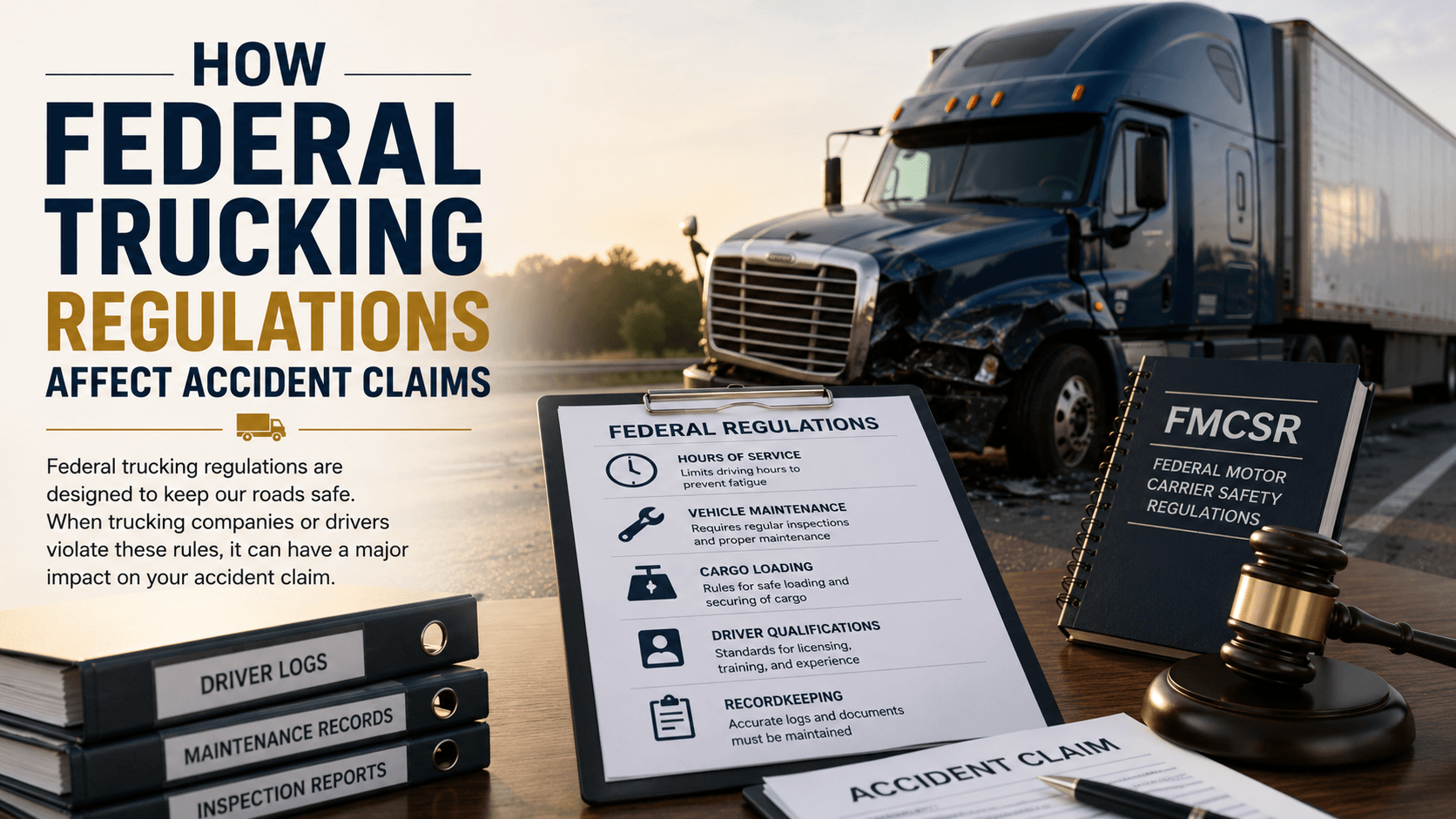
Federal and State Regulations
Commercial trucking is subject to extensive regulation.
These rules may address:
- Driver qualifications
- Hours-of-service limits
- Vehicle inspections
- Maintenance requirements
- Cargo securement
- Driver training
- Drug and alcohol testing
- Recordkeeping
Compliance with applicable regulations helps promote roadway safety and may become relevant during accident investigations.
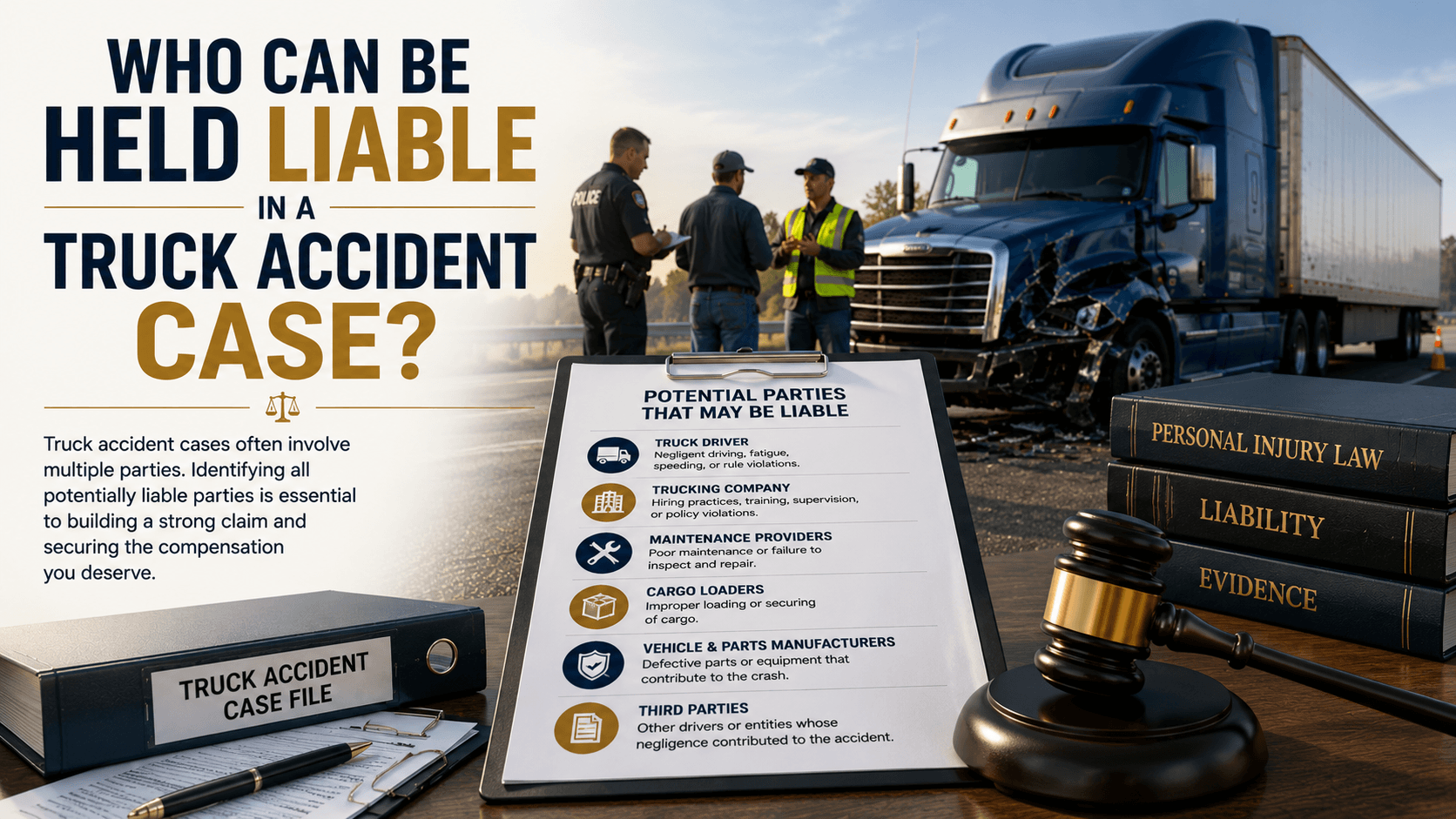
Who May Be Involved in a Truck Accident Claim?
Unlike many passenger vehicle accidents, truck accident claims may involve several parties.
Potentially involved businesses or individuals include:
- Truck drivers
- Trucking companies
- Vehicle owners
- Cargo loading companies
- Maintenance contractors
- Equipment manufacturers
- Component suppliers
- Freight brokers
- Other motorists
Determining responsibility depends on the facts of the accident and applicable law.
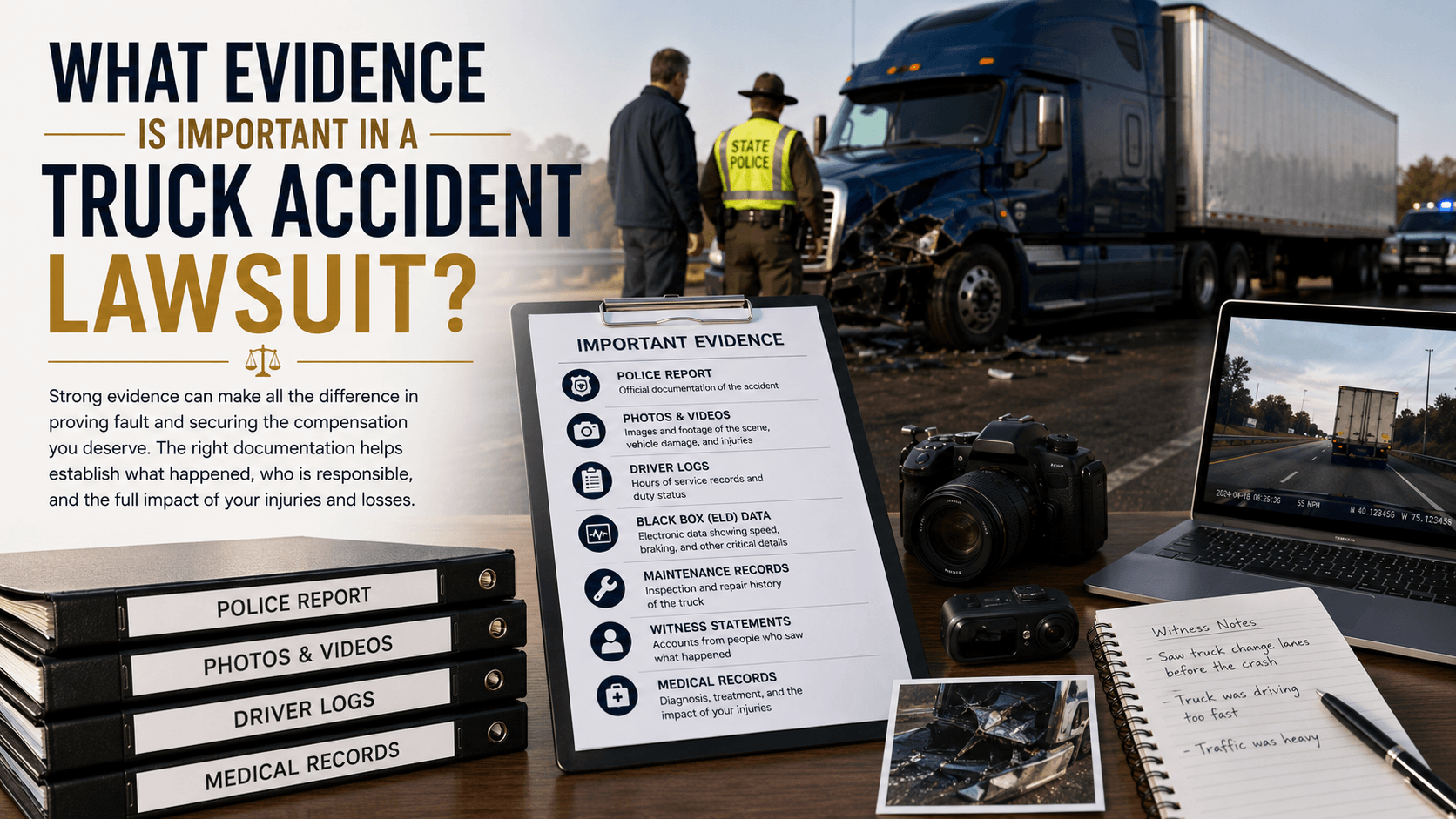
Evidence in Truck Accident Cases
Evidence is especially important in truck accident claims because commercial vehicles generate extensive operational records.
Important evidence may include:
- Police reports
- Driver logbooks
- Electronic logging device (ELD) records
- Vehicle maintenance records
- Inspection reports
- Dash camera footage
- GPS data
- Cargo documentation
- Witness statements
- Accident scene photographs
Preserving evidence promptly may assist investigators in understanding how the accident occurred.
Common Injuries in Truck Accidents
Because of the size and weight of commercial trucks, collisions may result in significant injuries.
Examples include:
- Traumatic brain injuries
- Spinal cord injuries
- Broken bones
- Internal injuries
- Burns
- Neck injuries
- Back injuries
- Soft tissue injuries
- Psychological trauma
The severity of injuries varies depending on the specific circumstances of the collision.
Insurance Considerations
Commercial trucking companies often carry insurance policies that differ from standard passenger vehicle coverage.
Depending on the situation, claims may involve:
- Commercial liability insurance
- Cargo insurance
- Trailer coverage
- Employer liability insurance
- Umbrella policies
Understanding the applicable insurance coverage is often an important part of the claims process.
The Investigation Process
Truck accident investigations are often more detailed than ordinary traffic accident investigations.
Investigators may review:
- Vehicle damage
- Driver qualifications
- Hours-of-service records
- Maintenance history
- Black box data
- Electronic logging devices
- Road conditions
- Surveillance footage
- Expert analyses
The goal is to reconstruct the events leading to the collision as accurately as possible.
Settlement and Litigation
Many truck accident claims are resolved through negotiated settlements.
Settlement discussions may consider:
- Medical expenses
- Property damage
- Lost income
- Future medical care
- Rehabilitation costs
- Pain and suffering
- Comparative negligence
- Insurance policy limits
If the parties cannot reach an agreement, the case may proceed through litigation and, if necessary, trial.
Common Misconceptions About Truck Accident Claims
Myth: Truck Accidents Are Handled Exactly Like Car Accidents
Truck accident claims often involve additional regulations, commercial insurance policies, multiple parties, and specialized evidence that make them more complex than ordinary automobile accident claims.
Myth: The Truck Driver Is Always the Only Responsible Party
Depending on the circumstances, responsibility may involve trucking companies, maintenance providers, cargo loaders, manufacturers, or other businesses connected to the operation of the commercial vehicle.
Myth: Every Truck Accident Results in a Lawsuit
Many truck accident claims are resolved through insurance negotiations or settlement without proceeding to trial.
Myth: Larger Trucks Are Always at Fault
The size of a commercial truck does not automatically determine legal responsibility. Liability depends on the facts, evidence, and applicable law.
Technology in Modern Trucking
Technology continues transforming the commercial trucking industry.
Examples include:
- Electronic logging devices (ELDs)
- Collision avoidance systems
- Lane departure warnings
- Automatic emergency braking
- GPS fleet tracking
- Driver monitoring systems
- Telematics
- Advanced onboard diagnostics
These technologies improve fleet management and may also provide valuable evidence during accident investigations.
Safety Tips for Sharing the Road with Commercial Trucks
Although professional truck drivers receive specialized training, all motorists can contribute to roadway safety.
Helpful practices include:
- Avoid driving in large truck blind spots.
- Allow extra stopping distance.
- Pass commercial trucks carefully.
- Avoid cutting in front of trucks.
- Be cautious during poor weather.
- Watch for wide turns.
- Maintain safe following distances.
These habits help reduce the likelihood of collisions involving large commercial vehicles.
The Future of Truck Accident Claims
Commercial transportation continues evolving with advancements in technology.
Future developments may include:
- Autonomous commercial vehicles
- Artificial intelligence-assisted fleet management
- Enhanced driver safety monitoring
- Smart highways
- Connected vehicle communication
- Advanced collision prevention systems
- Improved electronic evidence collection
- Predictive maintenance technology
As trucking technology advances, accident investigations and liability analyses are likely to become increasingly data-driven.
Conclusion
Truck accident claims involve unique legal and factual issues that distinguish them from ordinary motor vehicle accident cases. The size of commercial trucks, the extensive regulations governing the trucking industry, the involvement of multiple businesses, and the availability of specialized evidence all contribute to the complexity of these claims.
Understanding the basics of truck accident claims helps individuals appreciate how these cases are investigated and resolved. Whether evaluating driver conduct, vehicle maintenance, cargo handling, or regulatory compliance, careful evidence collection and thorough investigation remain essential to determining responsibility and resolving claims fairly.
Frequently Asked Questions
What is a truck accident claim?
A truck accident claim is a legal claim arising from a collision involving a commercial truck or other large commercial vehicle, often involving issues of liability, damages, and insurance.
Why are truck accident claims more complex than car accident claims?
Truck accident claims may involve commercial regulations, multiple responsible parties, specialized evidence, larger insurance policies, and more extensive investigations.
Who may be responsible for a truck accident?
Depending on the circumstances, responsibility may involve the truck driver, trucking company, vehicle owner, maintenance provider, cargo loader, manufacturer, or other parties connected to the commercial vehicle.
What evidence is important in a truck accident case?
Important evidence may include driver logbooks, electronic logging device records, maintenance records, inspection reports, GPS data, police reports, witness statements, photographs, and expert analyses.
Do all truck accident claims go to court?
No. Many truck accident claims are resolved through settlement negotiations, mediation, or insurance discussions before reaching trial.